Colonial Photography: Britain's Attempt to Classify India Through Images
In a compelling new exhibition at the Delhi art gallery DAG, a collection of 150-year-old photographs unveils a dark chapter of British colonial history. These images, originally part of a project to classify and control India's population, now serve as a testament to the resilience and individuality of their subjects. The exhibition accompanies the release of the book Typecasting: Photographing the Peoples of India 1855-1920, offering a critical look at how photography was weaponized for imperial purposes.
The Imperial Project of Photographic Ethnography
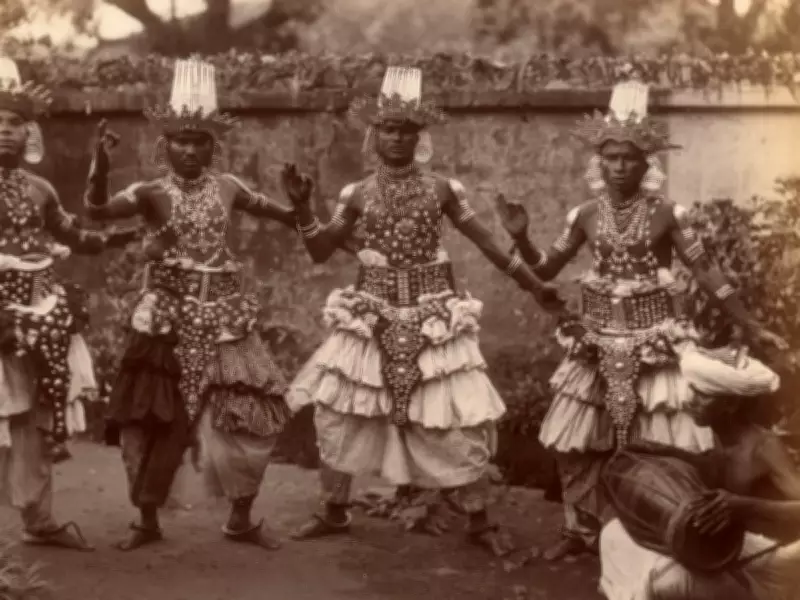
At first glance, the photographs appear as striking portraits of Indian men and women, with piercing eyes and dignified presence. However, context reveals a more sinister reality. Taken by British colonialists, these images were part of a large-scale ethnographic project aimed at categorizing India's diverse population into 'generic types.' This effort, detailed in the book, sought to understand subjects' motivations, traits, and customs to exert more effective control.
The project, notably the People of India 1868-1875, involved British photographers like Benjamin Simpson and James Waterhouse, alongside Indian commercial photographers. Over 160 surviving photographs have been compiled, supplementing censuses and surveys from the era. Sitters are often unnamed, reduced to captions labeling them as 'ethnic specimens'—such as water carriers, aboriginals, or snake charmers—based solely on race, region, and occupation.

Resistance and Agency in the Frame
Despite the colonial intent, many photographs reveal the subjects' agency and defiance. In some images, like 'Group of Naga Women,' unease is palpable, while in others, such as 'Lepcha man in Darjeeling,' the sitter's direct gaze challenges reduction to an exotic object. Photographers themselves noted the challenges: one grumbled about reluctant subjects who feared being 'shot or converted into some uncouth animal,' while Waterhouse expressed irritation at Indians' refusal to comply with posed instructions.
This resistance underscores the futility of the British endeavor. As DAG curator Sudeshna Guha explains, the photographs ultimately prove that 'generic types' are a construct. India's extreme diversity in skin color and features makes such classification absurd, highlighting the nobility of individuals who refused to be codified.
Historical Context and Legacy
The photographic project gained urgency after the 1857 rebellion against the East India Company, which left the British traumatized. In response, the colonial government initiated systematic surveys, with the first census in 1861. Photography, seen as a tool of 'scientific objectivity,' was deployed to preempt future uprisings. Officials, army surgeons, and missionaries traveled across India, burdened with heavy equipment, to document the land and people.
Guha emphasizes that while the British aimed to 'codify' Indians by occupation, caste, and facial features, the photographs instead showcase humanity's irreducible complexity. Today, this exhibition not only critiques colonial tactics but also celebrates the enduring spirit of those photographed, reminding viewers of photography's power both to oppress and to preserve dignity.