The Unflinching Gaze of Diane Arbus
The David Zwirner Gallery in London is currently hosting Diane Arbus: Sanctum Sanctorum, a powerful exhibition showcasing the American photographer's distinctive and often unsettling vision of humanity. Running until 20 December, this collection presents Arbus's work in all its controversial glory, from her haunting portraits of marginalised individuals to her stark depictions of everyday life.
A Legacy of Alienation and Truth
Diane Arbus's photography remains as provocative today as when she created it. The exhibition includes one of her most shocking images: A woman with her baby monkey, NJ, 1971, which presents a disturbing parody of motherhood. The photograph shows an emaciated woman cradling a dressed monkey, creating what many interpret as a desperate attempt to find meaning in life's absurdities. This image becomes particularly poignant considering Arbus took her own life in 1971 at age 48.
Another significant work, Transvestite at Her Birthday Party, NYC 1969, captures a moment of celebration that Arbus herself described as macabre and pathetic. She documented the shabby hotel room, the broken elevator, and the sparse attendance - just the subject, a sex worker friend, her pimp, and the birthday cake. Rather than portraying moments of triumph, Arbus focused on the underlying loneliness and poverty she perceived.

Critical Perspectives and Lasting Impact
When Arbus gained posthumous fame through a 1972 Museum of Modern Art exhibition, she faced significant criticism. The renowned cultural critic Susan Sontag condemned her work as anti-humanist, arguing that Arbus dwelled excessively on misery and ugliness. However, the exhibition makes a compelling case for Arbus's significance alongside other disenchanted artists like Francis Bacon and Lucian Freud.
What makes Arbus's work particularly compelling is its undeniable truthfulness. The reviewer notes having met two of Arbus's subjects - Norman Mailer and Gerard Malanga - and confirms the accuracy of her portrayals. While Arbus could capture conventional beauty, as seen in her portraits of Marcello Mastroianni and Mia Farrow, her most powerful work emerges when she turns her lens on ordinary people.
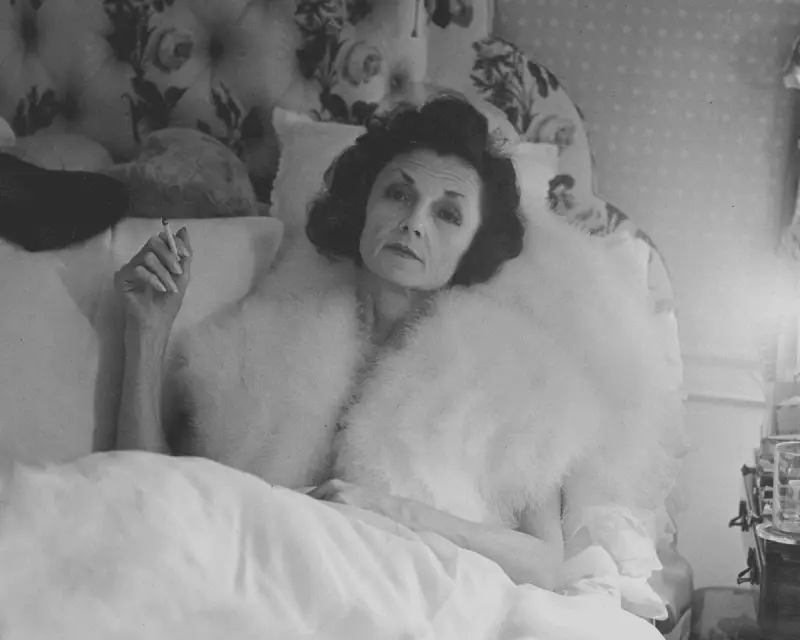
The exhibition includes some of her most challenging images, particularly her portraits of elderly widows. Mrs T Charlton Henry, photographed in 1965, appears almost mummified in her fine clothing, with Arbus emphasizing the dry skin beneath expensive jewellery. These images, like much of her work, refuse to offer comforting illusions, instead presenting what Arbus saw as the unvarnished truth of human existence.
Diane Arbus: Sanctum Sanctorum presents a challenging but essential opportunity to engage with one of photography's most distinctive voices. Her work continues to provoke, disturb, and fascinate in equal measure, offering a vision of humanity that remains as relevant today as when these photographs were first taken.