Konrad Mägi Exhibition at Dulwich Gallery Criticized as Expressionism Without Soul
A recent exhibition of early 20th-century Estonian painter Konrad Mägi at Dulwich Picture Gallery in London has drawn sharp criticism for what one reviewer describes as "expressionism without expression." The show, which runs from March 24 to July 12, features Mägi's colorful landscapes and portraits that echo modernist movements like pointillism and cubism but ultimately fail to deliver emotional impact or artistic significance.
Plodding Landscapes and Derivative Portraits
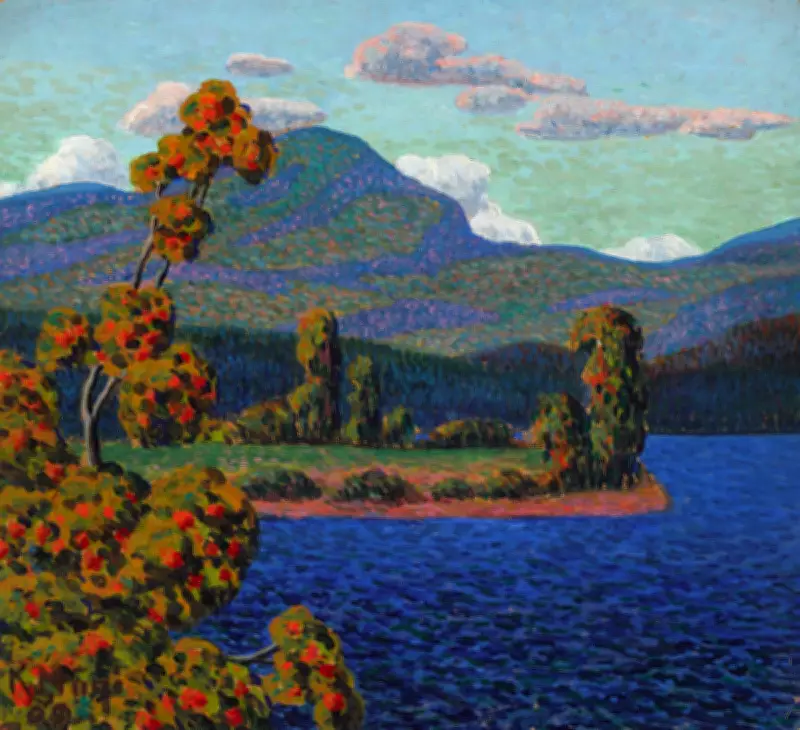
The exhibition begins with Mägi's early Norwegian landscapes from the 1900s, painted after his exposure to Parisian avant-garde ideas. Works like Norwegian Landscape display orange-brown bushes against violet hills in a style that the reviewer calls "bland and decorative." Compared to contemporaries like Edvard Munch, whose paintings brim with anxiety and terror, Mägi's pieces lack pathos and purpose, reducing expressionism to mere aesthetic exercise.
His portraits fare even worse, according to the critique. A room dedicated to these works features women with oddly similar faces and self-consciously bohemian men, painted with soft, vague cubistic patches that result in quirky but unremarkable images. Portrait of a Woman (1923-24) and other pieces hint at influences like Chaïm Soutine but are marred by a "banal, hesitant ordinariness" that grows uglier and more vulgar upon closer inspection.

Contrast with Dulwich's Permanent Collection
The reviewer notes a stark contrast between Mägi's works and Dulwich Picture Gallery's permanent collection, which includes masterpieces by Rembrandt, Rubens, and Anthony van Dyck. These older works, dealing with themes of sex, death, passion, and loss, are described as "moving and unforgettable" for their urgency and seriousness. For instance, van Dyck's portrait of Venetia Stanley, painted two days after her death, and Rembrandt's depiction of his son Titus offer emotional depth that Mägi's paintings conspicuously lack.
This disparity raises questions about the gallery's curatorial choices. Founded over 200 years ago to house a collection intended for the Polish royal family, Dulwich has historically focused on pre-1800 art. Its recent forays into 20th and 21st-century exhibitions, like Mägi's, seem aimed at showcasing modernity but fall flat when featuring artists deemed "minor and derivative."
Broader Critique of Modernism and Gallery Ethos
The review extends beyond Mägi to critique the broader modernist movement, acknowledging geniuses like Matisse and Picasso while lamenting followers and hacks. Mägi is placed in the latter category, accused of applying a "chic veneer" to safe, unenergetic paintings that drift into "vacuous idylls." His sunlit seashores and purple hills are described as lacking the vitality and historical awareness appropriate for art from 20th-century Europe, a period of unprecedented conflict.
This criticism ties into concerns about Dulwich Picture Gallery's evolving ethos. Once a serene space for contemplating Sir John Soane's melancholic architectural beauty, the gallery now features cafes and an adventure playground in its grounds. While these changes make it more accessible, the reviewer worries they "evade and even shun the high art" the gallery was founded to preserve. The Mägi exhibition is seen as a symptom of this shift, offering "decorative escapism" that wastes Soane's poetic interior.
In summary, the Konrad Mägi exhibition at Dulwich Picture Gallery is portrayed as a missed opportunity, showcasing works that are colorful but emotionally hollow. It prompts reflection on the gallery's direction and the importance of selecting exhibitions that resonate with both historical context and artistic integrity.