Gwen John Retrospective in Cardiff Reveals Artist's Spiritual Quest Through Solitude
A superb and mystical retrospective of Gwen John, now widely regarded as Wales's most significant modern artist, has opened at the National Museum in Cardiff. The exhibition, titled Strange Beauties, presents a compelling journey through John's artistic evolution, focusing not on biographical details but on her profound exploration of spiritual and austere existence.
Embracing the Essence of Inner Experience
From the moment visitors enter the show, they are immersed in John's world of solitude and contemplation. The exhibition features numerous works depicting women in moments of quiet reflection, often in sparse Parisian rooms or accompanied by cats. A notable series from around 1920 shows variants of a young woman in a blue dress with long dark hair, seated weakly in an armchair with a table nearby. Titles such as The Letter, The Seated Woman, and The Convalescent hint at themes of sorrow, illness, and recovery.
The brilliance of these paintings lies in their omission of anecdotal details that preoccupied many British artists of her generation. Instead of crowded scenes or decorative elements, John pares down her compositions to capture the essence of inner experience. Her early work, like Portrait of Mrs Atkinson from 1898, already demonstrates this approach, with its bleak portrayal of an elderly woman in Victorian black, set against precise but sombre backgrounds.

Intelligence and Decisiveness in Artistic Purification
John's artistic practice required enormous intelligence and decisiveness to achieve such purity. Her portraits, including those of her friend Dorelia from their first trip to France, are characterised by a mystical, pared-down aesthetic. This reflects John's great renunciation – her commitment to painting only what is essential.
Despite this austerity, John's work is not devoid of passion or desire. Her affair with Auguste Rodin, the world-famous sculptor for whom she modelled, is represented through studies and portraits that reveal emotional depth. Similarly, her Self-Portrait, Nude, Sketching from around 1908-9 shows her cool and unabashed, using nudity to symbolise freedom from social constraints.
Mysticism and Religious Inspiration
John's search for simplicity led her to Catholicism, and after moving to Meudon in the Paris suburbs in 1911, she began creating striking portraits of nuns. These works paradoxically highlight individuality within religious uniformity, with one portrait of Mother Marie Poussepin featuring the only smile in the exhibition.
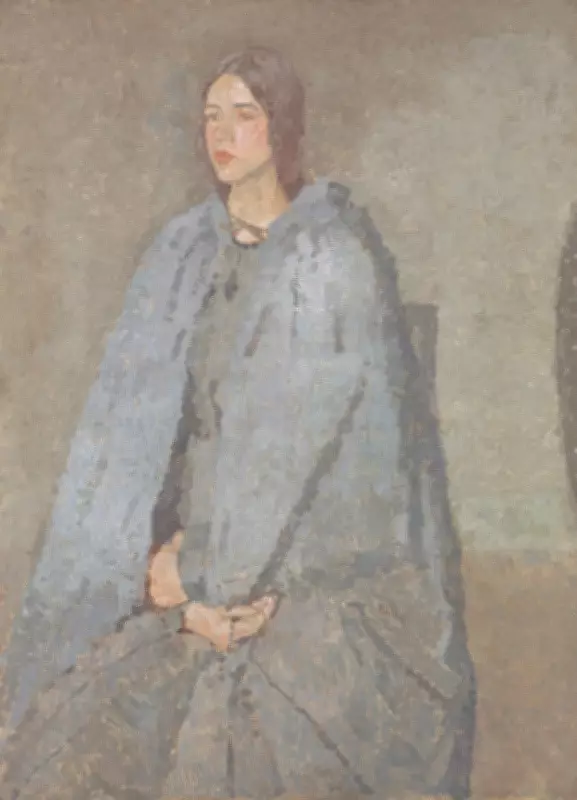
Her mysticism extends to symbolic use of colour, such as the blue often worn by her female subjects, representing purity and heaven in Christian art. In The Pilgrim, a woman meditates in a vast blue cape, evoking a sacred, solitary quest.
A Legacy of Emotional Power
The exhibition, which runs from 7 February to 28 June, features small-scale paintings in pale, almost spectral colours. Yet, despite their modest size, John's works carry immense emotional weight. As noted in a framed letter from 1935, where she expressed happiness at the museum acquiring one of her little paintings, her art proves that profound impact can come in subtle forms. This retrospective fully honours Gwen John as a pivotal figure in modern art, showcasing her unique ability to convey the glory of solitude through masterful restraint.