

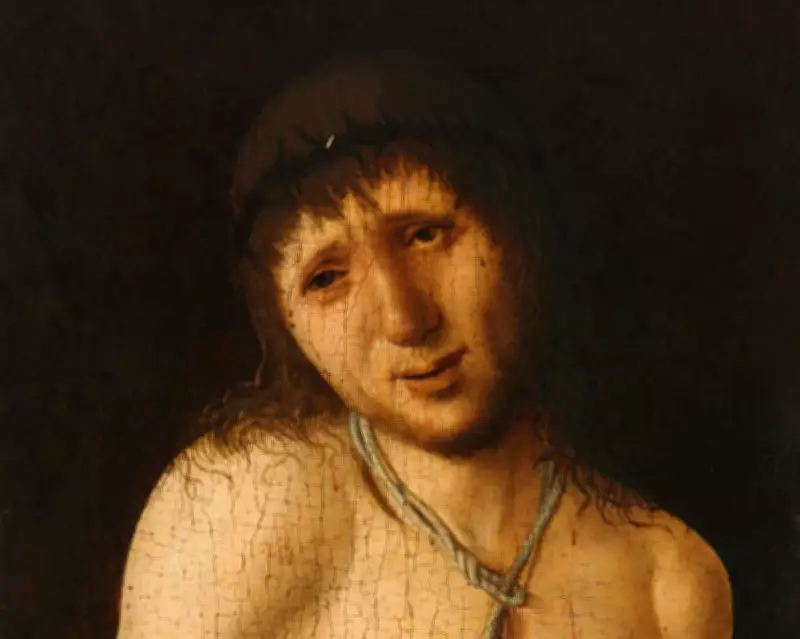
Italy's $14.9 Million Renaissance Acquisition Ignites Sicilian Homecoming Debate
In a landmark cultural acquisition, the Italian government has secured a rare Renaissance masterpiece at auction in New York, spending $14.9 million on Antonello da Messina's Ecce Homo. The 15th-century painting, sold at Sotheby's, represents an intensely human portrait of the suffering Christ, believed to have been completed around 1460. This significant purchase has now sparked a passionate debate about where this national treasure should ultimately reside.
The Earthquake That Erased Cultural Memory
On December 28, 1908, the Sicilian port city of Messina experienced what remains the deadliest natural catastrophe in modern European history. A devastating 7.1-magnitude earthquake struck for just 37 seconds, killing approximately half the population and leveling much of the historic center. Along with homes, churches, and monuments, invaluable historical documents and artworks were lost forever—including numerous works by Messina's greatest artistic son, Antonello da Messina.
Before this seismic catastrophe, Messina ranked among southern Italy's most important and dynamic cities. Curved around its natural sickle-shaped harbor, the city bore centuries of trade and cultural exchange. Elegant palazzos lined its streets, historic churches anchored neighborhoods, and theaters, convents, and civic buildings testified to a vibrant intellectual life. The earthquake not only claimed approximately 80,000 lives but stripped away much of the cultural memory that had made Messina a Mediterranean crossroads.

The Masterpiece and Its Creator
Antonello da Messina stands as one of the Renaissance's most influential artists, widely credited with transforming the course of Italian art. Many art historians attribute to him the introduction of oil painting techniques from Flemish art to Italy—an innovation that allowed Renaissance painters to achieve unprecedented softness, delicate glazes, and subtle facial shadings.
The recently acquired Ecce Homo represents a remarkably small panel painting measuring just 19.5 by 14 centimeters. Created in tempera and oil, the work features Christ crowned with thorns on one side and Saint Jerome against a rocky landscape on the reverse. Italian Culture Minister Alessandro Giuli has described the painting as "unique in the landscape of 15th-century Italian art" and a cornerstone in efforts to expand the national cultural heritage.
The Battle for the Painting's Home
As museums across Italy await the culture ministry's decision about where to display the masterpiece, a political tussle has erupted over whether Ecce Homo should return to Messina. Current frontrunners include Milan's Pinacoteca di Brera and Venice's Gallerie dell'Accademia—heavyweights of the Italian museum circuit. The decision might ultimately favor Naples's Museo di Capodimonte, whose southern setting would emphasize the Neapolitan dimension of the painter's legacy.
Strikingly absent from this shortlist is Messina itself—the city where Antonello was born and where many argue the painting's return would carry the greatest symbolic force. For local officials and cultural advocates, bringing the canvas home would represent an act of historical redress, partially restoring what catastrophe swept away over a century ago.
"Antonello is a son of Messina; he belongs to this land," declared Valentina Certo, an art historian and author. "Bringing this Ecce Homo back here would help stitch back together a fragment of the memory and historical identity of Messina—a city devastated by earthquakes in 1783 and 1908, when a large part of our heritage was lost."
Sicilian Frustration and Cultural Redress
On the island, frustration simmers over decisions traditionally made in Rome, long accused of neglecting Sicily's vast cultural wealth. Regional Democratic Party lawmaker Fabio Venezia has formally questioned the Sicilian government, urging officials to press for the painting's return. "Bringing the work back here would restore it to the historical and geographical context that produced it," Venezia argued. "To recover these works is to begin healing the wound of Sicily's scattered artistic heritage."

Sicily's regional culture assessor, Francesco Scarpinato, has confirmed opening discussions with the culture ministry, which holds final authority over the painting's placement. With fewer than 40 known surviving paintings by Antonello da Messina, each work carries extraordinary significance.
For cultural advocates, more than art hangs in the balance. Returning an Antonello masterpiece to Sicily would represent a quiet act of redress—a way of reclaiming, at least partially, what disaster and decades of perceived neglect have stripped away from the island's cultural identity. As Italy celebrates this major acquisition, the question of where this Renaissance treasure truly belongs continues to divide art historians, politicians, and cultural preservationists across the nation.





