World's Largest Light Installation Illuminates Albany's History and Culture
In the coastal town of Albany, Western Australia, the night sky has been transformed into a breathtaking canvas of light and color. Finnish artist Kari Kola has created "Lighting the Sound," a monumental light installation that spans more than 10 million square meters across King George Sound, making it the largest light installation ever staged on Earth. The spectacle runs for the next two weekends of March, casting beams across the landscape that may even be visible from space.
Rooted in Indigenous Heritage
The inspiration for this colossal artwork came from a humble source: the bloodroot plant, known as meearn by the Menang people. During an earlier visit to Whalers Cove on the Vancouver Peninsula, Menang man Larry Blight showed Kola the bloodroot, which has crimson flesh and a spicy flavor reminiscent of chili and onion. "Everything started from there," says Kola, who has illuminated landscapes from Ireland's Connemara mountains to Stonehenge in the UK.
Blight explains that the Menang people were named after this plant, with "Menang" meaning "those who eat the bloodroot." This connection to the land became the central storyline for Kola's installation, which aims to reflect the deep cultural heritage of the area.

A Spectacle of Light and History
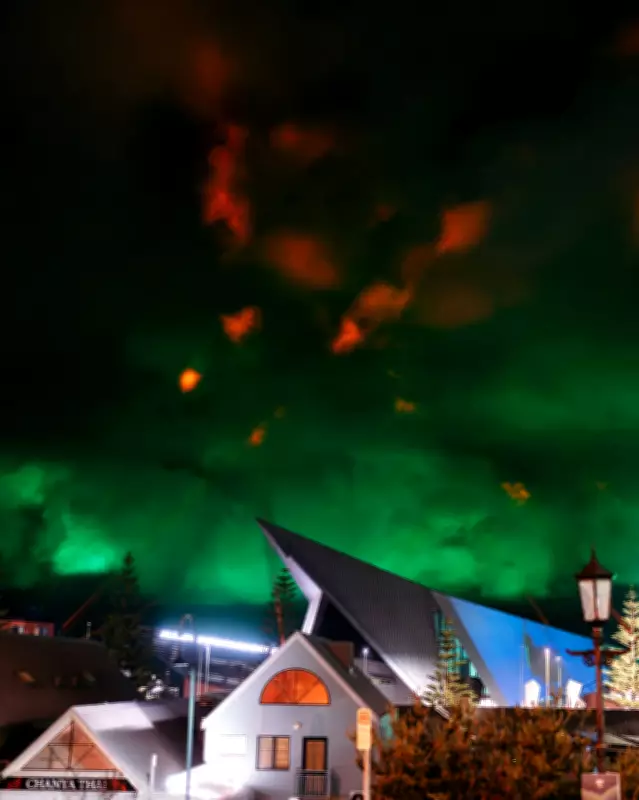
As the sun sets over King George Sound, the installation comes to life with green light rising into the sky, piercing the clouds and gathering into an aurora-like wash. Red shards follow, symbolizing the bloodroot leaping into the sky. "We are creating the red roots which connect the land and the cosmos," Kola says.
The location is rich with historical significance. Known to the Menang as Mamang Koort, or "heart of the whale," these waters have been a gathering place for over 45,000 years. In 1826, the British brig Amity arrived, establishing the first European settlement in Western Australia. The harbor later became a center for the whaling industry, which operated for more than 140 years, and was the departure point for thousands of Anzac troops during World War I. The tradition of the Anzac dawn service is believed to have begun here in 1923.
Community Collaboration and Technical Innovation
Realizing this vision required two years of consultation with Menang elders and the Albany community. Kola initially planned to illuminate the surrounding hills, but tests showed the landscape looked too small from a distance. Instead, he turned the sky into his canvas, using about 750 LED floodlights and 15 red "pencil beam" lights mounted on steel towers up to 20 meters high.
Menang elder Carol Pettersen emphasizes that the installation is about commemorating the past and celebrating the future. "We're choosing to use the word commemorate," she says. "It's about recognizing the past and celebrating the future." Pettersen hoped for clouds on the opening night, as Menang culture has long used firelight and clouds to tell stories, seeing images take shape in the sky.
A Reflection of Culture and Landscape
Kola believes his work does not impose something new on the landscape but reveals what is already there. "It's like a mirror reflecting the culture and the world," he says. The installation's scale is so vast that Kola has begun discussions with astronauts aboard the International Space Station about photographing it from orbit.
On the opening night, clouds gathered above the sound, catching the light beams and scattering them into shifting, luminous patterns. This natural element added depth to the spectacle, as if the harbor's many chapters of history were being painted across the sky.
"Lighting the Sound" continues at King George Sound in Albany on March 20–22 and March 27–29, offering a unique blend of art, history, and cultural reflection that lights up the Australian coast.