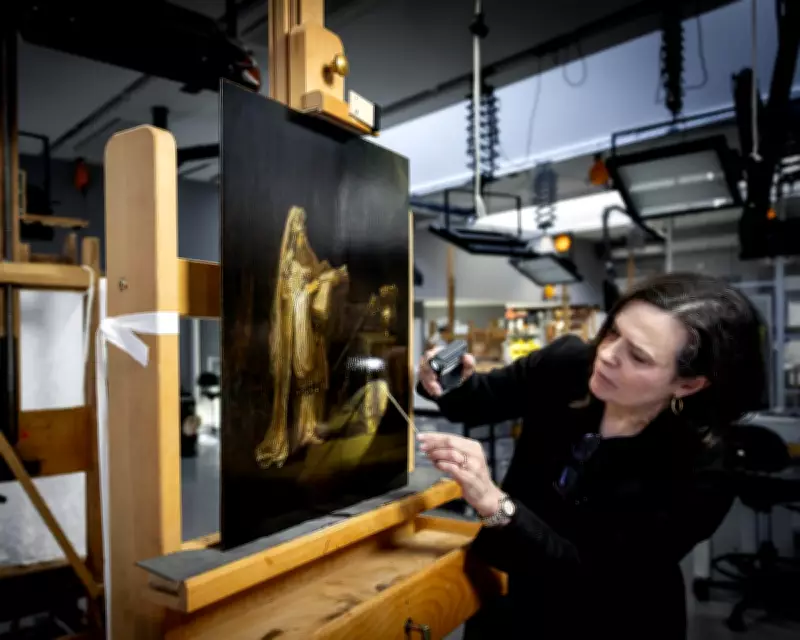
Rijksmuseum Authenticates Early Rembrandt Masterpiece After Hi-Tech Analysis
A 17th-century painting that hung unrecognized in a private home for decades has been revealed as an early work by Rembrandt, dramatically increasing its potential value from thousands to millions of pounds. The Rijksmuseum announced this groundbreaking discovery on Monday, attributing the biblical scene Vision of Zacharias in the Temple, dated 1633, to the Dutch master after two years of expert analysis and advanced scanning techniques.
From Workshop Attribution to Masterpiece Recognition
Since the 1960s, the painting had been credited to Rembrandt's "workshop," suggesting it was created by a lesser-known artist like Jan Lievens or Salomon Koninck. However, the Rijksmuseum's research, including macro X-ray fluorescence scans and pigment analysis, confirmed it as a genuine Rembrandt. Taco Dibbits, the museum's general director, described the moment of revelation: "It was really very dark, but after restoration, the gold seemed to burst off it—remarkable because he painted with yellow, not gold. This is classic Rembrandt."
The Story Behind the Discovery
The painting was inherited by a European couple from their father, who purchased it from Amsterdam art dealer P de Boer in 1961. Initially de-attributed in 1969 by scholar Horst Gerson based on low-resolution photos, it remained overlooked until the owners sought expert opinion. Jonathan Bikker, a curator at the Rijksmuseum, noted, "It was as if there was a grey veil over the painting. They didn't dare believe it could be a young Rembrandt." The couple joked about the large signature but were surprised by the authentication.

Artistic and Historical Significance
Vision of Zacharias in the Temple depicts the biblical tale of high priest Zechariah visited by the archangel Gabriel, foretelling the birth of John the Baptist. The painting shows only a bright light and the priest's disbelief, lacking an angel figure. This find adds to the Rijksmuseum's collection, which will now display 25 Rembrandts, the world's largest assemblage. While the museum declined to specify the painting's value, Rembrandt works typically fetch millions, compared to workshop pieces worth tens of thousands.
The rediscovery highlights the importance of direct examination over photographic analysis and showcases how technology can unveil hidden artistic truths, enriching our understanding of 17th-century Dutch art.