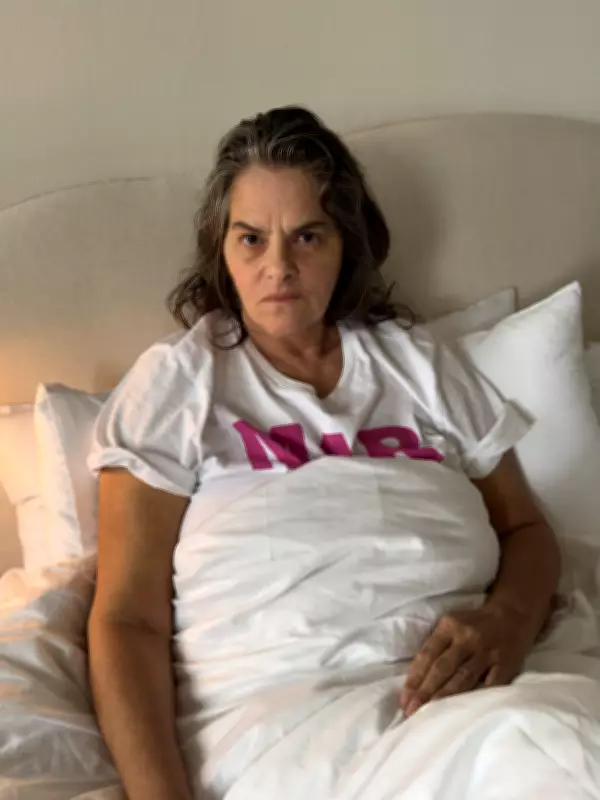
Tracey Emin: A Second Life in Margate
Tracey Emin, the renowned British artist, welcomes visitors into her Georgian home in Margate, where she now resides permanently. Known for scandalising the art world in the 1990s with works like My Bed, Emin has undergone a profound transformation following a brush with death from cancer. Her life today is marked by a surprising calmness, a stark contrast to her earlier turbulent years.
Surviving Cancer and Embracing Change
In 2020, Emin was diagnosed with squamous cell cancer, leading to extensive surgery that removed her bladder, uterus, lymph nodes, and parts of her vagina and bowel. She now lives with a urostomy, requiring a collection bag for urine, which she describes as a challenging daily reality. Life without a bladder is pretty heavy, she admits, detailing frequent infections and the constant need for medical supplies. Despite this, Emin feels fortunate, viewing her survival as a second chance at life.
This near-death experience spurred her to relocate to Margate, where she has established a philanthropic empire. She has set up an art school, affordable artist studios, and community projects, including a training kitchen for the unemployed. Her foundation aims to give back to her hometown, ensuring her legacy continues after her eventual death.

The Tate Modern Exhibition: A Second Life
Emin's upcoming exhibition at Tate Modern, titled Second Life, spans her 40-year career but is not a retrospective. It includes early works like My Major Retrospective 1963-93 and recent photographs of her post-operative body, juxtaposed with images from her youth. The show will feature My Bed, the controversial installation that caused an uproar in 1999, and films such as Why I Never Became A Dancer, which addresses themes of grooming and bullying.
Emin reflects on the sexist criticism she faced in the 1990s, noting that the world has since caught up with her radical honesty. She has pulled a version of the exhibition from the Guggenheim in New York due to space constraints, hinting at potential censorship of her abortion-related works. If I have a show in New York, it's got to be exactly as I want it to be, she asserts.
Political Views and Social Commentary
Emin, a lifelong Labour voter, expresses disdain for the far-right Reform party and its rhetoric on immigration. She warns of the dangers if Reform gains power, predicting a volcanic uprising in the arts. If the far right get in in this country, we are doomed, she states, advocating for education as a solution to poverty and lack of opportunity.
She also discusses her childhood in Margate, marked by poverty and trauma, including a rape at age 13. Emin emphasises the ongoing prevalence of sexual violence, criticising social media and AI tools that exploit women. Her advice to young people is to slow down and embrace traditional methods like diaries and letters.
Regrets and Reflections
When asked about regrets, Emin lists smoking and taking it up the wrong hole, a humorous reference to anal sex and metaphorical missteps. She regrets her B-list years in the mid-2000s, characterised by excessive partying and neglect of her art. Now, she focuses on painting, describing it as an explosive process where she drags her emotions onto the canvas.
Emin finds happiness in her sovereignty, enjoying her cats and the freedom to paint, teach, or walk on the beach as she pleases. I don't ever again in my life want someone saying, 'What time you coming home?' she declares, embracing a self-contained life dedicated to art.
Conclusion: A Renewed Purpose
Tracey Emin's journey from scandalous artist to national treasure is a testament to resilience and reinvention. Her second life in Margate is centred on art, philanthropy, and radical honesty, with the Tate Modern exhibition serving as a culmination of her career. She concludes, I realised: I could have my time back again, highlighting her newfound appreciation for life and creativity.