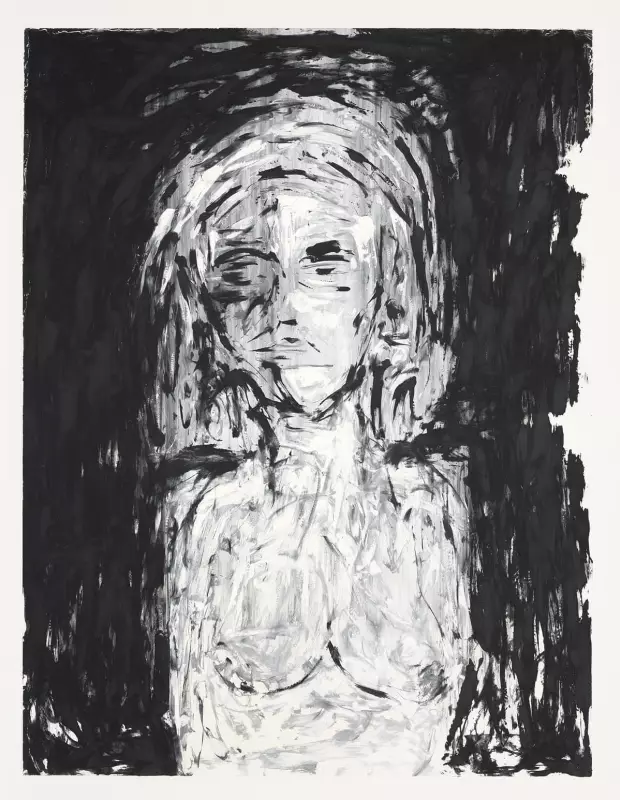
In the depths of a Kentish winter, Tracey Emin has masterminded a haunting and generous new exhibition that plunges visitors into an exploration of shadow, fear, and ultimately, hope. 'Crossing into Darkness' at the Carl Freedman Gallery in Margate is a carefully curated journey that places Emin's own artistic heroes shoulder-to-shoulder with the emerging talents she nurtures, all united under a canopy of deliberate gloom.
A Nocturnal Gathering of Artistic Giants
The experience begins with a striking manipulation of light. The gallery space is bathed in a nocturnal shadow, a lighting strategy that allows the artworks to emerge from the darkness like visions. The exhibition's eclectic mix spans painting, installation, and performance art, demonstrating a profound openness to diverse creative forms.
Emin sets the tone by including major figures from modern art alongside residents from her own Margate studios. The opening room is dominated by uneasy portraiture. Antony Gormley's concrete waistcoat, a hollow cast of his own body, suggests an absent presence. Nearby, Edvard Munch's 1895 self-portrait gazes out with a spectral intensity, his arm rendered like a skeleton's.

This dialogue between established and new continues powerfully. A resident artist, Joline Kwakkenbos, presents a striking work titled Self-Portrait as a Painter as Lucretia, while a wailing, stuffed head by Louise Bourgeois offers a visceral response to Munch's iconic Scream.
Gothic Horrors and Mythic Power
Some artists have embraced Emin's sombre theme with a blast of theatrical gothic. Lindsey Mendick's ceramic busts of zombie women, with glazed, festering sores, walk a fine line between horror and dark comedy. In contrast, painter Laura Footes, another graduate of Emin's studios, presents a large, serious allegory of power with a detail of a Francis Bacon-inspired screaming mouth that reveals her considerable skill.
The exhibition delves into myth and ritual. A relic from Hermann Nitsch's infamous 'Orgy-Mystery Theatre' performances—a board marked with sketchy lines and real blood—evokes ancient sacrifice. Close by, Anselm Kiefer's vitrine containing a hammer and anvil, titled Thor, vibrates with latent, mythic power. The fragmentation of reality is further explored in Georg Baselitz's 1967 painting Ein Werktätiger, where a woodcutter seems to disintegrate under his own axe.
Finding Light in the Depths
Yet darkness is not solely the province of gothic fantasy. Photographer Johnnie Shand Kydd captures an uncanny, quiet dread in misty Suffolk landscapes at dawn, their black-and-white stillness holding its own against more overtly dramatic works. The exhibition culminates with a piece by Gilbert & George that, Emin confesses, makes her think of the gates of hell, their faces twisted amid stark, black branches.
For Emin, this collective descent is deeply personal and universally resonant. She states the exhibition recognises the dark times we inhabit, while also offering solace drawn from her own experience with cancer: "I thought I would die but didn't." At the heart of the show, her large new painting I Am Protected depicts a woman curled on a bed with a cowled figure standing over her—a spooky yet comforting guardian.
Emin suggests that within darkness lies the seed of renewal, a concept known since ancient crowds gathered for the winter solstice at Stonehenge. 'Crossing into Darkness' posits that we must enter the night to discover a new dawn, a cycle we all experience daily. The exhibition is a potent reminder that our passing phantoms—the dreams and fears—can be transformative. The show runs at the Carl Freedman Gallery in Margate until 12 April.