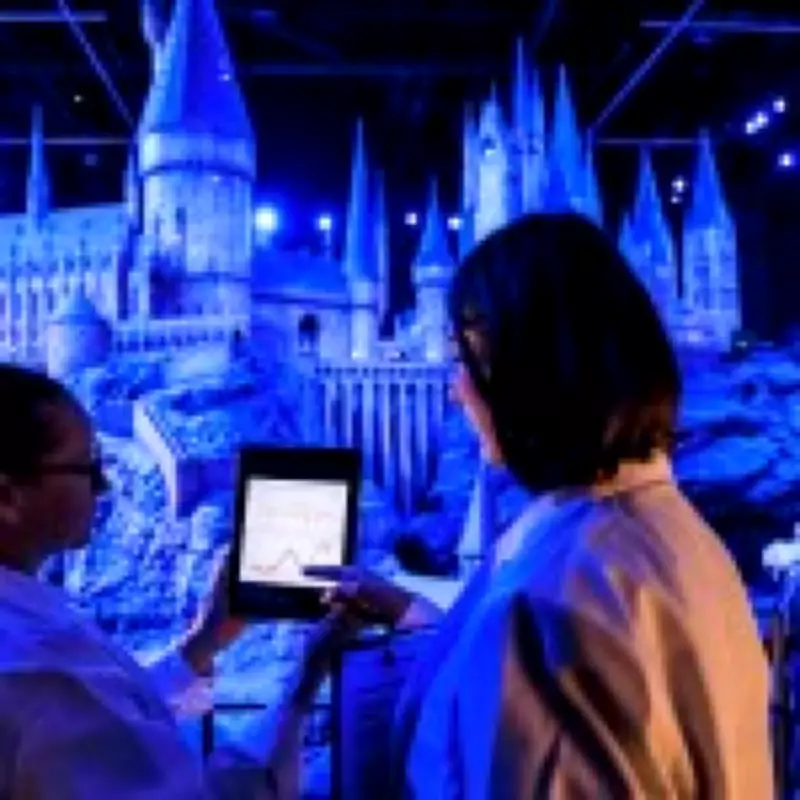
Scientists have finally decoded the mysterious phenomenon of goosebumps, revealing the complex emotional triggers behind this hair-raising sensation. A groundbreaking study conducted at Warner Bros. Studio Tour London – The Making of Harry Potter has uncovered that multiple emotions, not just one, can produce this familiar physical reaction.
The Immersive Research Environment
A team from i2 Media Research based at Goldsmiths, University of London, conducted their investigation within the immersive Harry Potter tour environment. Unlike previous studies that examined isolated clips in laboratory settings, this research took place in a rich, multi-layered real-world experience that combines spectacle, narrative, and culturally significant moments.
Professor Jonathan Freeman, who led the research, explained the significance of this approach: "The Studio Tour offers a particularly strong context for this kind of work, as it brings together spectacle, narrative, and culturally recognisable moments in a unique way that allows different emotional responses to emerge, accumulate, and overlap."

Measuring Physiological Responses
Researchers equipped participants with hand sensors to monitor physiological reactions including heart rate and skin conductance, known scientifically as Galvanic Skin Response (GSR). This technology measures subtle changes in sweat activity that indicate emotional arousal, making it ideal for identifying precise "goosebump moments."
Participants also rated their emotional intensity on a scale from one to five, allowing scientists to correlate subjective feelings with objective physiological data. This dual approach revealed exactly when and why goosebumps occurred during the tour experience.
The Emotional Triggers Revealed
The research discovered that up to seven different emotions can prompt goosebumps, with joy and nostalgia appearing most frequently and scoring highest for intensity at 90%. These findings challenge previous assumptions that goosebumps result from a single emotional state.
Some of the strongest reactions occurred at the Destroyed Gringotts exhibit, where a Ukrainian Ironbelly dragon wrecks the wizarding bank. This section produced the highest peak in skin conductance, with GSR spiking at 99% above baseline for one participant when the magical creature was revealed.
Multiple Emotions in Iconic Settings
The iconic Great Hall proved particularly emotionally rich, where visitors experienced awe, joy, nostalgia, and surprise simultaneously. This location demonstrated how multiple emotions can overlap and intensify the goosebump response.
Laura Sinclair-Lazell, head of show experience at Warner Bros. Studio Tour London, commented on the findings: "We love to see the wonder and awe when our visitors are transported behind-the-scenes of the filmmaking magic of the Harry Potter film series. It's fascinating to now understand, thanks to the research, that it has a real physiological effect as they explore the experience."
Broader Implications and Survey Results
A separate Warner Bros. survey found that the average person experiences approximately six goosebump moments annually, with 95% occurring during real-life experiences rather than media consumption. Multiple emotions contribute to these moments, including excitement (41%), surprise (35%), joy (31%), and nostalgia (21%).
Human connection emerged as a key factor, with more than a third (36%) of British respondents reporting goosebumps when encountering something fantastical. This explains why the Harry Potter tour, which recreates a magical world many discovered during childhood, has such a profound impact on visitors.
The research demonstrates that goosebumps can have lasting effects, serving as physical markers of significant emotional experiences. The study's findings provide new insights into how immersive cultural experiences trigger complex physiological responses that bridge memory, emotion, and physical sensation.