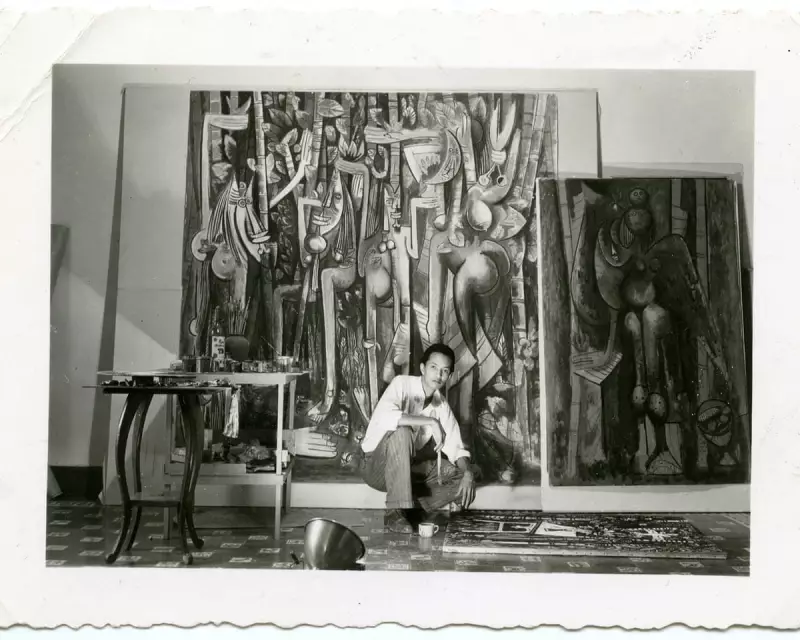
The Museum of Modern Art in New York is preparing to unveil the most comprehensive North American exhibition of Wifredo Lam's work in decades, offering a fresh perspective on the Cuban master who transformed 20th-century art. Opening in February 2025, 'Wifredo Lam: The Transatlantic Modern' promises to reintroduce audiences to an artist whose unique visual language bridged continents and cultures.
A Revolutionary Visionary
Lam emerged as one of modern art's most distinctive voices, creating what curators describe as a 'decolonial modernism' that challenged Western art traditions. His work represents a powerful fusion of European avant-garde techniques with the rich spiritual traditions of the African diaspora in the Caribbean.
Having studied in Madrid and worked alongside Picasso in Paris, Lam absorbed European modernism only to transform it through his unique cultural perspective. The exhibition traces this remarkable journey, showing how he developed a visual vocabulary that was both globally aware and deeply rooted in his Cuban heritage.

The Masterpiece That Redefined Modern Art
At the heart of the exhibition sits Lam's monumental 1943 painting 'The Jungle' (La Jungla), which MoMA acquired back in 1945. This iconic work features hybrid figures—part human, part animal, part plant—emerging from sugarcane stalks, creating what one curator calls 'a counter-image to the colonial fantasy of the tropical paradise.'
The painting's complex symbolism reflects Lam's engagement with Santería and other Afro-Caribbean traditions, while its visual intensity demonstrates his mastery of European modernism. It remains a powerful statement about identity, resistance, and cultural synthesis.
Rediscovering a Neglected Master
Despite his significance, Lam has often been marginalised in mainstream art history. This exhibition aims to correct that oversight, presenting him not as a peripheral figure but as a central protagonist in the story of modern art.
The show features nearly 200 works, including paintings, drawings, and prints drawn from collections across Europe, North America, and Cuba. Many pieces have rarely been seen in the United States, offering visitors a unique opportunity to experience the full scope of Lam's revolutionary vision.
Key Exhibition Highlights:
- Rare early works from Lam's Spanish period
- Photographs and correspondence documenting his friendships with Picasso, Breton, and other avant-garde figures
- Previously unseen studies for major compositions
- Late works showing his continued artistic evolution
The exhibition arrives at a moment when museums are reconsidering the canon of modern art, making Lam's fusion of diverse cultural traditions particularly relevant to contemporary discussions about identity and global modernisms.
As one curator noted, 'Lam doesn't fit neatly into the categories we're used to—he was both insider and outsider, both European-trained and Caribbean-rooted. That's exactly what makes him so important today.'