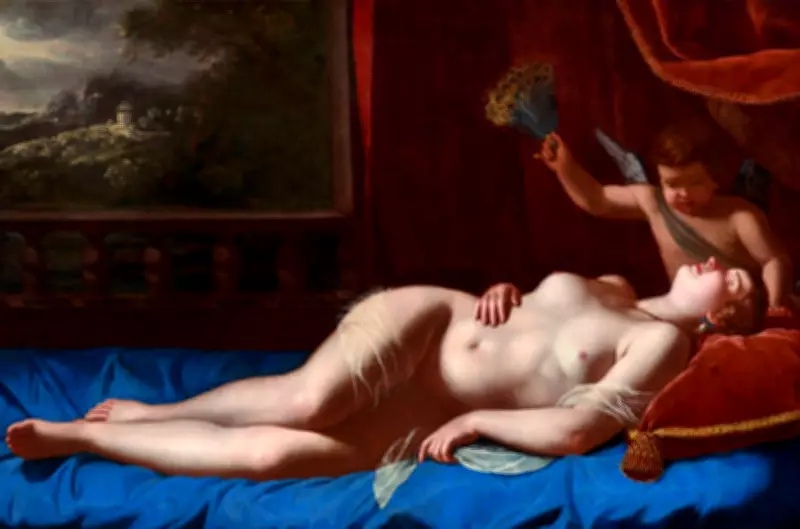
Women Artists Redefine the Female Nude: A Rejection of the Male Gaze
For centuries, the female nude in Western art has been dominated by male artists, from Titian and Botticelli to Picasso and De Kooning, often objectifying women as idealized muses. However, a powerful counter-narrative has emerged, with female artists like Artemisia Gentileschi, Yoko Ono, and Frida Kahlo reclaiming their bodies through self-portraiture and art. This movement challenges the traditional male gaze and explores the unvarnished truth of female experience.
The Historical Struggle for Female Representation
Historically, women artists faced significant barriers, including limited access to nude models, forcing many to use their own bodies as subjects. This act was often met with outrage or dismissal, as seen with Carolee Schneemann's 1975 performance piece Interior Scroll, where she read a manifesto while nude, questioning what it means for a woman to be both artist and model. Similarly, Amrita Sher-Gil was expelled from school for wanting to paint nudes, later creating works like Self-Portrait As a Tahitian to critique colonial male perspectives.
Self-Portraiture as a Political Act
When female artists take authority over depictions of their nudity, it becomes inherently political, threatening the status quo. Gwen John's 1909 nude self-sketch, made during her affair with Auguste Rodin, shows her free from the male gaze, while Paula Modersohn-Becker's 1906 self-portrait is often cited as the first of its kind. These works expand beyond mere representation to address themes like aging, motherhood, disability, and race.

Influence on Literature and Culture
This artistic revolution is vividly captured in Rhiannon Lucy Cosslett's novel Female, Nude, which weaves these artists into its plot. The story follows painter Sophie, who engages with female artists through imagined conversations, exploring their inner worlds. As Sophie reflects while viewing Artemisia Gentileschi's Susanna and the Elders, "Only a woman could have made this." The novel highlights how artists like Emma Amos, with works such as Work Suit, use satire to critique the whiteness and maleness of the art canon.
Diverse Perspectives and Modern Interpretations
From photographers like Francesca Woodman, who captures the strangeness of inhabiting a young woman's body, to Suzanne Valadon's frank self-portraits, these artists reinvent the female nude. They move beyond refuting the male gaze to engage with what it means to create art in a body that is also the subject. Whether through Tracey Emin's exploration of sexual desire or Zanele Muholi's focus on fluidity, these contributions redefine art history.
In summary, female artists have not only expanded the definition of the female nude but have transformed it into a tool for personal and political expression, ensuring their voices are heard in galleries and beyond.