Zanele Muholi Honored with 2026 Hasselblad Award, Dedicates Win to Marginalized Communities
South African visual artist Zanele Muholi has been named the recipient of the prestigious 2026 Hasselblad award, cementing their status among the world's elite photographers. The non-binary artist, renowned for three decades of transformative work in African art, views this accolade not as a personal victory but as a collective triumph for under-represented groups still grappling with apartheid's legacy.
A Recognition Rooted in Community and Resistance
Muholi, born in 1972 in Umlazi township during apartheid's bloodiest era, rejects the notion of "winning," emphasizing instead the award's significance as recognition for often-overlooked visual storytellers. "This is an honor for our people, for the Black LGBTQIA+ community from home – it's for all of us, the queer and trans community in Africa," they stated. Their career has been defined by collaboration and empowerment, working alongside communities to document, educate, and heal.
The artist's early memories are marked by systemic inequality: a mother who worked as a domestic servant for white families, segregated beaches, and educational barriers under Bantu education. Muholi deliberately describes their background as "under-resourced" rather than "poor," highlighting structural injustices while celebrating the resilience and support of township networks that shaped their artistic vision.

Photography as Activism and Archival Justice
Muholi's seminal series, Faces and Phases, meticulously portraits queer community professionals, ensuring subjects are named and portrayed with dignity—a direct challenge to historical anthropological photography that often anonymized African subjects. "I'm trying to fix that and make sure that we are done beautifully in the most amazing way," they explained.
In 2007, Muholi photographed Miss D'Vine, a Johannesburg drag performer, outdoors to "undo the closet" and affirm visibility. One powerful image features Miss D'Vine wearing a beaded isigege, a Zulu maiden's skirt traditionally excluded from trans participation, reclaiming cultural rituals.
A 2012 burglary in Cape Town saw over 20 hard drives of Muholi's work stolen, with evidence suggesting homophobic motives. Undeterred, Muholi declared, "We are a growing nation. There is a struggle that needs to be fought here," reaffirming their duty to continue creating.
Self-Portraiture and Cultural Reclamation
The series Somnyama Ngonyama ("Hail the Dark Lioness" in isiZulu) features striking self-portraits inspired by Muholi's mother, using everyday objects like combs, clothes pegs, and bicycle tires as bold attire. These works interrogate Western beauty standards, asserting that "what is fashion in the west might be ritual to us."
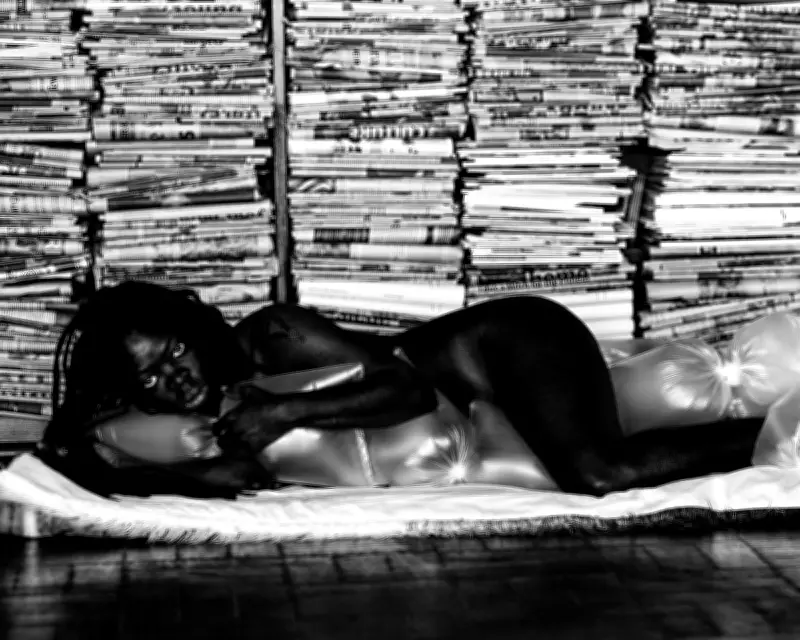
In "Julile" ("the one who thinks deeply"), Muholi lies nude amidst plastic bags and newspapers, reflecting on fibroid surgery and the intersection of illness, trauma, and identity. Another piece, Ntozakhe II, reimagines the Statue of Liberty with a jeans headdress, celebrating Black women's iconic representation.
Muholi's camera serves as both weapon and responsibility, aiming "to change whatever is unjust towards our bodies, ourselves." Their work, including a celebrated Tate Modern survey, continues to challenge narratives and uplift marginalized voices.
The Hasselblad award exhibition will open at the Hasselblad Center in Gothenburg on October 10, 2026, showcasing Muholi's enduring legacy in visual activism.