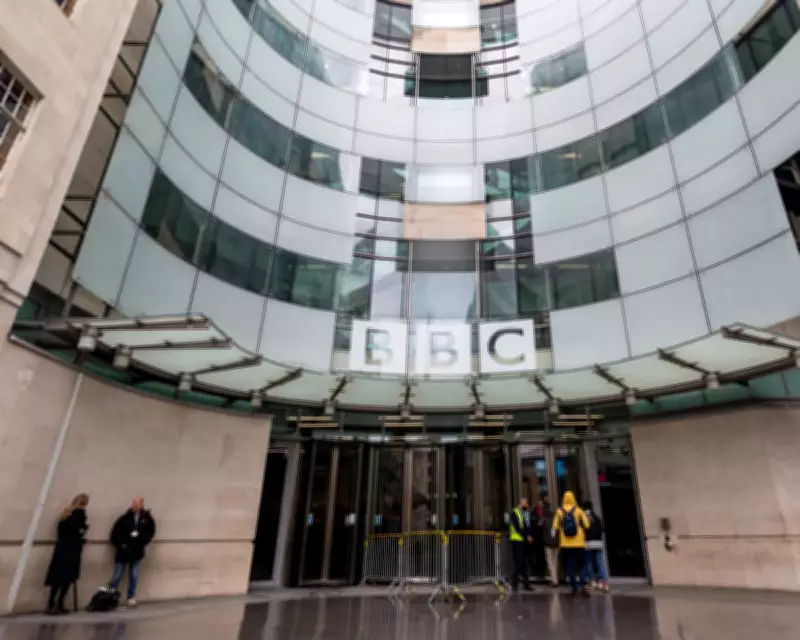
BBC Funding Crisis Sparks Heated Debate Over Licence Fee Future
In response to Polly Toynbee's recent article defending the BBC, readers have penned letters expressing deep concerns about the broadcaster's funding model, with many calling for urgent reforms to prevent its collapse. The debate highlights a growing divide over whether the current TV licence fee system remains viable in an era of streaming services and declining household compliance.
Licence Fee Under Fire as Outdated and Unjust
Hugh Sheppard from Odiham, Hampshire, argues that the BBC's reliance on the TV licence fee is fundamentally flawed. With hundreds of channels now available from broadcast and streaming platforms, he contends that forcing households to pay for BBC services is both outmoded and unfair. Sheppard points to alarming statistics: in 2024-25, 12.5% of households do not hold a licence, contributing to a 30% loss in BBC funding. This trend, he warns, is pushing the broadcaster to the brink of financial ruin.
Sheppard criticises the BBC's recent public consultation, which mentioned reforming the fee but explicitly ruled out replacing it with general taxation. He questions whether this stance reflects a closed mindset, especially given that fee collection is outsourced to Capita—a practice he deems "plain wrong." He emphasises the injustice of requiring viewers of channels like GB News to fund the BBC, suggesting a need for a more equitable approach.

Proposal: Integrate BBC Funding into Council Tax
Sheppard proposes a radical solution: treat access to the BBC's publicly owned services as a national right, similar to police and fire rescue services, which are part-funded through council tax. He argues that this method, recognised as progressive and hypothecated taxation, is both fair and familiar, despite costing over twice as much as the current licence fee on average. Addressing concerns about editorial independence, Sheppard notes that the BBC chairman, board members, and licence fee are already government-decided, with policies enforced by Ofcom. He believes council tax integration would not compromise independence and would align with the liability of 26.3 million households, matching Office for National Statistics data for fairness.
Drawing inspiration from Switzerland, where a national broadcast levy is compulsory for all households regardless of consumption, Sheppard advocates for a similar system in the UK to ensure sustainable funding.
Defending the Licence Fee as Value for Money
In contrast, Michael Thorn from Helston, Cornwall, defends the TV licence fee as exceptional value. At just £15 per month, he argues it provides unparalleled benefits, including advertisement-free TV and radio output, support for UK classical music through BBC orchestras and the Proms, and soft power via the World Service. Thorn highlights the government's strategic gain from this soft diplomacy and population connectivity, framing the fee not as a cost but as a vital investment. He asserts that no commercial broadcaster could match this quality and range at such a low price, making the BBC a unique asset in the media landscape.
Alternative Model: Charitable Status for the BBC
William Ward from London offers another perspective, suggesting that much of the BBC's work could be classified as charitable under statutory definitions. By becoming a charity regulated by the Charity Commission, he believes political involvement would be removed, shielding the broadcaster from threats and interference during charter renewals. While funding would need reassessment, Ward argues this model would protect the BBC from party-political pressures, ensuring its long-term stability and independence.
Conclusion: A Crossroads for Public Broadcasting
The letters collectively underscore a critical juncture for the BBC. As funding declines and public compliance wanes, the broadcaster faces mounting pressure to adapt. Whether through council tax integration, charitable restructuring, or maintaining the current fee, the debate reflects broader questions about the role of public media in a digital age. With the Guardian inviting further reader opinions, this conversation is set to continue, shaping the future of one of the UK's most iconic institutions.