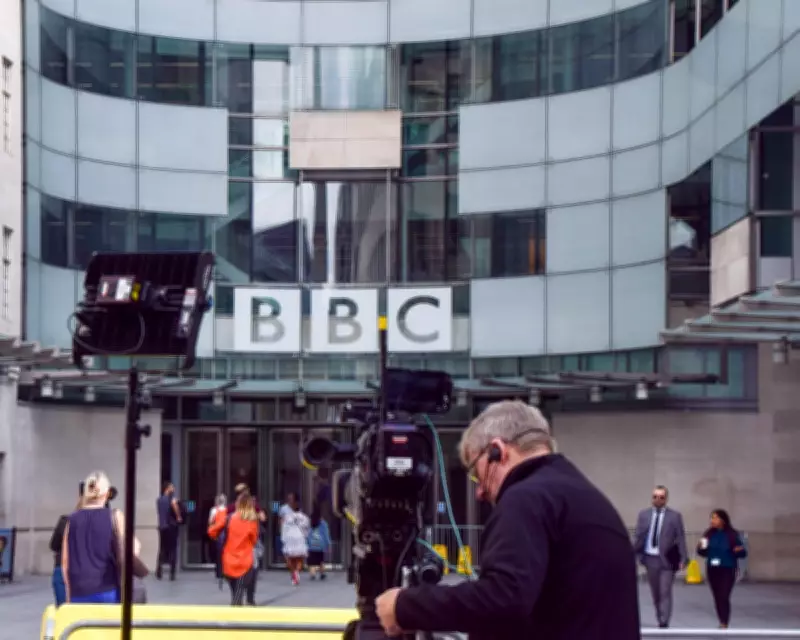
BBC Faces Critical Moment as Charter Consultation Deadline Looms
The future of Britain's national broadcaster hangs in the balance as the public consultation on BBC charter renewal approaches its closing date next week. All supporters of public service broadcasting are urged to submit their responses before the March 10 deadline, as political forces opposed to the BBC mobilize to undermine its existence.
Trusted Journalism in an Age of Disinformation
As global conflicts escalate and misinformation proliferates, the BBC's role as a trusted news source has never been more vital. The broadcaster's experienced correspondents, including Jeremy Bowen, Sarah Smith, Lyse Doucet, Orla Guerin, and Clive Myrie, provide reliable reporting that few other organizations can match. Culture Secretary Lisa Nandy recently praised the BBC World Service as "the light on the hill" in a world increasingly dominated by what she termed "flexible fictitious facts."
The current information landscape presents unprecedented challenges, with digital platforms controlled by a handful of billionaires prioritizing engagement over truth. Authoritarian states wage sophisticated information wars against democratic nations, making independent public broadcasting more essential than ever for maintaining informed societies.

Political Threats and Institutional Pressure
Although the BBC's charter doesn't expire until December 2027, the current consultation represents a crucial battleground. The broadcaster faces sustained attacks from right-wing political factions and media outlets that seek its radical restructuring or even abolition. These opponents have weaponized minor errors in the BBC's vast output to undermine public confidence, most recently forcing director general Tim Davie's resignation over an editing issue in a Panorama segment.
The timing of this consultation coincides with a rare period of Labour governance, potentially offering the BBC protection from the most extreme dismantling proposals advocated by Conservative and Reform party elements. However, the broadcaster remains vulnerable to political pressure, particularly through government-appointed board members who have amplified manufactured controversies.
Navigating the Complex Consultation Process
The Department for Culture, Media and Sport has published a lengthy and often confusing questionnaire that presents challenges for BBC supporters. Several questions appear designed to elicit responses that could weaken the broadcaster's position:
- "How, if at all, does the amount those working for the BBC are paid impact your view of the BBC?" This question reflects ongoing attacks on BBC salaries, despite compensation being below industry standards for many positions.
- "Would you be willing to pay for a BBC top-up subscription service focused on premium and entertainment content?" While some might voluntarily pay more than the current £3.36 weekly fee, a two-tier system would break the universal principle that all license payers receive equal access.
- "To what extent do you agree or disagree that BBC content or services should carry advertising?" Introducing advertisements would not only compromise the viewing experience but could devastate commercial broadcasters by fragmenting the limited advertising market.
Funding Challenges and Future Sustainability
The BBC has suffered a 30% reduction in funding during Conservative governance, severely limiting its capacity to innovate and maintain quality programming. The license fee system, while imperfect, remains superior to alternative funding models proposed thus far. Questions about financial concessions for struggling households must be answered carefully, ensuring any support mechanisms don't become another financial burden shifted onto the broadcaster.
Culture Secretary Nandy's introduction to the consultation expresses a vision for "a BBC that is trusted, loved and belongs to us all, providing those shared spaces and places that have become so rare and so precious in recent decades." This sentiment underscores the cultural importance of maintaining a robust public broadcaster.

A Call to Action for Broadcasting's Future
Pro-public service campaign group British Broadcasting Challenge has developed suggested responses to help navigate the consultation's technical questions. Supporters are encouraged to engage with the process to counter well-organized opposition campaigns that seek to diminish the BBC's role and resources.
The fundamental question remains whether Britain will continue to value and invest in independent public broadcasting. As the consultation deadline approaches, the coming days may determine whether the BBC can fulfill its potential as a cornerstone of democratic society and cultural life for years to come.