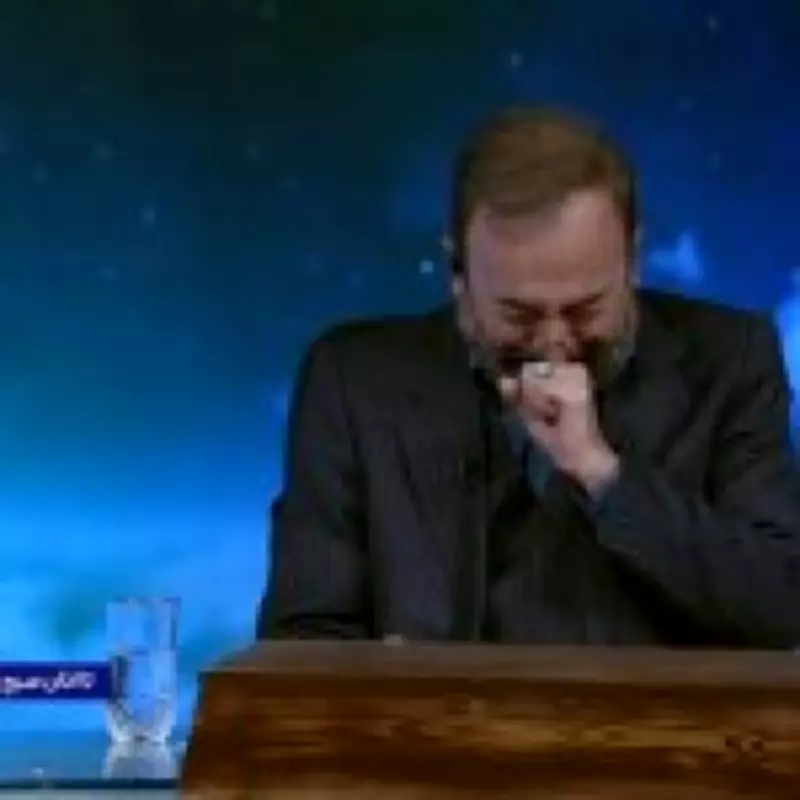
An Iranian state television anchor delivered a tearful on-air announcement confirming the death of Supreme Leader Ayatollah Ali Khamenei, following coordinated airstrikes by the United States and Israel targeting Tehran. The emotional broadcast, which occurred during the holy month of Ramadan, has sent shockwaves through Iran and the international community.
Emotional On-Air Announcement
Reading from an official statement issued by the National Supreme Council, the presenter began with the words, "God is great. God is great." He then declared, "With deep sorrow, it is announced to the nation of Iran that Grand Ayatollah Ali Khamenei, Supreme Leader of the Islamic Revolution, was martyred today in a joint criminal attack by the United States and the Zionist regime."
As he continued, his voice faltered, and he became visibly emotional, covering his mouth with his hand and lowering his head in an attempt to compose himself. Off-camera, others could be heard crying, adding to the somber atmosphere of the broadcast.

Details of the Attack
Iranian state media confirmed early Sunday that Khamenei, aged 86, was killed in airstrikes targeting his compound in Tehran. According to the semi-official Tasnim news agency, he died in his office at home during the attack. Satellite images showed smoke rising from the site, and officials reported that his body was found under the rubble.
The statement described Khamenei as a revered Islamic figure whose "long dream of martyrdom became true." It also noted that four members of his family and two senior military commanders were killed in the strikes. His wife, Khojasteh Bagherzadeh, and several of his children and grandchildren were believed to have been at the compound at the time.
Political and Social Fallout
The Iranian government announced a 40-day mourning period and declared a seven-day national holiday. The on-air statement warned that while Iranians mourn, "martyrdom will spark a massive uprising in the fight against oppressors."
US President Donald Trump had announced Khamenei's death hours earlier in a post on Truth Social, calling him "one of the most evil people in History." Trump urged the people of Iran to "rise up," with Israeli Prime Minister Benjamin Netanyahu echoing similar sentiments, encouraging them "to flood the streets and finish the job."
Initial Denials and Confirmation
Iranian officials initially dismissed reports of Khamenei's death as psychological warfare but later confirmed it as further strikes were reported across the country. Crowds gathered overnight in parts of Tehran and other cities, with some mourning and others celebrating the end of his nearly four-decade rule.
Khamenei had served as Iran's supreme leader since 1989, becoming a central figure in the country's political and religious establishment. His death marks a significant moment for the Islamic Republic as the conflict with the United States and Israel continues to escalate.
Uncertain Emotions and Broader Impact
It remains unclear whether the anchor's tears were solely in mourning, or if they reflected fear of continued strikes, relief at the end of an authoritarian regime, or a mixture of these emotions. The broadcast has highlighted the deep divisions and tensions within Iran amid ongoing geopolitical strife.
This event underscores the volatile nature of Middle Eastern politics and the potential for further instability in the region. As Iran enters a period of mourning, the world watches closely to see how the nation will respond to this pivotal moment in its history.