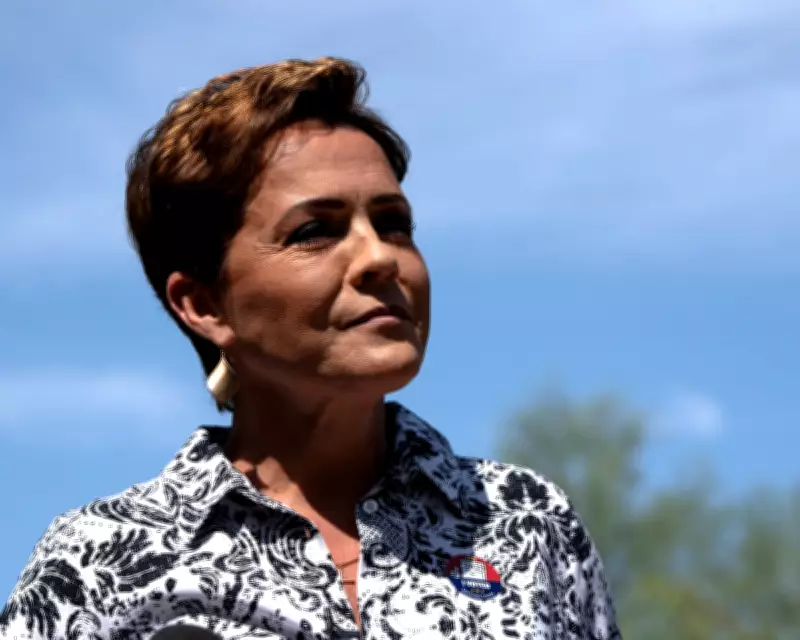
Kari Lake's Potential Role at Voice of America Ignites Controversy
Kari Lake, the former Republican candidate for governor of Arizona, is reportedly under consideration for a significant position at Voice of America (VOA), the US government-funded international broadcaster. This development has sparked intense debate among media analysts, political observers, and advocates for journalistic integrity, who fear that her appointment could undermine the agency's long-standing commitment to impartial reporting.
Background and Political Context
Kari Lake gained national prominence during her 2022 gubernatorial campaign in Arizona, where she embraced a staunchly conservative platform and echoed former President Donald Trump's claims of election fraud. Despite losing the race, she has remained a vocal figure in Republican politics, frequently criticizing mainstream media and promoting alternative narratives. Her potential move to VOA, which operates under the US Agency for Global Media (USAGM), raises questions about the intersection of political agendas and public broadcasting.
Voice of America was established in 1942 to provide news and information to audiences worldwide, with a mandate to offer accurate and objective journalism. Historically, it has aimed to represent American values without direct government interference, though it is funded by Congress. Critics argue that appointing a politically charged figure like Lake could compromise this mission, potentially turning VOA into a tool for partisan messaging rather than a trusted source of news.

Concerns Over Media Independence
Media watchdogs and former VOA employees have expressed alarm over the possibility of Lake's appointment. They point to her history of promoting conspiracy theories and attacking journalists as evidence that she may not uphold the broadcaster's standards of fairness and accuracy. There is a growing fear that her influence could lead to biased reporting, eroding VOA's credibility in international markets where it competes with state-controlled media from countries like China and Russia.
Proponents of the move, however, suggest that Lake's outsider perspective could bring fresh energy to the agency and help it connect with conservative audiences both domestically and abroad. They argue that VOA has sometimes been perceived as leaning left, and a balance might be necessary to reflect diverse viewpoints. Nonetheless, the debate highlights a broader tension in US media: how to maintain independence while navigating political pressures.
Implications for US Soft Power
The controversy surrounding Kari Lake's potential role extends beyond domestic politics to impact US soft power on the global stage. Voice of America serves as a key instrument of American diplomacy, broadcasting in over 40 languages to an estimated audience of 280 million people weekly. Any perception of politicization could weaken its effectiveness, undermining efforts to counter disinformation from adversarial nations.
Experts warn that if VOA is seen as a mouthpiece for a particular political faction, it risks losing trust among international listeners, who may turn to alternative sources for news. This could diminish the United States' ability to promote democratic values and factual reporting worldwide, at a time when misinformation is rampant.
Looking Ahead
As discussions about Kari Lake's appointment continue, stakeholders are calling for transparency in the selection process. Many advocate for safeguards to protect VOA's editorial independence, such as clear guidelines on political neutrality and oversight from bipartisan committees. The outcome of this situation will likely set a precedent for how US-funded media agencies balance political appointments with journalistic integrity.
In conclusion, the potential appointment of Kari Lake to Voice of America has ignited a crucial conversation about the future of public broadcasting in the United States. While it presents an opportunity to reassess and reinforce commitments to unbiased reporting, it also poses significant risks if not handled with care. The decisions made in the coming months could have lasting effects on both domestic media landscapes and international perceptions of American democracy.