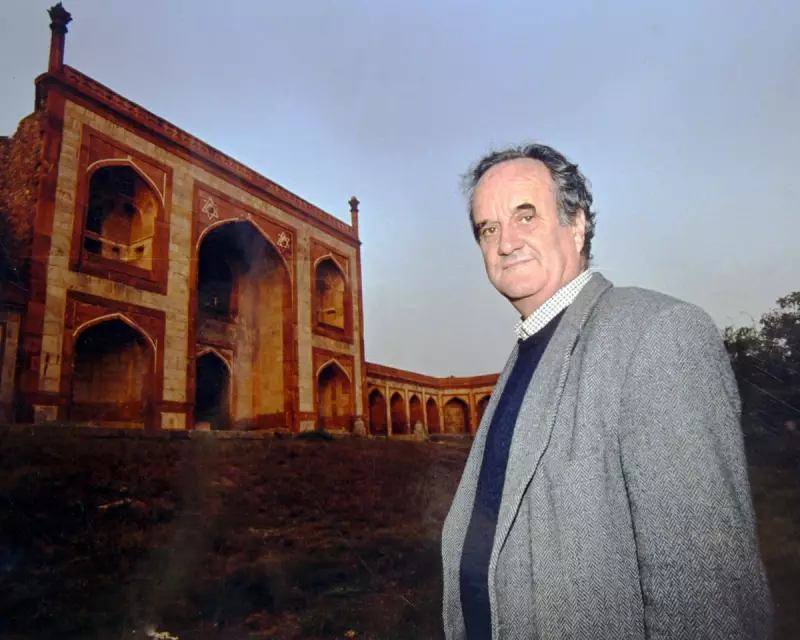
Sir Mark Tully: The Enduring Legacy of the BBC's Voice of India
The passing of Sir Mark Tully at the age of 90 marks the end of an era in international journalism. For over two decades, from 1972 to 1993, Tully served as the BBC's Delhi bureau chief, becoming synonymous with authoritative reporting from the Indian subcontinent. His profound understanding of the region's complex politics and his sensitive approach to storytelling earned him unparalleled respect among the Indian public, who regarded him not merely as a foreign correspondent but as a cherished public figure.
A Career Defined by Tumultuous Events
Tully's reporting career coincided with some of India's most significant historical moments. In 1984 alone, he provided crucial coverage of three major events: the devastating Bhopal industrial disaster, the dramatic siege of the Golden Temple in Amritsar, and the shocking assassination of Prime Minister Indira Gandhi. His ability to navigate these combustible situations with deep cultural insight set his journalism apart.
Even after stepping down as South Asia correspondent in 1994, Tully's influence remained substantial. As recently as 2017, while producing a BBC World Service documentary commemorating the 70th anniversary of partition, he found himself unable to walk down Indian streets without admirers approaching to shake his hand. This enduring popularity testified to the lasting impact of his work.

From Theology to Journalism
Born in Kolkata in 1935 to British parents, Tully's connection to India began at birth. After being sent to the UK for education at Twyford School, Marlborough College, and Trinity Hall, Cambridge, where he studied theology with initial aspirations toward priesthood, he returned to India in 1965. He joined the BBC in an administrative capacity before becoming a talks writer with the Eastern Service in 1969.
His spiritual curiosity, nurtured by India's diverse religious landscape, profoundly influenced his work. From 1995 to 2019, he hosted Radio 4's Something Understood, exploring life's meaning through poetry, prose, and music. "I still cling to Christianity and identify myself as Christian," he told Radio Times in 2019, "but living in India with so many religions around me, I no longer believe that Christianity is the only way to God."
Literary Contributions and Controversial Departure
Beyond broadcasting, Tully authored numerous books that deepened Western understanding of India. His first, Amritsar: Mrs Gandhi's Last Battle (1985), co-written with Satish Jacob, examined the Golden Temple siege. Subsequent works included No Full Stops in India (1991), India in Slow Motion (2002), and India: The Road Ahead (2011).
His departure from the BBC in 1994 followed controversy after he publicly criticized then director-general John Birt for "turning the BBC into a secretive monolith." The ensuing contractual disputes led to his resignation, though he continued contributing to BBC programming while maintaining his Delhi residence.
Recognition and Personal Life
Tully received numerous honours, including a knighthood in 2002 and two of India's highest civilian awards: the Padma Shri and Padma Bhushan. He married Margaret Butler in 1960, with whom he had four children, while sharing his Delhi home with partner Gillian Wright, describing the arrangement as "complicated."
Sir Mark Tully's legacy extends far beyond his official tenure. Through his radio broadcasts, television appearances including the 1996 series The Lives of Jesus, and extensive literary output, he fostered deeper cultural understanding between India and the wider world, leaving an indelible mark on international journalism.