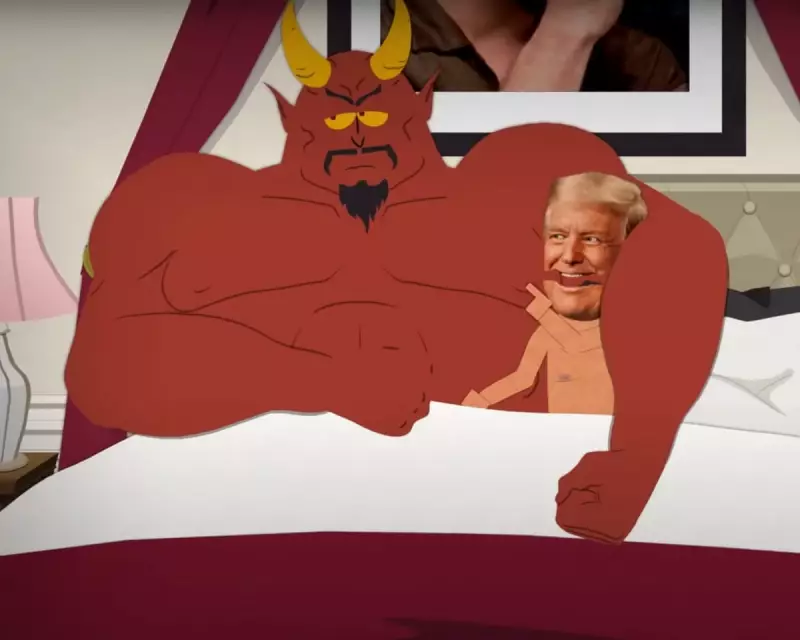
In an era where political discourse often veers into the surreal, satirical television programmes have found themselves carrying an unexpected burden. The latest season of South Park offers a typically raucous example, depicting Donald Trump in a bizarre storyline involving Satan and JD Vance. While creators Trey Parker and Matt Stone master this terrain of unhinged comedy, their work highlights a broader phenomenon: comedy increasingly stepping into roles traditionally reserved for journalism.
The American Precedent: Comedy as News Provider
For decades in the United States, comedy has filled spaces vacated by partisan news media. As far back as 2000, economist Paul Krugman criticised American press for being "fanatically determined to seem even-handed" to the point of failing to call out outrageous untruths. This media failing created fertile ground for satirical programmes to assume journalistic functions.
The Daily Show began conducting harder-hitting interviews than many primetime news programmes. Stephen Colbert rose to prominence through his parody of conservative talk shows, while John Oliver pioneered "investigative comedy" that frequently broke scandalous stories more effectively than traditional news outlets. Researchers from Innsbruck and Groningen universities note that "affective shifts" among audiences enable late-night comedians to build trust, allowing political comedy to function as "opinionated journalism."

The Comedian's Dilemma: Power Versus Purpose
American standup star Gianmarco Soresi articulates the tension many comedians feel: "Comedy should question power, and the second that comedy becomes power, it's lost its efficacy." He notes that the Trump administration provided so much satirical material that comedy risked merely recounting daily events rather than offering meaningful critique.
Soresi acknowledges comedy's limitations while recognising its strengths: "Do I think we can create a space for relief? Yes. Do I think it can create a space for reflection? Yes... Do I think it can build a political movement that takes down Netanyahu? No." This distinction between commentary and political action remains crucial.
The French Evolution: Following America's Path
France presents an illuminating contrast and cautionary tale. When journalist Alexander Hurst first moved to France in 2012, he noted the absence of American-style satirical political comedy on television. This wasn't due to cultural differences but rather because French news media were performing their journalistic functions effectively.
Programmes like Des Paroles et Des Actes on France 2 featured live fact-checking of political claims. Presidential debates maintained substantive discourse with moderators following up on answers and tracking speaking time to ensure fairness. The institutional safeguards of journalism remained intact.
Media Decline and Comedy's Rise
Over the past fifteen years, however, French media has experienced concerning parallels with American developments. Two right-wing billionaires have acquired significant media holdings, including television stations, radio stations, and newspapers. CNews has positioned itself as a French equivalent of Fox News, contributing to declining trust in news media and increased disinformation.
As French society grows more polarised and far-right electoral performance strengthens, satire has begun filling emerging voids. The satire site Le Gorafi recently exposed Nicolas Sarkozy's prison memoir contradictions after just three weeks of incarceration, demonstrating comedy's growing investigative role.
The Danger of Blurred Lines
There exists genuine danger in expecting comedy to assume journalism's responsibilities without institutional safeguards. Comedy at its best questions power and provides cathartic relief, but it lacks journalism's accountability structures, fact-checking protocols, and ethical frameworks.
Parisian journalist and standup comedian Charles Pellegrin observes that "comedians don't have to play by the same rules, so they can point out the glaringly obvious." Meanwhile, comedy producer Safia Benyahia notes standup's growing popularity because "people are walking on eggshells and they trust comedy to engage difficult topics in a safe way."

Preserving Comedy's Essential Nature
The fundamental concern remains: when comedy becomes society's primary forum for political discourse, it risks losing its essential nature while failing to provide what proper journalism offers. Anti-politics thrives where anti-media takes root, creating a cycle where comedy serves as both catharsis and cause of political disillusionment.
While reversing this trend presents challenges, the alternative risks transforming comedians' stages into our most important public forums. This development proves dangerous for democratic societies and represents the opposite of comedy's true purpose. The long-term return on investing in robust journalism far outweighs any cost, preserving both comedy's artistic integrity and democracy's informational foundations.