A Holiday Revelation: From Leicester's Diversity to Irish Isolation
Manish Chauhan experienced a profound shift in perspective during a seemingly ordinary holiday. Growing up in Leicester, one of England's first "super diverse" cities where minorities form the majority, he had always felt a strong sense of belonging. School photographs showed a sea of brown faces, leading him to believe Leicester was a blueprint for England, perhaps even the wider world. His upbringing, while racially homogeneous in many ways, fostered a robust sense of self that he took for granted.
The Trip That Changed Everything
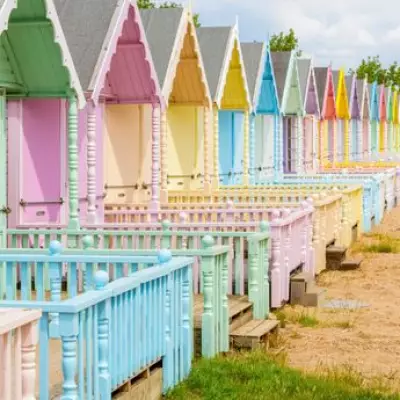
At age 24, shortly after university graduation, Chauhan visited Ireland for the first time. A friend had used prize money to rent a beach hut on Valentia Island, where they planned to work on their novels. The location was stunning—a stone hut near the water's edge on Ireland's western tip, overlooking the vast Atlantic. They explored the island's rugged beauty, from cliff edges to lush rainforests, and travelled to places like Killarney and Derrynane beach, riding horses along golden coasts.
After a week of exploration, a realisation dawned: they had not seen a single person of colour. Despite Ireland's proximity to England, the diversity Chauhan knew from home was absent. This was driven home during a visit to a local convenience store. When the young woman behind the till looked up, her shocked expression suggested Chauhan might be the first person of colour she had ever encountered in person. He completed his purchase and left, but the encounter lingered, marking the first time he had ever felt he truly stood out.

Contemplating Identity and Heritage
Back at the beach hut, Chauhan began to reflect deeply on his family's history. He thought of his grandfather, who arrived in England from Africa in the 1950s, when Leicester had only a handful of non-white residents. He considered his mother, who came from India in the early 1960s, followed by waves of immigrants drawn to the growing community. Had they felt invisible or conspicuous in their new home? This personal history contrasted sharply with his temporary experience of otherness in Ireland.
Returning to Leicester, he initially slipped back into the secure bubble of his former life. However, the trip had planted a seed. In the following years, he developed a metaphor of people as balloons, their sense of self expanding or contracting based on circumstances and location. He realised his formative years in Leicester had been a state of comfortable expansion, where he naively felt part of the majority. The holiday forced a contraction, bringing a startling awareness of his own insignificance—akin to a king discovering his castle was merely a small room in a vast palace.
Broader Implications and Modern Parallels
Chauhan's journey continued as he left Leicester for university in Hertfordshire and later moved to London, finding diverse communities where he could exist in a "comfortable middle." Travels further afield revealed a world throbbing with differences, which he now approaches with pride and empathy rather than the intimidation felt at 24.
This shift in perspective has allowed him to view contemporary events through a more nuanced lens. Reflecting on incidents like the summer riots of 2024 and Tommy Robinson's "unite the kingdom" rally, he sees how a person's sense of self can contract to the point of destruction. Beneath the chants and violence, he identifies a fear of losing one's footing in a place called home—a fear familiar to every immigrant. Growing up in Leicester gave him the strength to recognise his power and privilege, while that short trip exposed his insignificance. As he ages, Chauhan believes experiencing both is essential for a meaningful life.