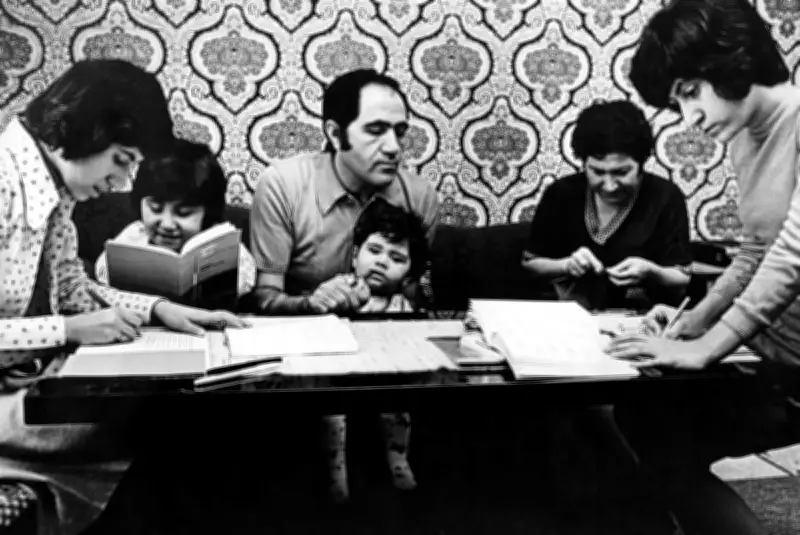
A Flea Market Discovery Unearths Painful History
On a recent Sunday stroll through the Bomonti flea market in Istanbul, a chance encounter with an old book sparked a profound reflection on migration and identity. Among embroidered napkins and vintage records, a 1965 language textbook titled Türkler için Almanca – Deutsch für Türken (German for Turks) lay waiting. This wasn't just any manual; it was among the first distributed to Turkish Gastarbeiter, or "guest workers," who arrived in West Germany during the 1960s and 70s.
The economic boom of post-war Germany had created a severe labor shortage, leading to bilateral agreements like the 1961 pact with Turkey. Hundreds of thousands of Turkish men and women were recruited to work in factories, officially on a temporary basis. Families often stayed behind, and these workers packed their suitcases with hopes and necessities, including copies of this very book.
The Illusion of Language Learning
Learning a new language as an adult is notoriously challenging, especially between languages as distinct as German and Turkish. Turkish uses suffixes to convey meaning, lacks grammatical gender, and often reverses sentence structure compared to German. While modern resources aim to bridge these gaps, the 1965 textbook promised fluency but delivered something far more revealing.

Upon examination, the book reads less like a tool for genuine exchange and more like a display of cultural superiority. It focuses on rote phrases about family members left behind, adjectives like "sick" or "lazy," and commands such as "Always be diligent." Notably, the word "happy" is absent, and there's no way to answer "How are you?" This approach treats learners not as individuals with rich backgrounds, but as mere subjects to be molded.
A History of Oversight and Racism
The term Gastarbeiter itself underscores the temporary, transactional nature of their presence. These workers were seen as labor, not future citizens, and their deep historical ties with Germany were ignored. Long before the 1960s, Ottoman and German empires were intertwined economically and militarily. During World War II, Turkey provided refuge for hundreds of Jewish and antifascist Germans, including Ernst Reuter, who later became mayor of Berlin.
Yet, when Turkish workers arrived, this shared history vanished. They faced racism and isolation, a reality that persisted for generations. In East Germany, similar agreements with "brother states" like Vietnam mirrored this structure, though terminology differed. For decades, societies in both Germanys failed to acknowledge the hardships migrants endured.
Modern Echoes and Cultural Transformation
Today, voices from the grandchildren of the first generation are shedding light on these experiences. Documentaries like Aşk, Mark ve Ölüm (Love, Deutschmarks and Death) by Cem Kaya explore the difficult lives of Turkish workers through their music, capturing sentiments of betrayal and loss. The 1965 language book appears briefly in the film, symbolizing the inadequate support offered to migrants.
Despite this painful past, Germany has evolved. The contributions of Turkish communities have enriched German culture, making it more diverse and globally connected. However, current government discussions about recruiting "skilled labor" risk repeating old mistakes by framing migration as a transaction rather than a human relationship.
The book's inclusion of canonical German authors like Goethe and Heine in its appendix highlights a stark contrast: while it aimed to impose a rigid cultural framework, the real transformation came from those once kept at a distance. Germany today sounds, tastes, and moves differently—and better—because of them.