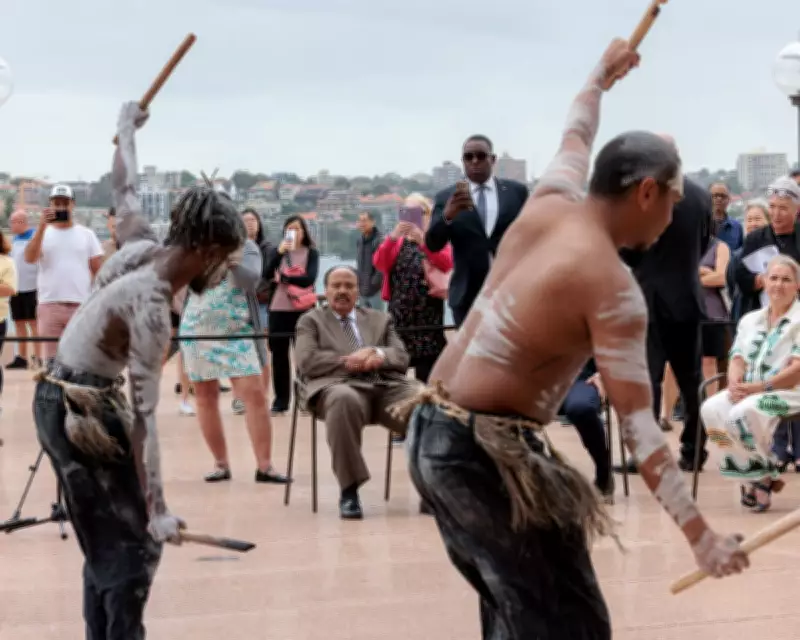
During his recent Australian visit, globally respected humanitarian Martin Luther King III has delivered a powerful message about the fundamental role language plays in shaping national character and social cohesion. The civil rights leader, eldest son of Dr Martin Luther King Jr, argues that the stories nations choose to tell about their Indigenous populations do far more than influence public opinion.
The Power of Narrative in Building Society
King III observes that Australia stands at a critical juncture where language choices profoundly impact social fabric and national identity. Drawing parallels with current challenges in American society, where social cohesion faces immense strain from divisive rhetoric, he warns that Australia must not wait for similar fractures to widen before taking meaningful action.
'The health of a society is revealed not only in its laws or institutions but in the way its people speak to, and about, one another,' King III reflects, echoing his father's teachings about nonviolence beginning with language. He emphasises the discipline required to choose words that uplift rather than degrade, clarify rather than distort, and build community rather than fracture it.

First Nations Relationships and Language
During his Sydney visit, King III focused particularly on Australia's relationship with its First Peoples, noting how language forms the foundation rather than merely an accessory to progress. In conversations about emerging First Nations talent, pathways to economic participation, and the link between economic and social justice, he witnessed firsthand how narrative shapes reality.
'The stories a nation chooses to tell about Indigenous Australians do more than shape public opinion; they shape opportunity, belonging and the character of the country itself,' King III writes, highlighting how deficit-focused narratives have historically dominated discussions about Indigenous communities.
From Deficit to Excellence Narratives
While acknowledging that disadvantage, disparity and dysfunction must be confronted honestly, King III argues these realities represent only part of the story. The equally important narrative, he suggests, is one of resilience, brilliance, creativity and leadership that deserves equal prominence.
Through meetings with First Nations university students participating in the CareerTrackers Indigenous internship program, King III encountered young people defined not by deficit but by excellence and aspiration. These emerging engineers, scientists, lawyers, designers and entrepreneurs are actively rewriting Australia's narrative about Indigenous potential.
Practical Steps Toward Social Cohesion
King III proposes that strengthening social cohesion begins with a commitment to responsible language and civility that extends beyond legislation. This practice must be modelled by leaders, reinforced by institutions, and embraced by all citizens as part of daily interaction.
'Respect is not passive,' he asserts. 'It is a practice and not merely the absence of insult.' This requires finding courage to confront injustice without dehumanising those who disagree, and maintaining discipline to choose words reflecting our highest values rather than our lowest impulses.
Learning from Global Experience
Drawing from American experience, King III observes what happens when respect erodes: polarisation deepens, trust collapses, and democracy weakens. History demonstrates that when societies change their stories about who belongs and who can lead, collective ambition expands significantly.
In the United States, public celebration of Black Excellence challenged entrenched limitations and widened the nation's sense of what becomes possible. Australia now has similar opportunities to transform narratives about Indigenous achievement and contribution.
The Beloved Community Vision
King III concludes by invoking his father's concept of the Beloved Community - a society where differences are embraced rather than erased, where justice is pursued without violence, and where dignity is afforded to every person. He emphasises this represents not merely an American dream but a universal human aspiration.

'Australia has the opportunity to bring that vision closer to reality,' King III states. 'But it begins with language and respect. It begins with the stories you choose to tell about one another.' The civil rights leader's visit underscores how narrative power extends beyond rhetoric to fundamentally shape national character and social possibility.