Trans Muslim Poet Finds Power in Intersectional Identity on London Stage
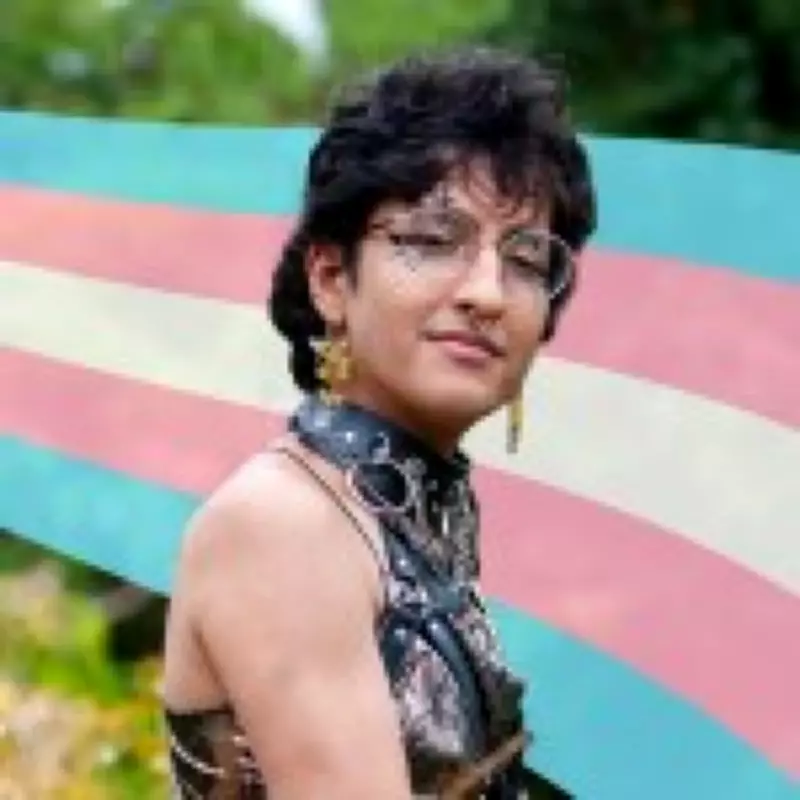
Jazmeen Qureshi, a trans non-binary Pakistani Muslim woman, recently took to a London stage adorned with gold, silk, and traditional desi patterns. The event, organized by MEHFIL, a London-based arts organization spotlighting South Asian artists, provided a vibrant backdrop for Qureshi's powerful poetry performance last December.
A Moment of Connection and Celebration
"I am a weapon," Qureshi read from her poem, "Or so I have been told. The soft subtlety of my brown skin. The fine hair shivering on the surface of my planet. The jingle jangle of my gold finery." The audience responded with affirmative clicks, laughter, and cheers as she shared her experiences through verse.
Qureshi described feeling content, empowered, and most importantly, safe in this environment surrounded by brown faces and shared cultural heritage. "I was spinning tales of what Islam means to me, with my queer, hairy, brown, trans woman body," she explained, "and they loved me. Not despite it, but because of it."

Understanding Trans Day of Visibility
International Transgender Day of Visibility (TDoV), celebrated annually on March 31, was founded in 2009 by Michigan-based transgender activist Rachel Crandall. The day specifically celebrates the joy, resilience, and existence of transgender and non-binary people worldwide, moving beyond narratives focused solely on tragedy.
In 2021, U.S. President Joe Biden became the first American president to issue a formal proclamation recognizing the day. This visibility has become increasingly crucial as recent developments have created challenges for transgender communities:
- April 16, 2025: UK Supreme Court rules that the legal definition of a woman is based on biological sex
- June 1, 2025: The FA implements a ban on trans women in women's football
- December 2, 2025: Trans girls banned from joining Girlguiding
- December 3, 2025: Women's Institute announces it will no longer accept trans women as members
- March 9, 2026: NHS England pauses new referrals for hormone treatment in under-18s
- March 26, 2026: Olympics announce a transgender ban in all women's sport
A Journey Through Multiple Identities
Qureshi grew up in a Sunni Muslim household with what she describes as "strictly religious but liberal-thinking" values. As an AMAB (assigned male at birth) person, she faced expectations to grow a beard, marry, pray five times daily, and learn the Quran.
"The toxic masculinity I saw and heteronormative roles in the community stunted my visions of a life," Qureshi recalled. "I'm not saying it was all bad, but my identity was severely limited."
Coming out as gay at 18 provided initial distance from heteronormative structures, but Qureshi soon found herself adopting stereotypes from mainstream gay representation. At 19, she came out as non-binary, describing it as "shedding heavy, ill-fitting armor" made from societal expectations.
Reconciling Faith and Identity
For part of her life, Qureshi rejected organized religion entirely. "All organized groups centring god-like entities could - ironically - go to hell," she admitted. However, as she understood herself better, she began seeking an Islam that made sense to her evolving identity.
"Stranger still, it was realising my transness that set me on a path back to any sort of religious identity," Qureshi revealed. Her Islamic upbringing remained interwoven with cultural roots - Pakistani food, Arab perfumes, Arabic and Urdu languages, and non-Eurocentric beauty standards.
"My lack of conformity makes it hard for me to access these communities," she acknowledged, "but it isn't because I'm made wrong, it's because the world I was thrust into was made for singular identities - and that's wrong."
Embracing Intersectional Existence
Today, Qureshi embraces the full spectrum of her identity: non-binary, trans woman, Muslim, Pakistani-Indian heritage, and passions for both science and artistry. "These all live alongside each other," she explained, "and they help to uncover faults in the others."

To others struggling with similar journeys, Qureshi offers this advice: "You already have all the stuff you need inside you. The magic and colour of the ecosystem that exists within you, that's your toolbox. You have more tools than anyone else because you encompass so many worlds."
She concludes with a powerful message to fellow "outcasted, non-conforming, not-white, religiously connected" individuals: "You're so much, and that's not only fine, it means you have a right to not belong to any of the groups you overlap with or come from. You are an intersectional masterpiece of art, and the artist is you."