Ballet de Lorraine's London Return: Acid Gems and a Folia Review
After a long absence from London stages, choreographer Adam Linder makes a striking comeback with Ballet de Lorraine's double bill at the Queen Elizabeth Hall, Southbank Centre. The program features Linder's Acid Gems, a vibrant reinterpretation of George Balanchine's classic Jewels, alongside Marco da Silva Ferreira's raucous a Folia, creating an evening that blends clubby cool with wild, transformative energy.
Adam Linder's Neon Reimagining of Ballet Tradition
Adam Linder, who won the prestigious Place prize in 2008 before relocating to Berlin, returns to London with Acid Gems, a piece created specifically for Ballet de Lorraine. Inspired by Balanchine's 1967 abstract ballet Jewels, Linder swaps the original's rich gemstone hues for sharp, sour neon tones. The backdrop is drenched in a vivid Wham Bar pink, enhanced by a palette of other synthetic colors, expertly lit by artist Shahryar Nashat.
Despite training at the Royal Ballet School and later rejecting traditional ballet, Linder remains in deep conversation with his roots. Initially, Acid Gems channels the unnerving, aloof aesthetic reminiscent of choreographer Sharon Eyal, with slow undulations, jutting hips, and dancers moving in tight, Lycra-clad groups. However, the piece evolves into something more complex, skillfully treading the line between ballet and contemporary forms. It incorporates entrechat jumps and spiky angles alongside playful references like the Running Man, all executed with zinging clarity and simplistic geometry.

Marco da Silva Ferreira's Wild Party Vision
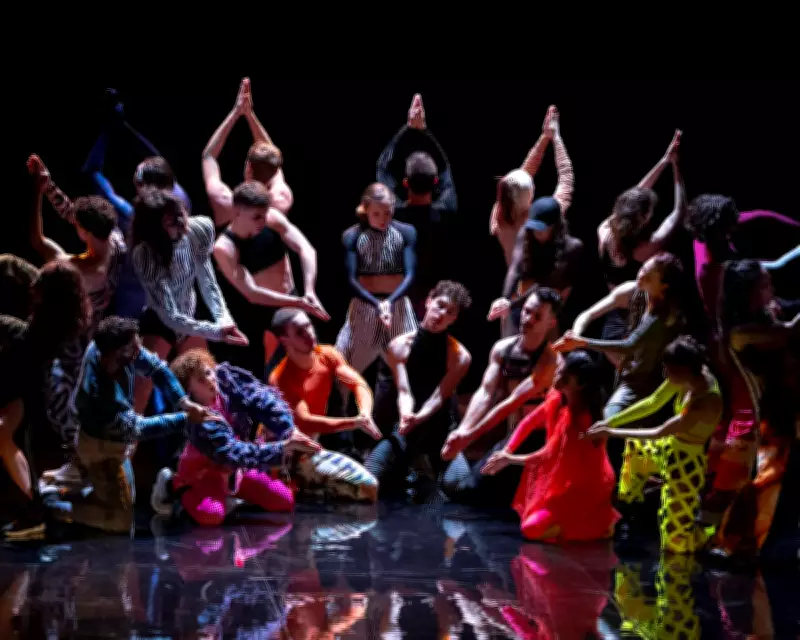
Marco da Silva Ferreira, a finalist in last year's Rose prize, opens a Folia in a similar vein of clubby, androgynous cool. The scene evokes the dark haze of a 2am dancefloor, with eccentric costumes featuring fringing, shoulder pads, tie-dye, rips, chaps, and straps, including a striking skin-colored bodysuit with a green ponytail. An oddly stilted 4/4 melody unexpectedly transforms into the harpsichord arpeggios of Corelli's La Folia violin sonata, reimagined by composer Luis Pestana.
This musical shift turns the gathering riotous, with a raucous crowd whooping as dancers perform impressive tricks. Da Silva Ferreira's core idea is that a wild, free-spirited party can change the world, though the piece sometimes echoes the hedonistic, self-congratulatory excess of shows like The Great. While later sections risk feeling overly pleased with themselves, the ebullient highlight captures a vibrant, transformative energy that leaves audiences craving an after-party.
A Double Bill of Contrast and Conversation
Together, Acid Gems and a Folia offer a compelling exploration of contemporary dance's boundaries. Linder's work delves into ballet's legacy with neon intensity, while da Silva Ferreira's piece celebrates communal, chaotic joy. Performed at the Queen Elizabeth Hall until March 7, this double bill marks a significant moment for dance in London, blending technical precision with uninhibited expression.
The return of Adam Linder to the London stage after years in Berlin underscores the global nature of contemporary choreography, while Marco da Silva Ferreira's rising prominence highlights fresh voices in the field. For dance enthusiasts and newcomers alike, this production promises an engaging, thought-provoking experience that challenges and entertains in equal measure.