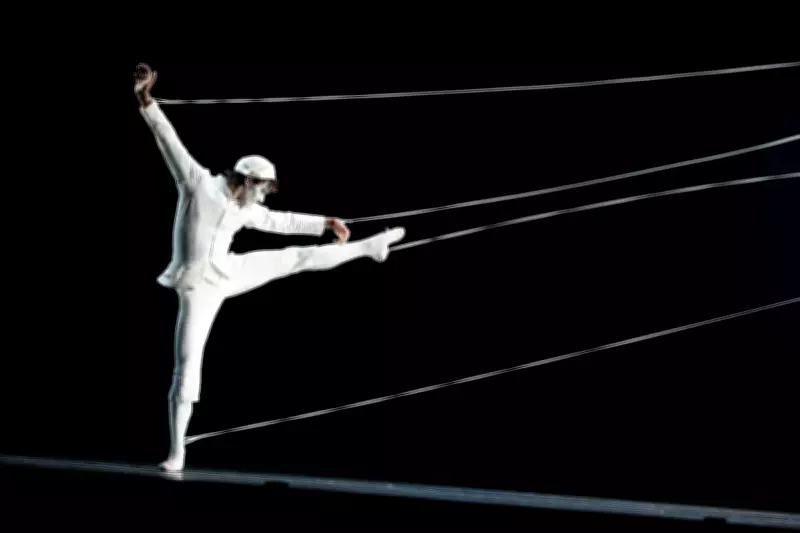
Royal Ballet Revives 1960s Cult Classic Pierrot Lunaire After Two Decades
In a bold move that celebrates both history and innovation, the Royal Ballet is set to bring back Glen Tetley's 1962 avant-garde ballet Pierrot Lunaire to the stage for the first time in twenty years. This revival marks a significant moment in the company's repertoire, highlighting a work that has long been revered as a cult classic for its daring blend of classical and modern dance forms.
A Challenging and Eccentric Masterpiece
Created by American choreographer Glen Tetley, whose centenary is being commemorated this year, Pierrot Lunaire stands out as a distinctive and eccentric piece. It is set to Arnold Schoenberg's atonal song cycle of the same name, which is based on poems by Albert Giraud and delivered in a unique vocal style known as sprechstimme—a haunting mix of song and speech. This ballet is not frequently performed, adding to its mystique and special status within the ballet world.
Historically, Pierrot Lunaire is recognised as a pioneering example of integrating modern dance with classical techniques. It offers a juicy and emotionally complex role for its male lead, Pierrot, the sad clown from commedia dell'arte, who embarks on a journey of self-discovery and depth. Notably, it was a favourite of the legendary dancer Rudolf Nureyev, underscoring its artistic significance.

Dancers Embrace the Emotional Journey
This season, the role of Pierrot will be shared by Royal Ballet principal Marcelino Sambé and soloist Joshua Junker. Sambé, known for his vibrant and sunny stage presence, is delving into a more vulnerable side for this performance. He describes Pierrot as a character full of human traces, moving from hopeful naivety to poignant realisations through encounters with Columbine, his unrequited love, and Brighella, the dark clown of experience.
Initially, Sambé found it difficult to connect with the piece, viewing the stock character as two-dimensional. However, working with Christopher Bruce, a famed interpreter of the role in the 1960s, helped unlock its emotional layers. "What makes it so poignant and emotional is that this archetype is full of human traces," says Sambé. "It's about bringing something of my DNA to it. It's deeply layered, comedic but based in darkness, a place of huge contemplation, self-discovery and curiosity."
Joshua Junker interprets the ballet as a symbolic journey from innocence into adulthood, fraught with pain, suffering, and responsibility. He sees Brighella not just as a separate character but as a representation of Pierrot's internal struggles, akin to the shadow in Jungian psychology. "It's a really symbolic piece," Junker explains, highlighting the psychological depth that Tetley infused into the work.
Confronting the Unconventional Score
Both dancers initially faced challenges with Schoenberg's atonal music, which Sambé admits "horrified" him at first. Having previously enjoyed Schoenberg's more Romantic work, Verklärte Nacht, he found Pierrot Lunaire less accessible. The score, performed by a small instrumental ensemble and a soprano with a swooping delivery, creates an eerie, fantastical, and strange mood that defies traditional rhythmic cues for dancers.
Sambé has since acclimatised to the music, describing it as a feeling rather than a mere rhythm. "Music becomes a feeling," he says. "Almost like an organism in itself, with its own veins and blood." So much so that he now finds himself listening to it during everyday tasks, like chopping onions in the kitchen, a testament to its haunting allure.
A Standalone Intimate Experience
In an unusual programming decision, Pierrot Lunaire will be performed as a standalone piece for these upcoming shows, rather than as part of a double or triple bill. Lasting forty minutes, the ballet will be staged in an intimate setting, allowing for a focused experience on the dancers and the live music. Junker emphasises this intimacy, noting that it will feature just three performers on a small stage, creating a close-up connection with the audience.

Sambé describes the revival as "putting a magnifying glass to Tetley's vision," offering a rare opportunity to appreciate the choreographer's modernist influences, including those from Martha Graham and the broader new age of movement. He reflects on the educational value of learning this ballet, gaining insight into the high level of craftsmanship and the deliberate challenges posed by choreographers and composers of that era.
Legacy and Contemporary Relevance
Tetley's own background, spanning classical companies like the Joffrey Ballet and American Ballet Theatre, as well as modern dance pioneers like Hanya Holm and Martha Graham, informed his revolutionary choreographic style. He played a key role in introducing this blended approach to the UK, notably aiding Ballet Rambert's transition into a modern dance troupe.
Sambé expresses admiration for how artists of that time deliberately confronted their audiences, creating work that was not merely comforting but thought-provoking. "It's something that is confronting, not just ballet that is comforting," he says. "We don't experience work so much like this any more, at least in the dance that I see. It's going to be uncomfortable and funny, poignant, sad and beautiful at the same time. It leaves you with more questions. And I love work like that."
The revival of Pierrot Lunaire at the Linbury Theatre in London from 10th to 20th February promises to be a captivating event, blending historical significance with contemporary artistic exploration. It serves as a reminder of the enduring power of avant-garde works to challenge, inspire, and resonate across generations.