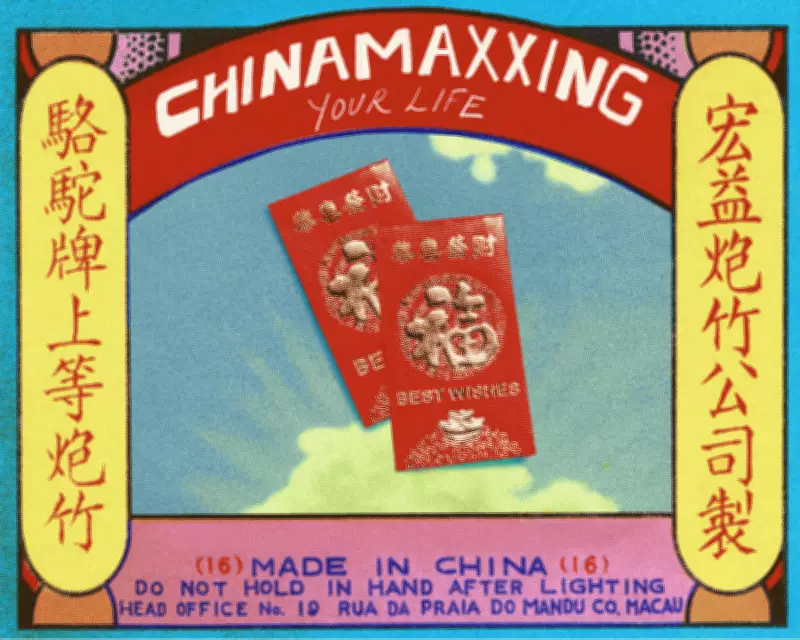
The Dual Nature of the Chinamaxxing Phenomenon
In the ever-evolving landscape of internet culture, a peculiar trend emerged in mid-2025 that has both captivated and confused digital audiences worldwide. Known as "Chinamaxxing," this viral movement sees creators from diverse backgrounds adopting Chinese cultural elements in their content, from drinking hot water and wearing household slippers to using chopsticks and embracing the color red. What began as a TikTok sensation quickly spread across Instagram and X, accumulating hundreds of thousands of views and sparking complex conversations about cultural identity in the digital age.
The Jarring Reality for Chinese Diaspora
For individuals of Chinese heritage, witnessing their culture become a disposable trend has provoked mixed emotions. Michelle She, a London-based fashion label owner, explains the phenomenon simply: "People are trying to be more Chinese regardless of what their heritage is." Yet for those who have lived their entire lives within Chinese cultural traditions, the experience has been described repeatedly with one word: jarring.
British author Jenny Lau, who wrote "An A-Z of Chinese Food (Recipes Not Included)," found the trend particularly unsettling during Lunar New Year celebrations. "Being told what to do for lunar new year, or how to prepare for the Year of the Fire Horse from non-Chinese creators felt unsettling," she reveals. This sentiment is echoed by Vanessa Li, a content creator based in Sydney, who questions why non-Chinese creators are suddenly sharing expertise about holidays they've likely never celebrated before.

Historical Context and Cultural Appropriation Concerns
The timing of Chinamaxxing adds another layer of complexity. For many in the diaspora, the sudden enthusiasm for Chinese culture feels particularly poignant given the xenophobic attacks against Chinese and Asian communities during the COVID-19 pandemic just six years prior. Claire, a Canadian content creator who preferred not to share her surname, expresses frustration that cultural elements once ridiculed are now being celebrated, often with non-Chinese creators gaining the most visibility and success from the trend.
Sherry Zhu, a prominent U.S.-based content creator associated with the Chinamaxxing movement, voices concerns about cultural appropriation. While she participates in the trend by "bestowing Chinese heritage" upon her followers, she worries about traditional medicine being reduced to a wellness fad. "I don't want people to forget the benefits that my culture is providing," she emphasizes. "It comes from China... it's not coming from somewhere else."
Academic Perspectives on Digital Cultural Exchange
Jamie Cohen, an associate professor of media studies at Queens College in New York, analyzes Chinamaxxing as more than just an aesthetic trend. He identifies it as a response to broader cultural shifts, including disillusionment with Western institutions, growing wellness obsessions, and historical exoticization of Eastern cultures. According to Cohen, the trend originated in early 2025 when thousands of new users discovered Chinese social media platform Red Note, exposing them to previously unseen aspects of Chinese daily life.
"It was like a de-propagandisation device," Cohen explains. "For the first time young people from the US saw that under those different systems of government, there's still people who do wonderful things. Who are just like you." He interprets Chinamaxxing as a coping mechanism for those who have "lost faith" in the United States as a cultural and democratic leader globally.
The Meme's Contradictory Appeal
The fundamental appeal of Chinamaxxing lies in its inherent contradiction. As Claire observes, "The appeal of the meme is that it can be two things at once: rebellious and meaningless." She notes that participants often use the trend to express political dissatisfaction, citing examples like "I'm becoming Chinese because Trump just did this," while simultaneously acknowledging that most participants aren't deeply examining their political beliefs with every post.

Tingting Liu, a research fellow at the University of Technology Sydney specializing in Chinese digital media, offers a nuanced perspective. While concerned about surface-level understandings of China, she ultimately views Chinamaxxing positively. "For many years, China's official cultural diplomacy was too serious, formal, and lacked this kind of sense of humour," she notes.
Generational Divides and Future Implications
The response to Chinamaxxing reveals significant generational differences within the Chinese diaspora. Millennials like Jenny Lau view the trend skeptically, describing it as "Orientalism by any other name," while Gen Z participants like Sherry Zhu and Claire demonstrate more openness. Cohen observes that younger generations exhibit greater "open-mindedness" toward cultural discussion formats, preferring Chinamaxxing over "any other type of cultural appropriation or cultural anger."
As the trend appears to be reaching its natural conclusion—Cohen notes that "if the trend makes it to Instagram, that's its punctuation mark"—participants wonder about lasting impacts. Some, like Michelle She, report increased interest in authentic cultural engagement, including more requests from friends to organize trips to China. Vanessa Li finds validation in younger diaspora members feeling proud of their Chinese identity, while Claire appreciates the shift in online discourse from negativity to shared humor.
Ultimately, Chinamaxxing represents a complex intersection of digital culture, identity politics, and global exchange. Whether it leaves behind genuine cultural appreciation or simply fades as another internet fad remains to be seen, but its journey through social media platforms has undoubtedly sparked important conversations about how cultures are represented, appropriated, and understood in our increasingly connected world.