Forget studies on aggression or cognitive benefits. A far more intriguing and personal phenomenon is captivating players: the concept of 'gamer brain'. This is the inexplicable part of a player's psyche that compels them to pursue objectively pointless goals within a game, from grinding for a meaningless trophy to refusing to lower a difficulty setting out of sheer stubborn pride.
What Exactly Is 'Gamer Brain'?
While mastering a game's story or mechanics is a standard motivation, gamer brain operates on a different, often illogical, level. It's that impulse that makes you retry a mini-game endlessly for a marginally higher score, or meticulously click along the edges of a map 'just in case'. It's the refusal to concede to a tough boss by adjusting the difficulty, framing it as 'letting the game win'. This specific flavour of obstinacy is a near-universal trait among dedicated gamers, a drive to bend a game's rules to one's will simply because it's possible.
The extreme manifestations are legendary within gaming culture. Think of players mastering impossible DragonForce songs on Guitar Hero at double speed, or the esoteric challenges showcased at events like Awesome Games Done Quick (AGDQ). Here, players perform feats such as completing The Legend of Zelda: Majora's Mask blindfolded or racing through bizarrely modded versions of classic games. These acts of 'joyful gaming pointlessness' are pure gamer brain in action.

Baby Steps: A Mirror to the Player's Psyche
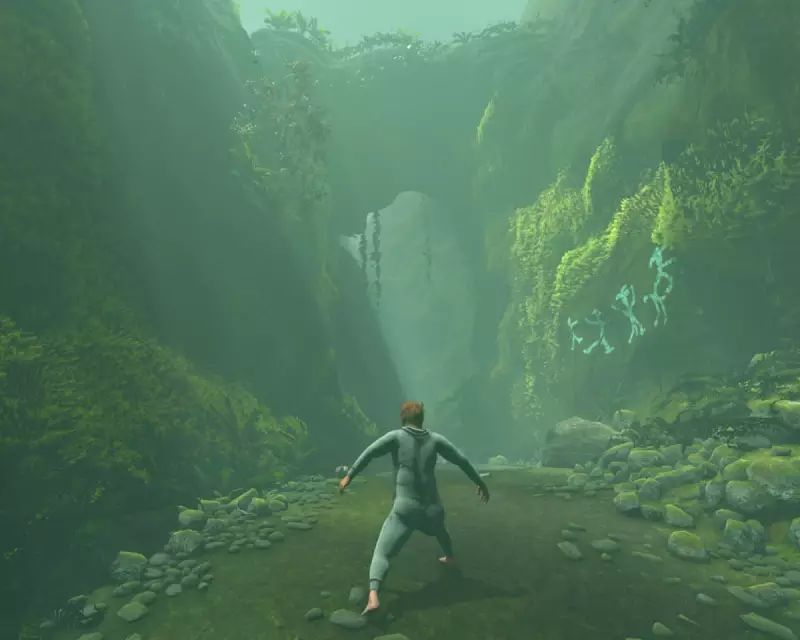
This compulsion was brilliantly explored and gently mocked in the 2023 game Baby Steps, from developers Gabe Cuzillo and Bennett Foddy. The game follows Nate, a stereotypically hapless protagonist who embodies gamer brain tendencies, including a stubborn reluctance to ask for help. The game is filled with design choices that tease the player's innate curiosity and compulsions.
As Bennett Foddy explained, the design creates a shared joke with the player. "There is a normal dirt path by a cliff that you can walk up perfectly safely, and then along the cliff is a series of wooden pegs that you could walk up instead, if you wanted to risk losing 20 minutes of progress," says Foddy. "That's a joke that you're making with the player, because for them to find that funny, they have to know that they're tempted to walk on the pegs."
One of the game's most exquisite jokes involves finding a pair of glasses that reveal invisible steps leading to an invisible trophy. Nate's triumphant celebration in front of this unseen prize, while a confused hiker looks on, perfectly encapsulates the absurdity and personal satisfaction of gamer brain pursuits. "You're seeing yourself reflected in this loser," Foddy notes. "That's the deep joke: this guy, this couch potato, he's actually you in this moment."
The Gendered and Personal Nature of Pointless Play
Gamer brain is often perceived as a masculine trait, linked to dogged determination and toxic masculinity within gaming culture. Foddy points to characters like Nathan Drake in Uncharted—whose grit can blur into obstinate stupidity—as examples of this cultural construction. However, the affliction is by no means exclusive to men.
Ultimately, as Cuzillo suggests, games like Baby Steps use level design as a form of introspection, asking players: "What do you care about? Who are you as a person?" The key revelation is that these pursuits are only pointless in an objective sense. If a challenge or achievement holds meaning, fascination, or joy for the player, then it has inherent value. Gamer brain, in all its stubborn, perplexing glory, is ultimately about the personal significance we forge in digital worlds.
Also in gaming this week: The serene PS5 and PC title Sword of the Sea offers a comforting, Journey-like experience. The long-awaited Hollow Knight: Silksong continues to be analysed for its themes of endurance. Lego revealed a massive, expensive Pokémon set, and Rockstar Games faces an ongoing legal case in Glasgow with former employees supported by the Independent Workers Union of Great Britain.

For readers seeking indie games: Explore curated storefronts like Itch.io, follow Steam's indie festivals, and engage with communities on platforms like Bluesky to discover experimental titles beyond the mainstream.