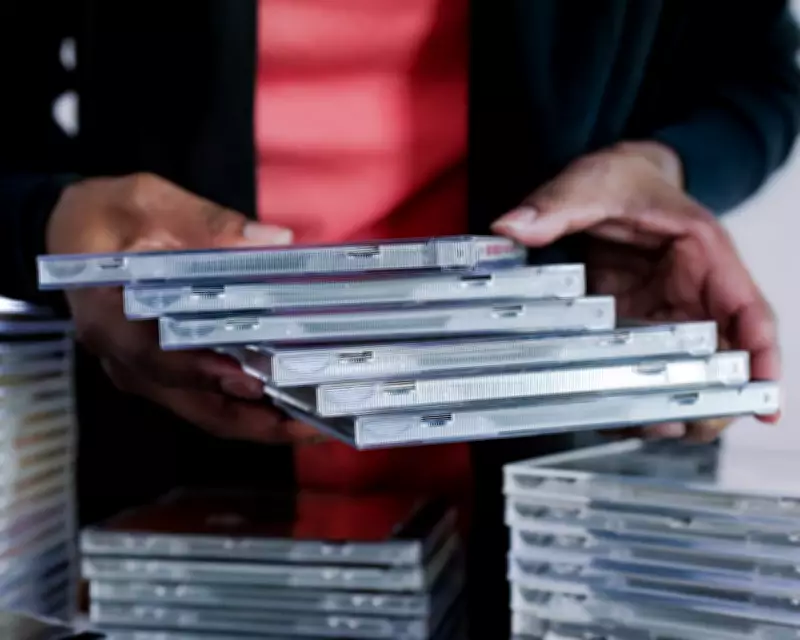
In our current age of frictionless digital experiences, where streaming services offer infinite content at the touch of a button, there remains something profoundly magical about obsolete technology. Physical media formats like DVDs and compact discs, which once signalled the beginning of the end for tangible collections, now occupy a curious space in our cultural consciousness – forgotten but not entirely gone.
The Tangible Appeal of Physical Collections
There's a particular charm in browsing someone else's DVD collection that no algorithm can replicate. Much like examining a bookshelf, a DVD collection reveals the owner's curated tastes and interests, or at least the version of themselves they wish to present to visitors. As a medium that has largely been superseded by streaming platforms, DVDs make a more abstract statement about commitment to physical media – the cinematic equivalent of maintaining a vinyl record collection in the digital music era.
Even with the entire world of streaming entertainment available instantly, we still find ourselves drawn to finite physical collections. Whether perusing the DVD shelves at a friend's house, a parent's living room, or even a stranger's Airbnb, these limited selections paradoxically offer more meaningful choice than endless digital scrolling. Each title comes recommended not by an impersonal algorithm, but by a human being who considered these films worth preserving in physical form.

The Ritual of Physical Interaction
What truly distinguishes physical media from its digital counterparts is the requirement for commitment through physical action. Putting on a DVD, CD, or LP demands deliberate engagement – you must select the disc, place it in the player, and initiate playback. Changing or stopping your selection requires another conscious physical action. This creates a level of engagement and commitment that streaming services, with their effortless skipping and endless options, simply cannot provide.
This appeal extends well beyond media formats to encompass various obsolete technologies. From stovetop coffee makers to dedicated telephones, from vintage kitchen appliances to classic video game consoles, there's comfort in the familiar physicality of older gadgets. As our world becomes increasingly streamlined into integrated touchscreen devices, there's genuine joy in the clunky, tactile processes of technological unitaskers.
The Value of Friction in a Frictionless World
Composer Brian Eno observed in his 1995 diary that "whatever you now find weird, ugly, uncomfortable and nasty about a new medium will surely become its signature." In our current era of seamless digital experiences, it is precisely the friction of older technologies that becomes precious. The ritual of loading a record onto a turntable, carefully lowering the needle, and committing to listen through an entire side – even when you desperately want to skip a track – forces a different kind of engagement.
When you must sit through a song you dislike on vinyl, you're compelled to consider why you dislike it rather than simply breezing past it. This very difficulty becomes the point – we've created such a seamless digital world that the physical acts of flipping a record or adjusting a radio dial make us active participants in the process rather than passive consumers.
Predictable Imperfection Versus Digital Fragility
There's a particular satisfaction in pressing physical buttons or turning mechanical dials that no touchscreen interface can replicate. This physical interaction provides certainty – when you reach for your car's temperature control knob, you know exactly where it is without taking your eyes off the road to navigate through multiple digital menus. Similarly, a DVD on your shelf cannot suddenly disappear due to licensing changes or platform decisions.
While older technology is rarely easier to use or superior in quality to modern equivalents, it possesses a predictable reliability. A forty-year-old soldering iron might require creative solutions like being plugged into a dimmer switch for temperature control, but it continues to function in its established, understandable way. Broken analogue technology can often be repaired with basic tools and ingenuity, whereas dead digital devices frequently become irredeemable electronic waste.

The Screen Era's Unique Frustrations
For all its promises of frictionless convenience, the Screen Era has introduced its own distinctive frustrations. The agonising process of typing search terms into smart televisions using remote controls, one laborious letter at a time, represents a new form of digital friction. While we theoretically have access to all the world's music, the overwhelming abundance makes it paradoxically harder for new artists to break through to listeners.
More seriously, the replacement of physical controls with touchscreen interfaces in vehicles has raised legitimate safety concerns. Some researchers estimate that interacting with car touchscreens can be more distracting to drivers than drink-driving, creating new dangers in our pursuit of seamless digital integration.
The Comfort of Technological Obsolescence
In our endlessly updating technological landscape, there's a peculiar sense of rest that comes with obsolescence. There will be no new Walkmans, Game Boys, or traditional landline phones, so the existing examples remain unchanged. If you knew how to operate these devices in the past, that knowledge remains valid today – a comforting stability in our rapidly evolving digital world.
The friction inherent in older technology represents more than mere inconvenience – at its heart, it embodies meaningful interaction. There's genuine victory in successfully playing a scratched CD through to completion or mastering the button combinations of classic video games. The physical action required to adjust a car stereo's volume knob might seem antiquated, but that very physicality delivers a satisfaction that touchscreen controls cannot match.
As we navigate an increasingly digital existence, the appeal of obsolete technology reminds us that sometimes the most meaningful experiences come not from seamless convenience, but from tangible interaction and the commitment it requires.