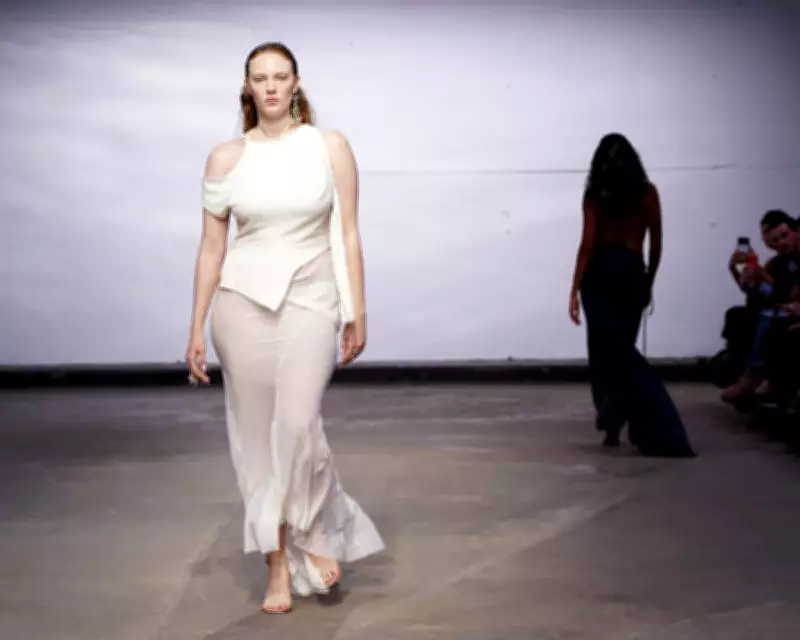
Body Diversity Makes a Stand at London Fashion Week
In a bold counter-movement to the fashion industry's growing obsession with ultra-thinness, body diversity has re-emerged as a powerful statement at London Fashion Week. Emerging designers including Karoline Vitto, Phoebe English, and Sinead Gorey have prominently featured a wide spectrum of body shapes on their catwalks over the past four days, showcasing sizes ranging from UK 10-16 (mid-size) to UK 18 and above (plus-size or curve models). This stands in stark contrast to the traditional sample size models, typically UK 4-8, which have dominated runways.
A Defiant Response to Industry Trends
This resurgence comes amid alarming reports of declining size inclusivity in fashion. Last year, Vogue Business revealed that plus-size representation accounted for a mere 0.9% of catwalk looks across major fashion weeks in New York, London, Milan, and Paris. Karoline Vitto, a London-based Brazilian designer, directly addressed this issue at her first catwalk show in two years, asking, "Where did all the curve models go?" She explained her return to the runway was a deliberate pushback against the pervasive narrative that "thin is back."
Vitto's brand, founded in 2020 and offering sizes UK8 to UK22, featured 23 models with diverse body proportions to accurately reflect her sizing. High-profile models like Jocelyn Corona and Nyakier Buong participated, with many covering their own travel costs from Brazil and the US to support the designer's vision. Vitto emphasized the importance of showcasing varied body types, noting, "Some have a lot of bust projection. Some have a wider hip... It sounds straightforward but it doesn't normally happen on the catwalk."

Innovative Casting and Broader Inclusivity Efforts
Other designers adopted creative approaches to promote diversity. Phoebe English utilized street casting, selecting models such as her mother and writer Aja Barber, while Yaku Stapleton featured gymnasts and dancers in his gaming-inspired show. Sinead Gorey celebrated curves with corsetry and high hemlines. Emma Matell, a casting director for brands like Tom Ford, praised these efforts but stressed that change must also originate from top luxury houses, which influence commercial standards.
Matell highlighted the normalization of thinness in Hollywood and mainstream culture, partly driven by weight-loss drugs like Ozempic, which has reduced opportunities for mid- and plus-size models. She noted, "Everyone has become smaller this season. The curve girls are seeing they can get more work if they are a smaller size."
Optimism and Expanding Diversity
Despite these challenges, Vitto remains hopeful, asserting that inclusivity is not a fleeting trend. She pointed to fellow female-led, size-inclusive brands like Sinéad O'Dwyer and Ester Manas as pioneers of lasting change. Beyond body diversity, age inclusivity also gained traction, with models like 47-year-old Karen Elson walking for Erdem and several 40-plus models featured at Emilia Wickstead.
This season's London Fashion Week demonstrates a resilient commitment to representing real bodies, offering a refreshing contrast to the industry's lean toward extreme thinness and setting a precedent for future inclusivity in fashion.