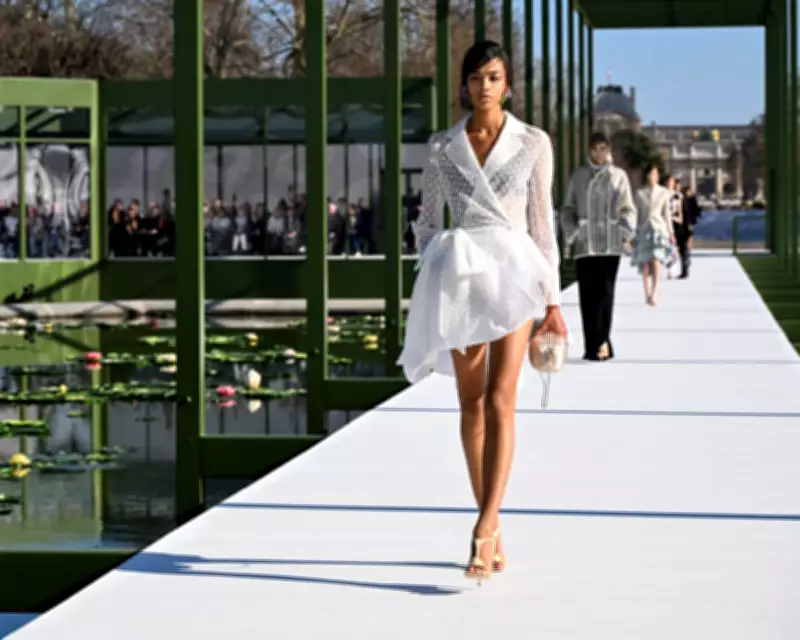
In a remarkable departure from darker themes, Dior's opening show for Paris Fashion Week transformed into a celebration of springtime joy and artistic inspiration. Northern Irish designer Jonathan Anderson, now in his second season as creative director, presented a collection that deliberately shifted away from the introspective mood of his debut, embracing instead a seductive vision of Parisian beauty and light.
From Dark Undercurrents to Sunlit Gardens
Six months after his debut collection opened with an Adam Curtis film blending horror cinema with Dior archive footage, Anderson chose a completely different atmosphere for his spring presentation. "That show was done in 26 days," Anderson recalled, contrasting it with his current approach. "Last year was so intense. Dior has this giant past, and I had to start there, but now I feel free to release it from that."
The designer, who moved to Paris specifically for the Dior role last year, expressed feeling "a lot more calm" this time around. Where his first collection featured models shadowed under darkly beaked Tricorn hats, this presentation unfolded under an obligingly blue sky, with the Eiffel Tower glittering in sunshine as part of the show's visual narrative.

Monet's Waterlilies Come to Life
Anderson drew direct inspiration from Claude Monet's famous waterlilies paintings, creating a collection that translated the artist's impressionistic vision into wearable art. The show's setting reinforced this artistic connection dramatically. A promenade across the octagonal pond of the Tuileries Gardens was constructed as a catwalk, while Sunday sailboats were transformed into giant lily pads adorned with vibrant blooms.
The designer's research extended beyond Monet to include Georges Seurat's romantic paintings of ordinary Parisians at leisure. This dual artistic inspiration manifested throughout the collection, particularly in pieces that captured the play of light and color that defined both artists' work.
Technical Mastery Meets Whimsical Design
The Dior atelier demonstrated exceptional craftsmanship throughout the collection, with the workforce having recently doubled in size—a clear indication of LVMH's substantial ambitions for the brand. Technical highlights included bar jackets that exploded into chiffon waves at the waist, each layer meticulously edged with beads to create a rippling, light-catching effect reminiscent of water movement.
Pointillist techniques appeared in an exuberant layered skirt covered in tiny paillettes, while a shearling coat was expertly ironed to resemble Astrakhan lamb fur. The collection closed with this remarkable coat, showcasing the atelier's ability to transform materials through innovative techniques.
Anderson's Signature Subversion
Despite the overall sunniness of the collection, Anderson maintained his characteristic edge. "Strong and pretty are often treated as opposites in fashion," he noted, "but this collection achieved both sunniness and sophistication." Trousers appeared throughout, slouched to hang like tracksuit bottoms but elevated with a hip-to-ankle line of tiny covered buttons where sportswear's go-faster stripes might typically appear.
The designer described this approach as "high-low, in a good way" during a preview before the show. His personal favorite piece was a simple wine-dark cashmere and mohair coat with a black satin shawl collar, which he characterized as "masculine, but sexual." Anderson emphasized, "People know Dior for dresses, but he made some of the greatest coats of all time."
Whimsical Touches and Future Directions
Playful elements added charm to the presentation, including dollhouse-sized pairs of classic French green park chairs sent out as whimsical invitations. Frothy dresses possessed a cottontail bounce, while shoes featured polka dots or delicate porcelain flowers.
Reflecting on his creative journey with the historic house, Anderson shared his evolving perspective: "Last season I was in my own head, now I am looking ahead. This feels like where I want this thing to go." The collection successfully balanced Dior's heritage with contemporary sensibilities, proving that in challenging times, as Anderson demonstrated, joy indeed sells—and does so with considerable style and substance.