

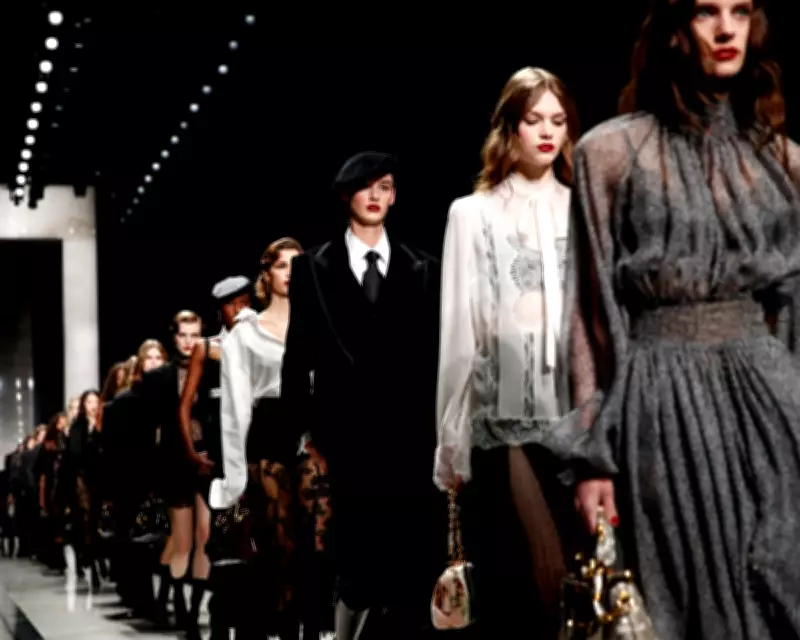
Dolce & Gabbana Reaffirms Brand Identity with Achromatic Collection in Milan
In a bold statement of self-definition, Dolce & Gabbana presented their latest womenswear collection during Milan Fashion Week, emphasizing their core identity through achromatic designs and a renewed focus on Italian archetypes. The designers, Domenico Dolce and Stefano Gabbana, sought to move beyond recent controversies by delivering what they described as "instantly recognizable" fashion that speaks directly to their brand's values and heritage.
Addressing Controversy Through Action
While the designers declined to comment directly on the all-white casting that overshadowed their January menswear show, their actions spoke volumes. More than one-third of the models at Saturday's womenswear presentation were women of color, a clear response to the criticism that had clouded their previous event. This strategic shift in casting demonstrated a willingness to engage with industry conversations about diversity, albeit without overt political commentary.
Instead, Dolce and Gabbana focused their narrative on brand identity. "Our collections speak to us, our identity, our values," they stated after the show. "We never wanted to follow trends." Their primary objective, they emphasized, was creating clothing so distinctive that viewers would immediately recognize it as Dolce & Gabbana without needing to see the label.

The Enduring Italian Archetypes
The collection remained remarkably faithful to the idealized Italian archetypes that have defined the brand since its founding in 1985. For men, this continues to mean the macho Italian beefcake silhouette. For women, the designers maintain their fascination with the Sicilian widow and the mistress—figures steeped in Mediterranean drama and sensuality.
However, Saturday's show introduced a new feminine archetype to the Dolce & Gabbana universe: the Gen Z hipster. This contemporary figure appeared wearing baggy ripped-denim jeans paired with a satin bra-top, representing the brand's attempt to connect with younger consumers while maintaining its core aesthetic.
Achromatic Palette with Strategic Accents
The collection predominantly featured black garments, creating a dramatic, cohesive visual statement. Strategic pops of color appeared sparingly—a single red shoe, a scarlet lip, or an occasional green doctor's bag providing contrast against the monochromatic backdrop. The designers incorporated faux fur, acknowledging the growing industry movement against animal fur that has seen London and New York implement bans, while Milan and Paris have yet to follow suit.
Accessories played a significant role in establishing the collection's mood. Crucifix earrings mixed religious symbolism with fashion, while Cinema Paradiso-style baker-boy hats evoked nostalgic Italian cinema references. These elements reinforced the brand's signature blending of sacred and profane themes.
Continuing Provocative Traditions
True to form, Dolce & Gabbana continued their tradition of transforming underwear into outerwear—a practice dating to the early 1990s. With the nipple already "fully freed" in contemporary fashion, the designers shifted their focus to liberating knickers. Nearly half the models displayed their underwear beneath sheer lace dresses, while one particularly daring look featured a white shirt tucked into bloomers.
Controversial History and Current Standing
The Italian fashion house has navigated numerous controversies throughout its history. In 2012, the brand faced accusations of romanticizing slavery after presenting earrings reminiscent of blackamoor artworks. Three years later, they listed "slave sandals with pompoms" on their website (later renamed "decorative flat sandals"). The designers have also made controversial statements about IVF babies being "synthetic" and expressed opposition to gay adoption rights.
Most significantly, a 2018 marketing campaign in China backfired spectacularly, resulting in the brand's removal from most Chinese-owned platforms and allegedly costing the company one-third of its business. Despite these challenges, Dolce & Gabbana rarely engages directly with criticism, maintaining their course while generating approximately €2 billion (£1.8 billion) in annual revenues.

Celebrity Presence and Brand Loyalty
The brand remains the most-worn menswear label on red carpets worldwide, though curiously, much of Saturday's tailoring appeared back-to-front. Catwalk shows primarily serve as marketing exercises designed to sell clothes and reinforce brand loyalty among existing customers.
Notable Dolce & Gabbana devotees include Lauren Sánchez, who wore a gown by the designers at her wedding to Jeff Bezos, and Melania Trump, who selected the brand for both of her official White House portraits. Neither attended Saturday's show, but Madonna made a memorable appearance, arriving thirty minutes late wearing teal gloves and sitting beside Anna Wintour as her music played throughout the venue.
The collection ultimately demonstrated Dolce & Gabbana's determination to define themselves on their own terms—embracing their controversial history while subtly addressing criticism through action rather than rhetoric. Their achromatic presentation in Milan served as both a reaffirmation of core identity and a strategic response to fashion industry conversations about representation and brand values.





