McQueen's Paris Show Blends Fatalistic Glamour Amid Brand Struggles
Beneath the glittering surface of Paris fashion week, where Chappell Roan shone in the front row and champagne flowed backstage, Alexander McQueen's latest presentation carried dark undercurrents. The brand has faced a staggering 60% decline in turnover over the past three years, with workforce reductions at its London headquarters last year and potential job losses affecting a third of its 180 employees in Italy. Fifteen years after the death of founder Lee McQueen, the iconic fashion house is grappling to sustain its momentum in a challenging market.
A Legacy Under Pressure
Lee McQueen remains a hallowed name in the fashion industry, one of the few modern designers whose character and story resonate widely with the public. However, the generation that once embraced McQueen's original bumsters has aged out of shock-value fashion, and the brand's influence over younger consumers has waned. This backdrop of adversity seems to suit McQueen, which has always leaned into a fatalistic kind of glamour, as evidenced in its recent Paris show.
Seán McGirr's Vision Takes Center Stage
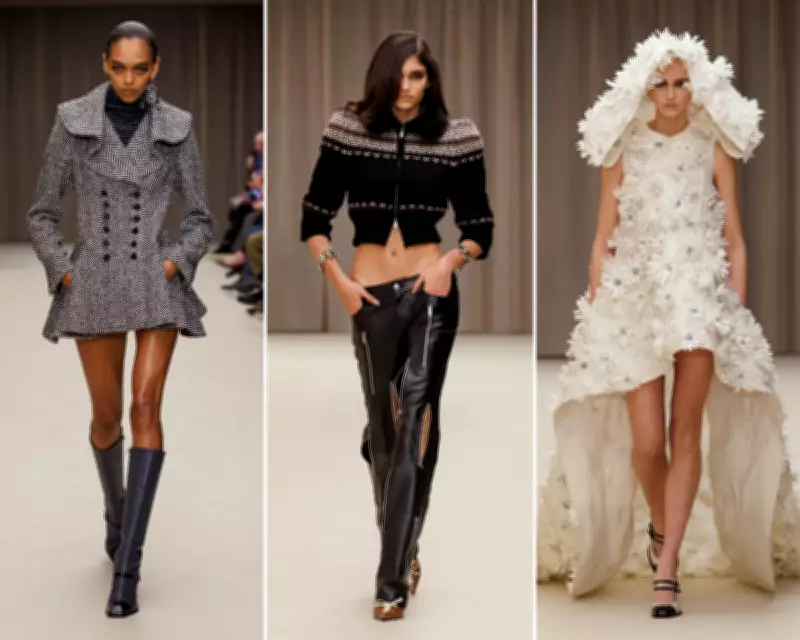
Seán McGirr, the 37-year-old Dubliner who assumed the role of creative director in 2023, delivered one of his strongest collections to date. The show opened with a herringbone jacket that was just long enough to pass as a dress, meticulously buttoned through the waist and flowing into soft waves that skimmed the upper thigh. Backstage, McGirr revealed his inspiration drew from archive pieces of McQueen's 20-year-old Widows of Culloden collection, a masterpiece known for its controlled emotion and striking silhouettes.

Modern Touches and Historical Nods
A corset-boned white lace dress was accentuated with a shoulder cape of glimmering feathers, now hand-embroidered in silk rather than plucked from birds, reflecting changed times since the 1990s. While last season revived the bumster trouser literally, this collection featured harness-lashed trousers with a subtle dip at the center of the spine, creating a heart-shaped frame around what Lee McQueen once described as "the most erotic part of anyone's body." Models sported long lashes, pointed nails, and tonged curls, evoking the glamour seen on young women in cities worldwide, rather than the avant-garde styles typical of catwalks.
Inspired by London and Modern Identity
This approach lent the show an immediacy and relevancy that can sometimes be lost in a house with such revered archives. "It was important to me that the girls looked like they dressed themselves," McGirr explained. "I'm inspired by London girls. West End girls, I guess, with a bit of Camden as well." The collection also paid homage to British fashion history through pert miniskirts and knee-high boots, nodding to the legacy of Mary Quant. McGirr emphasized his focus on the curated nature of modern identity, noting, "We're really 'on' all the time, you know? We're constantly performing. It feels like there's some kind of psychological disruption going on there, and I wanted to look at that. There is paranoia, and perfectionism, and performance."
Every McQueen show requires a touch of psychodrama, and this presentation delved into themes of performance and identity in contemporary life. Despite the brand's struggles, McGirr's collection showcased a blend of fatalistic glamour and modern inspiration, highlighting the ongoing evolution of Alexander McQueen in the fashion world.