

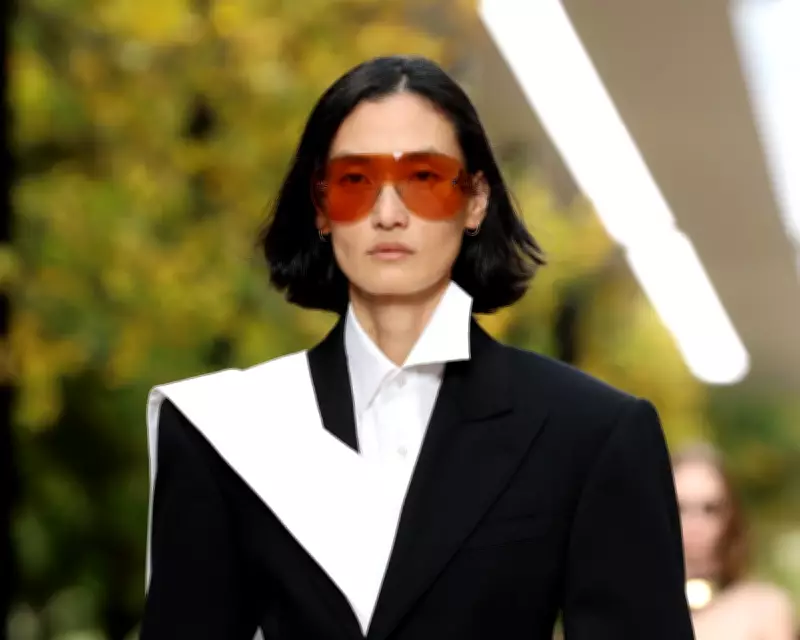
The Rise of Non-Sun Sunglasses in Fashion and Everyday Wear
Despite the United Kingdom experiencing forty consecutive days of rainfall this year, sales of sunglasses have remained surprisingly resilient. Instead of traditional dark lenses, a new eyewear revolution has emerged: non-sun sunglasses. These innovative accessories feature shield-style frames with barely-tinted lenses that offer protection while maintaining visibility.
From Dental Hygienists to Paris Catwalks
The style bears a striking resemblance to protective goggles worn during dental appointments or safety glasses used on construction sites. Originally designed for long-distance runners and cyclists needing protection from sun, sweat, and flying debris, this high-performance eyewear has transcended its athletic origins. Now, these glasses are being embraced by fashion enthusiasts who may never complete a couch-to-5k program but appreciate the functional aesthetic.
At Paris Fashion Week, luxury brand Celine showcased models wearing giant rimless shades with charcoal- and honey-tinted lenses that echoed sporting goods store aesthetics. While designer versions command prices around £470, more accessible alternatives from sporting giants like Decathlon start at just £29.99. British retailer Marks & Spencer has also entered this market with £20 "sport sunglasses" featuring rust-colored tints.

The Functional Luxury Phenomenon
Eyewear trend forecaster Selin Olmsted identifies a "huge uptick" in demand for non-sun sunglasses where "you can still see the eye." These glasses fall into "category one" eyewear, designed to protect against harmful UV light specifically on overcast days when many mistakenly believe protection is unnecessary. Some advanced versions incorporate photochromic lenses that automatically adjust tint based on light exposure.
"This reflects how different lifestyles are merging and blending into each other," Olmsted explains, describing the convergence of sport and fashion worlds. "Due to sociopolitical reasons, people are allocating more of their budget to their physical wellbeing. They're now investing in better-functioning gear that optimizes performance while still looking good."
Celebrity Endorsement and Cultural Shift
On social media platform TikTok, Generation Z has swapped Charli XCX-inspired blackout bug-eye shades for the Mamil (middle-aged man in lycra) favorite: wraparound cycling glasses. The cultural shift gained further momentum when pop star Harry Styles appeared in Runner's World magazine wearing vintage shorts and Oakley's rose-tinted Cybr Zero glasses while discussing his sub-three-hour marathon time.
Alex Ellinport, global product director at Oakley, observes this natural convergence: "Seeing people wear Oakley simply because they appreciate the design feels like a natural extension of where those communities are heading and how those worlds are converging."
Technical Innovation and Psychological Benefits
Styles's featured glasses utilize rimless construction and weigh approximately 22 grams, which Ellinport describes as "next to nothing" eyewear. Similar lightweight designs from specialist brands like District Vision and Kuro Athletics now appear as frequently on fashion front rows as on running tracks. US brand Research Studio, which 3D-prints glasses for endurance athletes, captures this dual-purpose appeal with their tagline: "Also great for running."
Beyond eye protection, non-sun sunglasses offer practical advantages for indoor wear without the social stigma of traditional sunglasses worn inside. Olmsted highlights their mood-enhancing properties: "On gloomy days they can uplift someone's psychology. You pop them on in the morning and they still allow you to see everything clearly, but through a really lovely warm pink or earthy toned light. It just adds a nice start to the day."
This trend underscores how sunglasses have evolved into year-round accessories that bridge performance technology with fashion sensibility, creating a new category of functional luxury that resonates across diverse demographics and lifestyles.






