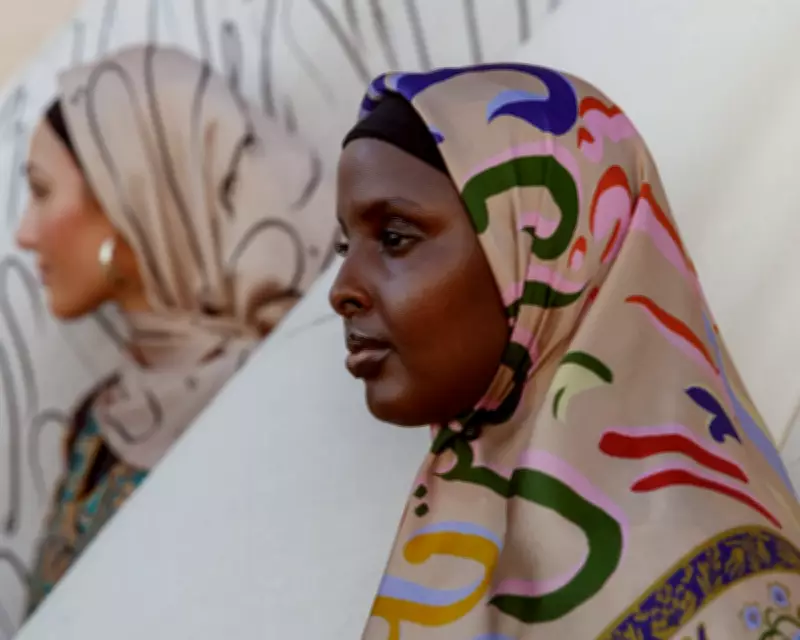
The Rise of Printed Hijabs: A Fashion Revolution
In a vibrant departure from tradition, printed hijabs are experiencing a full-throttle revival, captivating the fashion world with their bold designs and cultural significance. At London Fashion Week, models showcased headscarves adorned with jewellery, inspired by traditional Yemeni fabrics, signaling a dynamic shift in modest fashion. This movement is not merely about aesthetics; it represents a powerful assertion of identity and visibility for Muslim women, particularly those from Generation Z.
From Minimalism to Maximalism: A Cultural Shift
For years, the hijab aesthetic was dominated by sleek, controlled styles featuring chiffon fabrics and a palette of beige, taupe, and black. This minimalistic approach, prevalent in the mid-2010s, aligned with broader fashion trends of quiet luxury. However, it was also influenced by post-9/11 Islamophobia, as many Muslim women opted for neutral tones to blend into societies that often marginalized them. According to journalist Hafsa Lodi, author of Modesty: A Fashion Paradox, these muted colors served as a safety net, helping visibly Muslim women navigate a world that constantly 'othered' them.
Today, that narrative has flipped dramatically. The post-Covid generation is embracing boldness and self-expression, moving away from plain, solid designs. Brands like Vela, founded by sisters Marwa and Tasneem Atik in 2009, are at the forefront of this change. Their scarves, featuring everything from Bambi-style prints to Syrian-inspired motifs, regularly sell out within minutes. Tasneem Atik notes that this new wave represents a 'boldness' among Muslim women, signaling a departure from blending in for safety toward dressing in a way that stands firm in their identities.

Leading Brands and Social Media Influence
Vela has become a cornerstone for young Muslim women online, spawning a subculture of 'Vela girls' who share styling tips and tutorials on platforms like TikTok and Instagram. Its popularity has even inspired knock-offs on fast-fashion sites such as Shein, though this has sparked criticism about overconsumption in modest fashion. In the UK, Sooqlina, a London-based modest fashion retailer founded by Lina Salih in 2024, is part of this new wave. After identifying a market gap for digitally printed jersey-material hijabs, Salih released polka dot and plaid headscarves that sold out within days.
Social media plays a crucial role in this trend's visibility. Diana Lomani, a 23-year-old content creator, observes the emergence of subcultures like Gyaru hijabis, which blend Japanese fashion with modest wear. She emphasizes that styling hijabs uniquely helps humanize Muslim women, sparking conversations and fostering joy in personal expression. Lomani often incorporates her Palestinian heritage into her style, using headbands with tatreez embroidery and gold coin jewellery, describing it as an 'invitation to spark conversation.'
Cultural Reclamation and Economic Impact
For many Muslim women, especially first- or second-generation immigrants, prints are deeply embedded in cultural heritage. Lina Salih recalls how growing up, seeing mothers and aunties wear printed scarves confidently was the standard. This shift to patterns is part of a booming global market, with Muslim spending on apparel and footwear projected to reach $428 billion by 2027. Fashion influenced by Islam is increasingly mainstream, even as political stigmatization of hijab-wearing women persists.
Vela's collections, such as the Baladi line meaning 'home,' draw on cultural references from Guinean, Egyptian, and Pakistani traditions, helping diaspora women connect with their roots. In an increasingly polarizing climate, Marwa Atik views this representation as a 'form of resistance.' The brand's keffiyeh-inspired hijabs, printed with Urdu phrases about strength, have sold out repeatedly since late 2023, reflecting solidarity with political causes like Palestinian rights.

Conclusion: A New Era of Expression
While plain or black scarves remain a go-to for comfort, the embrace of bold, printed hijabs by Gen Z Muslim women signifies a larger cultural movement. It's energizing to witness a generation that wears its culture and faith unapologetically, transforming the hijab from a symbol of modesty into a canvas for personal and political expression. This trend not only revitalizes fashion but also challenges stereotypes, fostering a more inclusive and visible community.