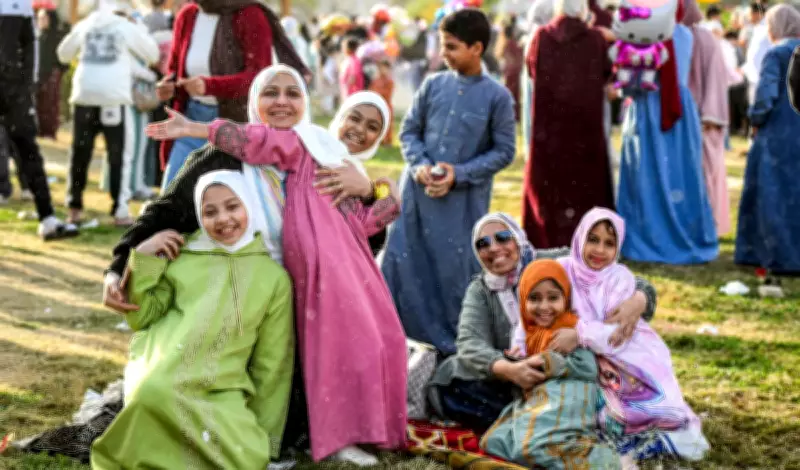
As Ramadan concluded, Muslim worshippers across the globe gathered to celebrate Eid al-Fitr, a joyous festival marking the end of fasting, though celebrations were tempered by the shadow of war in the Middle East. From bustling cities to serene parks, communities united in prayer, feasting, and traditional customs, showcasing both resilience and cultural diversity.
Celebrations Spanning Continents
In Cairo's Heliopolis district, families broke their fast at morning gatherings near the Siddiq mosque, enjoying festive meals in local parks. Similarly, in Goma, Democratic Republic of Congo, friends congregated for celebrations, with some arriving on motorcycle taxis at the Unity stadium, highlighting the vibrant spirit of the occasion.
Prayers and Gatherings in Diverse Settings
Prayers were observed in iconic locations worldwide. In Lagos, Nigeria, worshippers filled the Central mosque, while in Abidjan, Ivory Coast, the Great Mosque Salam of Adjame hosted Eid al-Fitr prayers. European cities like Amsterdam saw worshippers utilizing football pitches for prayers, and in Birmingham, UK, Small Heath Park transformed into a fairground with ice-cream vans adding to the festive atmosphere.

Traditional Attire and Cultural Expressions
Traditional dress played a central role in celebrations. In Abuja, Nigeria, young men donned senator suits, and in Turin, Italy, fathers and sons wore traditional attire for family gatherings. Markets in Srinagar, India, buzzed with activity as women shopped for bangles, and in Yogyakarta, Indonesia, children held balloons after prayers, emphasizing the cultural richness of the festival.
Somber Notes Amidst Festivities
However, the celebrations were not without poignant moments. In Gaza City, balloons were released and girls gathered at al-Saraya Square, but a woman visited a loved one's grave after morning prayers, reflecting the impact of conflict. In Beirut, Lebanon, children displaced by the Israel conflict played in streets on prayer day, underscoring the harsh realities faced by some communities.
Global Unity in Worship
From Skanderbeg Square in Tirana, Albania, to the Gazi Husrev-beg mosque in Sarajevo, Herzegovina, large crowds gathered for prayers. In Mecca, Saudi Arabia, worshippers circled the Kaaba at the Grand Mosque complex, while in Athens, Greece, spring settings provided a backdrop for prayers. New York City's Muslim community attended prayers outside Masjid-At-Taqwa in Brooklyn, demonstrating the global reach of Eid al-Fitr.
Cultural Practices and Community Spirit
Beyond prayers, cultural practices flourished. In Cairo, gifts were distributed after morning prayers outside the Siddiq mosque, and in Egypt's Abusir Necropolis near Giza, henna-painted hands symbolized traditional artistry. These moments highlighted the deep-rooted customs that accompany the festival, fostering a sense of community and shared heritage among Muslims worldwide.
Despite the challenges posed by regional conflicts, Eid al-Fitr served as a powerful reminder of unity and faith, with celebrations bridging geographical and cultural divides. The festival's ability to bring people together in prayer and joy, even in times of adversity, underscores its enduring significance in the Muslim calendar.