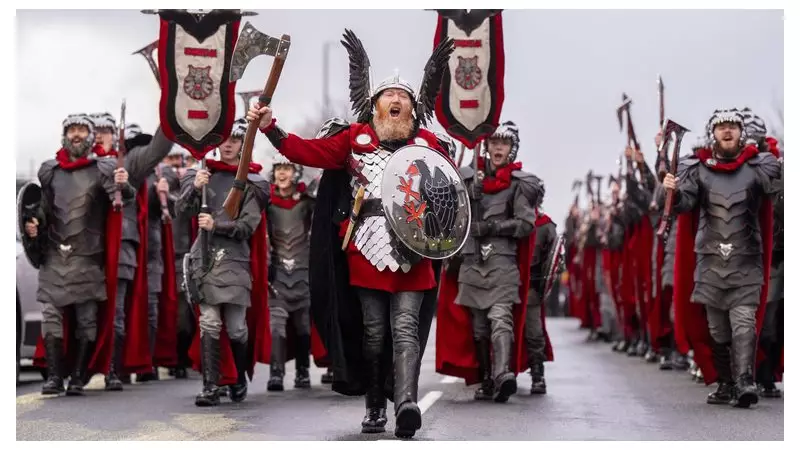
Crowds have assembled in Shetland for the internationally renowned Up Helly Aa fire festival, an annual spectacle that captivates visitors from across the world. This cherished event unfolds in Lerwick on the final Tuesday of January each year, drawing enthusiasts and tourists alike to witness its unique blend of history and celebration.
The Viking-Inspired Procession and Traditions
The festival is a vibrant homage to Shetland's Norse heritage, with participants donning Viking attire to march through the streets of Lerwick. This tradition, which originated in the 19th century, recreates the ancient past of the islands, which were under Norse rule for approximately 500 years before becoming part of Scotland in 1468.
The procession is led by the Guizer Jarl, or chief guizer, who guides the parade through the town. The event culminates in a dramatic torch-lit procession, where volunteers have meticulously produced over 1,000 torches for the occasion.

The Burning of the Replica Longboat
A highlight of Up Helly Aa is the burning of a replica longboat, a symbolic act that marks the climax of the festivities. Volunteers are responsible for constructing the galley boat, adding a community-driven element to the preparations. This fiery spectacle is a visual feast that underscores the festival's deep-rooted connections to Viking culture.
Evening Celebrations and Historical Roots
Following the procession and boat burning, the evening is filled with a host of celebrations in halls around Lerwick, offering attendees a chance to socialise and immerse themselves in local traditions. The festival's origins trace back to the 1870s when a group of local men sought to infuse new ideas into Shetland's Christmas celebrations, evolving into the grand event it is today.
Up Helly Aa not only serves as a major tourist attraction but also fosters community spirit and preserves Shetland's rich historical legacy. Its global appeal continues to grow, making it a must-see event for those interested in cultural festivals and Viking history.