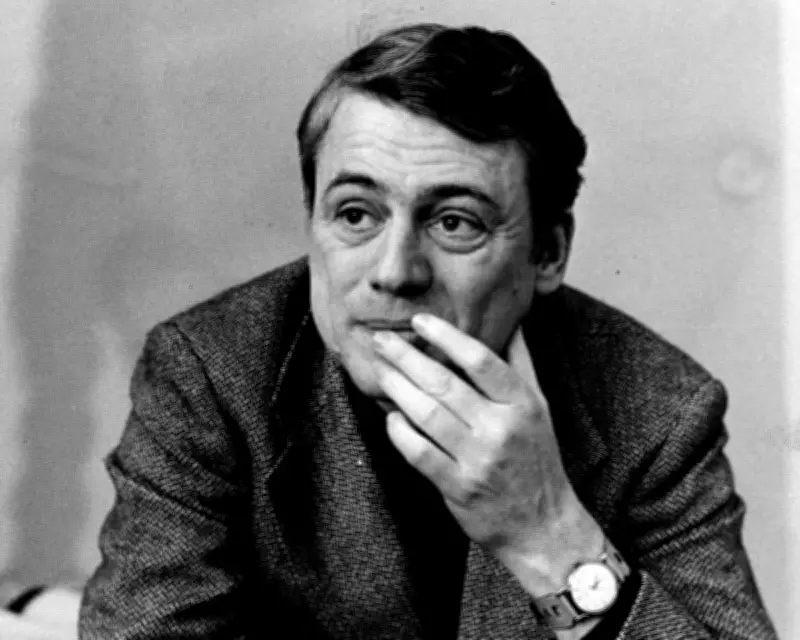
Alexander Kluge, Influential German Filmmaker and Author, Passes Away at 94
Alexander Kluge, a renowned German film-maker and author who played a pivotal role in the New German Cinema movement, has died at the age of 94, as confirmed by his publisher. Kluge, celebrated for his innovative cinematic collages, secured the prestigious Golden Lion award at the Venice Film Festival in 1968, cementing his legacy in the world of avant-garde cinema.
A Legacy of Intellectual and Artistic Innovation
Born in 1932 in Halberstadt, western Germany, Kluge survived the Allied bombing of his hometown in 1945, an experience that profoundly shaped his worldview. He pursued studies in law, history, and church music at Frankfurt University, where he was mentored by the philosopher Theodor Adorno, a key figure in the Frankfurt school of neo-Marxist cultural criticism. Kluge initially practiced law but soon gravitated towards literature and film, signing the Oberhausen Manifesto in 1962, which advocated for a break from traditional German film genres.
His early film, Abschied von Gestern (released as Yesterday Girl in the US), emerged from this manifesto and told the story of a Jewish woman struggling to adapt in West Germany. The film employed a jarring, non-linear narrative and won the Silver Lion at Venice, marking the first post-war German film to achieve this honor. Kluge further solidified his reputation by winning the Golden Lion two years later with Artists in the Big Top: Perplexed.

Bridging Art and Commerce
Kluge masterfully balanced his roles as a public intellectual and a commercially successful producer. In 1987, he founded the production company DCTP, through which he produced a steady stream of arts and interview programs for German television, bringing experimental film to broader audiences. His collaborations extended to figures like philosopher Jürgen Habermas, with whom he shared a commitment to the Frankfurt school, and US author Ben Lerner, with whom he co-authored The Snows of Venice in 2018.
A committed pacifist due to his wartime experiences, Kluge's views sometimes sparked controversy, particularly in light of modern conflicts like Russia's invasion of Ukraine. In a 2022 radio interview, he expressed that capitulation to end war was not inherently evil, a statement that drew criticism for its historical implications.
Kluge's work continues to influence filmmakers and thinkers, leaving an indelible mark on both cinema and cultural criticism.