Darren Aronofsky, the acclaimed director behind films like Black Swan and The Wrestler, has ventured into controversial territory with his new online series, On This Day... 1776. Produced by his studio Primordial Soup, this AI-generated depiction of America's revolutionary war has been met with widespread criticism for its disturbing visuals and potential impact on the entertainment landscape.
A Troubling Vision of History
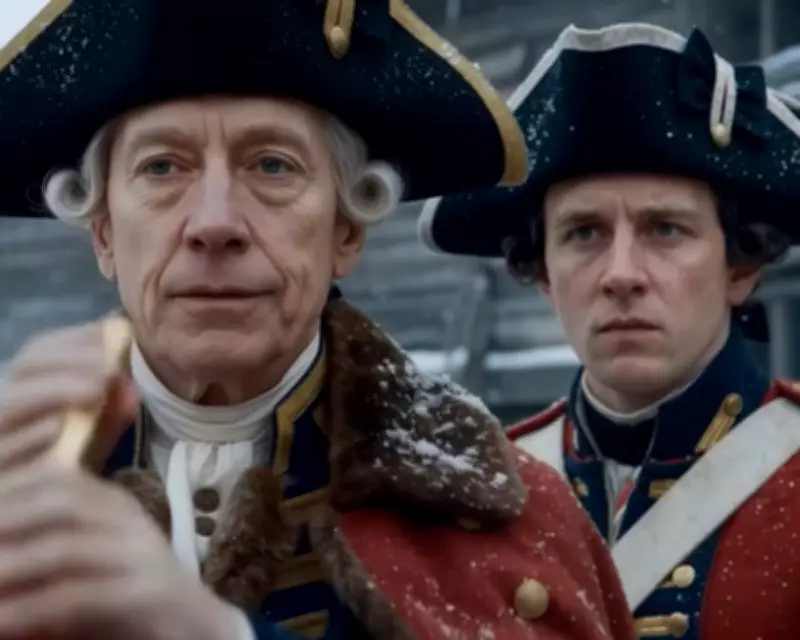
The series, available on Time magazine's YouTube channel, consists of short videos that aim to dramatise key moments from the revolutionary war. The first episode, running three and a half minutes, shows George Washington raising a new flag over Prospect Hill in defiance of King George III. Described as the moment 'rebellion becomes resolve,' the series attempts to blend historical narrative with cutting-edge technology, but the execution has been widely panned as deeply flawed.
Uncanny and Unsettling Visuals
Viewers have noted that the AI-generated characters in On This Day... 1776 exhibit a range of unsettling features. The faces of historical figures like Benjamin Franklin and Thomas Paine appear distorted, with shifting wrinkles and dead, expressionless eyes that evoke comparisons to animated films like The Polar Express. One critic described Franklin as looking like a genetic splice of Hugh Laurie and Anthony Hopkins, covered in liver spots, creating a nightmarish effect that undermines the series' historical aspirations.

The animation style, which oscillates between photorealism and abstraction, results in characters that seem poorly aligned, as if drawn on mismatched sheets of tissue paper. This visual inconsistency is particularly jarring during close-ups, where the limitations of current AI technology become glaringly apparent.
Human Voices in an AI World
Interestingly, the series employs human actors for voiceovers, a decision that has sparked debate about the role of professionals in an increasingly automated industry. While these performances are praised as the most convincing aspect of the production, they highlight a dissonance when paired with AI-generated visuals, especially in scenes where lip movements fail to sync with dialogue.
This reliance on human talent suggests a temporary compromise, but it raises questions about the future of acting and content creation. As AI technology advances, the need for human involvement may diminish, potentially rendering roles like Aronofsky's obsolete in a landscape dominated by prompt-based generation.
Industry Implications and Ethical Concerns
On This Day... 1776 has ignited discussions about the ethical and practical ramifications of AI in filmmaking. The series' use of likenesses that resemble actors such as Ralph Fiennes, Daniel Day-Lewis, and Matthew Macfadyen echoes past controversies, like Scarlett Johansson's legal action against OpenAI for voice similarity. This precedent suggests that actors may increasingly seek protection against unauthorised use of their digital personas.
Despite its flaws, the series represents a significant step forward in AI-generated content, showing rapid progress compared to earlier examples like Tilly Norwood. However, this advancement is double-edged, as it accelerates the timeline toward fully automated production, where writing, acting, directing, and editing could be handled by algorithms alone.
A Critical Reception
Critics have lambasted On This Day... 1776 as not only technically deficient but also artistically hollow. Some have called it the most disturbing work in Aronofsky's career, surpassing even the intense finale of Requiem for a Dream. The series' failure to balance innovation with quality has led to calls for greater scrutiny of AI's role in creative fields, emphasising the need for human oversight to preserve artistic integrity.
As the film industry grapples with these developments, On This Day... 1776 serves as a cautionary tale about the perils of embracing technology without considering its aesthetic and ethical consequences. While AI offers new possibilities, this series demonstrates that without careful execution, it risks producing content that is more horrifying than revolutionary.