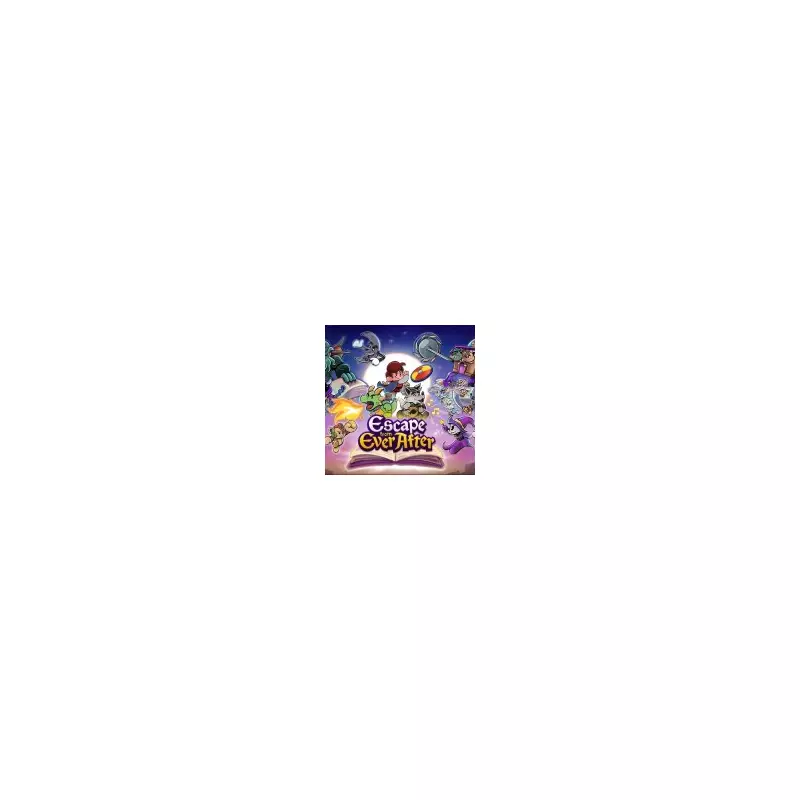
Escape From Ever After Review: Indie Paper Mario-Style RPG With Witty Corporate Satire
In the absence of new Paper Mario releases from Nintendo, indie developers have stepped up to fill the void with creative interpretations of the beloved formula. Escape From Ever After emerges as a notable contender, blending two-dimensional protagonists, turn-based combat, and sharp social commentary into a package that both honours and parodies its inspiration.
A Fairytale World Invaded by Corporate Greed
The game opens with a clever twist on classic fairytales. Players assume the role of Flynt Buckler, a hero who sets out to confront his nemesis, Tinder the Dragon, only to discover that Tinder's castle has been transformed into the corporate headquarters of Ever After Inc. This sinister company has annexed the castle, turning it into offices for executives, accounting, and HR departments, while Tinder himself is diminished and collared in the dungeons.
Forced into an unlikely alliance, Flynt and Tinder become interns at Ever After Inc., aiming to dismantle the corporation from within. The narrative cleverly satirises corporate culture, with Ever After's business model involving asset-stripping fairytale worlds and forcing characters into destitution or employment. As you explore the offices, you'll encounter a diverse cast, including mermaids, robots, unicorns, and fairies, all desk-bound in a humorous critique of modern work life.

Engaging Puzzles and Cultural References
One of the game's strengths lies in its well-constructed puzzles, which take place in limited areas filled with secrets. Players must combine props with party members' abilities to progress, such as using Tinder to light a torch or the Wolf's wind power to solve environmental challenges. The puzzles are thoughtfully designed, offering a satisfying level of difficulty without becoming overly cryptic.
The script is another highlight, delivering acerbic observations on corporate culture and a barrage of literary and video game references. From a parody of The Three Little Pigs, where the pigs build luxury flats with windproof straw, to a mission inspired by H.P. Lovecraft's The Shadow Over Innsmouth, the game maintains a light-hearted and amusing tone despite its social commentary.
Combat Mechanics: A Significant Flaw
Unfortunately, Escape From Ever After stumbles in its combat system. Like early Paper Mario games, battles are turn-based with rhythm-action elements for blocking and attacking. While attacks work predictably, parrying requires precise timing that often feels frustratingly unfair. Enemies have varied attack patterns with unclear tells, making it difficult to time blocks effectively.
Boss battles exacerbate this issue, with lengthy encounters that force players to spend turns healing or dismantling regenerating defences. The inconsistent attack patterns can make these fights feel interminable. Although an auto-block option is available, it renders battles overly simplistic, highlighting a lack of balance in the game's design.
Visuals and Platforming Limitations
The game features a charming, childlike art style that suits its fairytale theme, but it makes little use of the characters' 2D nature. Platforming sections are compromised by a fixed, front-on camera view, limiting exploration and movement. This lack of polish is particularly noticeable when compared to Nintendo's refined gameplay mechanics.
Overall Experience and Verdict
Escape From Ever After offers a genuinely funny and engaging experience with its witty dialogue, clever puzzles, and satirical take on corporate culture. However, the flawed combat system detracts significantly from the overall enjoyment, especially given the frequency of battles and their role in progression. The game's 100-storey battle arena, the Stairs of Success, feels like a chore rather than a rewarding challenge.
In summary, this indie RPG succeeds as a humorous Paper Mario-inspired adventure but falls short in execution, particularly in combat refinement. It's a worthwhile play for fans of the genre seeking sharp satire, though it may leave players longing for Nintendo's level of polish.
Score: 6/10

Formats: PlayStation 5, PlayStation 4, Xbox One, Nintendo Switch, Xbox Series X/S, and PC
Price: £19.99
Release Date: 23rd January 2025