Fargo at 30: Behind the Scenes of a Cinematic Masterpiece
Celebrating its three-decade anniversary this week, the Oscar-winning film Fargo remains a revered snowbound noir that pushed the boundaries of comedy thrillers. The Coen brothers' classic introduced "Minnesota Nice" to global audiences and provided seminal roles for Frances McDormand and William H. Macy, whose journey to securing his part involved an unforgettable audition threat.
The Audition That Almost Cost a Puppy Its Life
William H. Macy was originally slated for a modest detective role in Fargo when directors Joel and Ethan Coen unexpectedly asked if he would read for the lead part of Jerry Lundegaard. "I said: 'Boy, do I!'," Macy recalls with enthusiasm. After memorizing the script overnight and impressing the brothers, Macy knew he needed to seal the deal definitively.
Learning the Coens were in New York, Macy boarded a plane and deployed some signature Coen-esque dark humor during their meeting. "I said, I'm worried you're gonna screw up your movie by casting someone else. I knew Ethan had just gotten a little puppy and I said: 'Man, you don't give me this role, I'm gonna shoot your dog.'" The Coens laughed uproariously at this macabre joke, and Macy secured the role that would define his career.

A Perfect Script That Demanded Perfection
Both Macy and John Carroll Lynch, who played Marge Gunderson's husband Norm, recall being immediately captivated by the Fargo screenplay. Macy describes the Coens' dialogue as "scintillating" and "beautiful," comparing it favorably to David Mamet's work. "It's got metre and rhythm and poetry to it," Macy explains via Zoom from Los Angeles. "The words they choose are better than any ad-lib an actor can come up with."
Lynch echoes this sentiment, describing his first reaction to the screenplay as awe-struck. "It was a masterpiece," he says by phone. "You opened the first page and the white of the pages were reflected in the landscape in the script. It was a delight to read, an absolutely stunning piece of work without a doubt."
The Snowless Production That Defied Geography
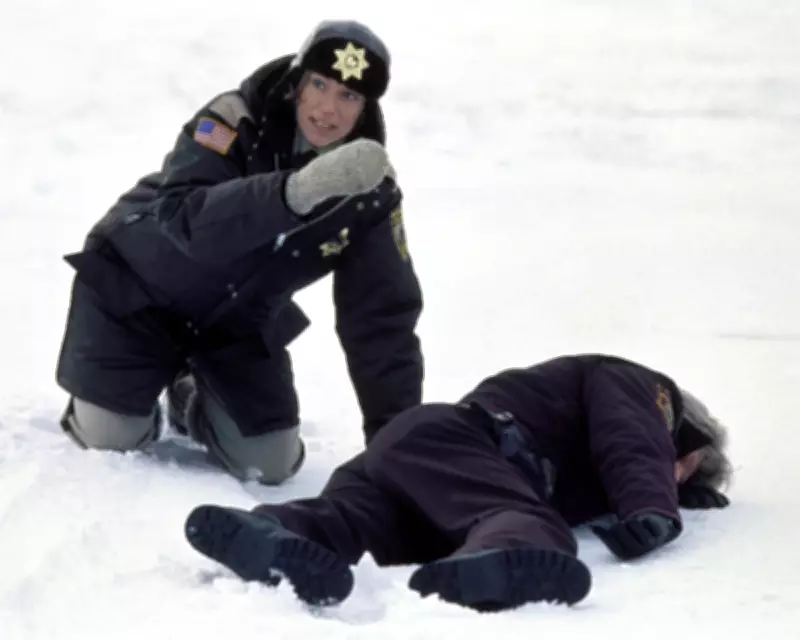
Paradoxically for a film defined by its desolate, freezing Minnesota landscape, the Fargo production was plagued by an unexpected lack of snow. The entire shooting schedule had to be inverted, with exterior crews moving progressively farther north in search of winter conditions. Eventually, they resorted to snowmakers to capture the suffocating atmosphere crucial to the film's mood.
Lynch, whose scenes were mostly indoors, was hastily flown out on a red-eye flight to shoot his bedroom scenes with McDormand. At one point, exhaustion from travel overwhelmed him, and he fell asleep in bed between takes next to McDormand's body double. "Everybody on the crew was very quiet," he laughs. "They didn't want to wake me."
The Coen Brothers' Distinct Collaborative Dynamic
Macy describes the Fargo set as a place of supreme calm and collaboration, facilitated by the distinct energies of the directing brothers. "Joel is sphinx-like," Macy observes. "Not only is he deliberate and methodical, he even moves that way. Ethan, on the other hand, is wound pretty tight. He's one of those guys like me who shakes their leg, can't sit still."
Regarding their collaboration process, Macy explains: "They both write them. They both direct them. They both produce them, but Joel directs more than Ethan and Ethan writes more than Joel. That's my takeaway from it. They were on the same page. The deliberations they would have they did quietly with each other."
Room for Improvisation Within Perfection
Despite the script's precision, there was space for actorly instincts and happy accidents. Macy improvised some idle doodling at the car dealership, which Ethan Coen filmed over his shoulder and kept in the final cut. He also pitched the painfully funny scene where Jerry rehearses a frantic phone call to his father-in-law.
Lynch, drawing from his stage experience at Minneapolis's Guthrie Theater, successfully pitched a subtle character moment for Norm during a breakfast scene. He would cook eggs for his pregnant wife but not for himself, waiting to finish her leftovers when she was called away to a murder scene. "It felt very right for me, for the character," Lynch notes, adding that his high school yearbook quote was "Are you gonna finish that?"

The Warm Heart at Fargo's Center
Lynch believes the deep, genuine love between Marge and Norm sets Fargo apart from the typical "coolness and detachment" of the Coen brothers' filmography. "It has this warm heart in the centre," he emphasizes, praising McDormand's Oscar-winning performance as particularly significant in American cinema.
"I don't know of many actors who've stood in so many American landscapes in the history of their film career," Lynch reflects. "The only person I could think of who had done that was John Wayne. Fran has stood in the Ozarks, she's stood in the Badlands, she's stood in the desert, she's stood in the winter tundra of Minnesota."
Enduring Legacy and Cultural Impact
Three decades later, Fargo continues to fascinate audiences and influence popular culture. Its distinctive "Minnesota nice" dialect, which Lynch notes was absent from mainstream culture before 1996, is still regularly shouted at Macy by enthusiastic fans. The film spawned an acclaimed anthology television series and even inspired a chainsaw-carved statue titled Wood Chip Marge in Fargo, North Dakota.
When asked why Fargo endures, Macy doesn't hesitate: "Because it's perfect. It's one of those lovely situations where everything – the way they cast it, where they shot it, the music, the tone, the script, the story – is in harmony. It's an exquisite film. There's not a false note in it."