New Film on Pacifist Turned Nazi Collaborator Sparks Heated Debate in France
Xavier Giannoli's latest cinematic offering, Les Rayons et les Ombres (Rays and Shadows), has ignited a fierce national conversation in France, delving into the complex and still-sensitive history of the Vichy period during World War II. The film, which runs over three hours, has already attracted more than 300,000 spectators in its opening week in mid-March, demonstrating its powerful pull despite its daunting length.
A Story of Moral Decline and Familial Devotion
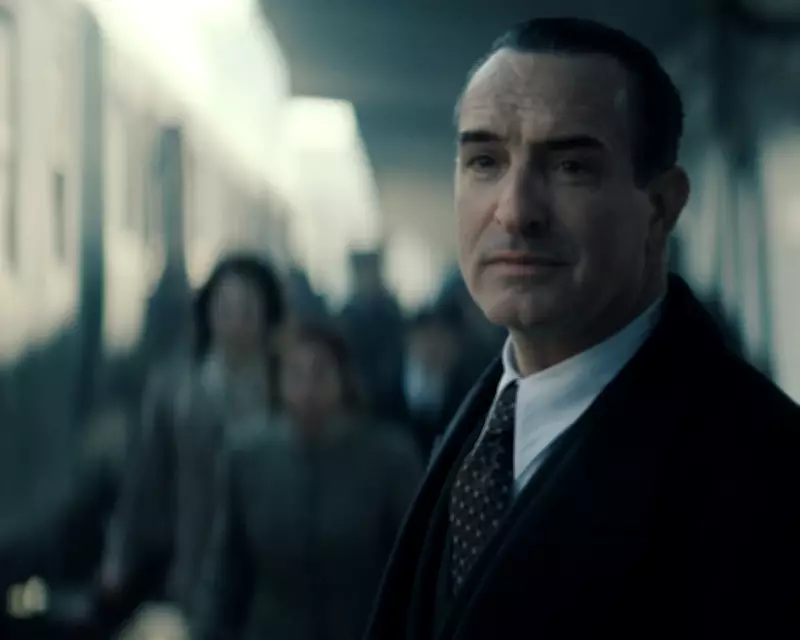
Told from the postwar perspective of Corinne Luchaire, a once-celebrated French actor hailed as the new Garbo, the narrative unfolds as she grapples with her unwavering loyalty to her father, Jean Luchaire. Played by Oscar-winner Jean Dujardin, Jean was a press baron executed for treason in 1946. Corinne, portrayed by newcomer Nastya Golubeva Carax, records her thoughts on a borrowed tape recorder, struggling to reconcile her father's actions with her devotion.
Her willful ignorance shatters when a Jewish director, who helped launch her career, visits her cramped flat. Upon inquiring about his sister, Corinne is met with the devastating revelation that she perished in a concentration camp. I didn't know, she murmurs, only to receive the poignant retort: Did you even try to find out? This moment encapsulates the film's exploration of complicity and blindness.

Controversial Portrayal and Historical Nuance
The film has polarized critics across the political spectrum. While center and right-leaning reviewers have praised it as a masterpiece of historical nuance, left-wing publications like Libération and L'Humanité have criticized it for relativizing those who willingly served the Nazi regime. Giannoli portrays Jean Luchaire not as a diehard ideologue, but as a disillusioned spendthrift whose fecklessness accelerated his downfall.
I wanted to make this film to show all the traps that a human being can fall into, says Giannoli, who spent five years developing the script with screenwriters Jacques Fieschi and Yves Stavrides. How suddenly your own little fears and cowardice can make history. This focus on personal moral failings rather than pure ideology has fueled the debate.
The Seductive Nature of Betrayal
Casting Jean Dujardin was crucial to Giannoli's vision of a seductive betrayal. Fieschi notes that Luchaire embodied a certain Parisian charm, reminiscent of Jean Renoir's La Règle du Jeu, with a lifestyle marked by mistresses and amorality. If he had been played by someone with an ugly face and no charm it would not have corresponded to the reality of the character, Fieschi explains, highlighting how allure can mask corruption.
The film delves into Luchaire's friendship with Otto Abetz, played by August Diehl, a Francophile former art teacher who became German ambassador to France. Their shared leftwing pacifism, born from the horrors of World War I, initially led to the Sohlberg Congress, a Franco-German forum that later morphed into a propaganda alliance. There is no Jean Luchaire without Otto Abetz, Giannoli emphasizes, tracing how Abetz appointed Luchaire as press tsar and funded the collaborationist newspaper Les Nouveaux Temps.
Lavish Depictions of Corruption
Giannoli spares no detail in showcasing the opulent and corrupt world of collaboration. Scenes depict black-market millionaires mingling with Nazi officials, endless champagne at embassy parties, drug-fueled orgies, and extravagant meals at iconic Parisian restaurants like Maxim's and Fouquet's. We spent a lot of money with the food designer to find just the right caviar, Giannoli said. There was no food at this time in France and it felt necessary to show how immoral and corrupt these elites – these beautiful people – had become.

Historical Context and Criticism
French cinema has long been hesitant to tackle collaboration directly, partly due to the résistancialisme myth promoted by Charles de Gaulle to unify postwar France. When Louis Malle explored similar themes in 1974's Lacombe, Lucien, the backlash forced him to relocate to the United States. Giannoli admits to sleepless nights during production, questioning his approach.
Historian Laurent Joly, while commending the film's ambiguity, disputes its portrayal of Jean Luchaire. It was not pacifism that pushed Luchaire over [into collaboration], but his fundamental amorality and venality, Joly argues, noting Luchaire's early corruption by Nazi Germany. He also suggests the depiction of Corinne as a wretched victim is exaggerated, pointing out her later memoirs and improved condition post-trial.
Balancing Fascination and Indignation
Giannoli reflects on the challenge of striking a balance between fascination and indignation. When consulting historian Pascal Ory, he was advised that neither lies nor the full truth would be forgiven, underscoring the delicate nature of portraying such a contentious period. Les Rayons et les Ombres continues to provoke discussion as it plays in French cinemas, serving as a poignant reminder of the complexities of history and morality.