Hollywood's Evolving Beauty Ideals: A Shift from Glamour to Concern
In a dramatic departure from traditional Hollywood glamour, recent appearances by celebrities have sparked widespread concern rather than admiration. The once-polished and aspirational beauty standards are being replaced by altered and gaunt aesthetics that leave audiences feeling unsettled and alienated. This transformation raises critical questions about Hollywood's enduring cultural influence when movie stars no longer represent ideals people wish to emulate.
The Jim Carrey Phenomenon: Body Double Speculations
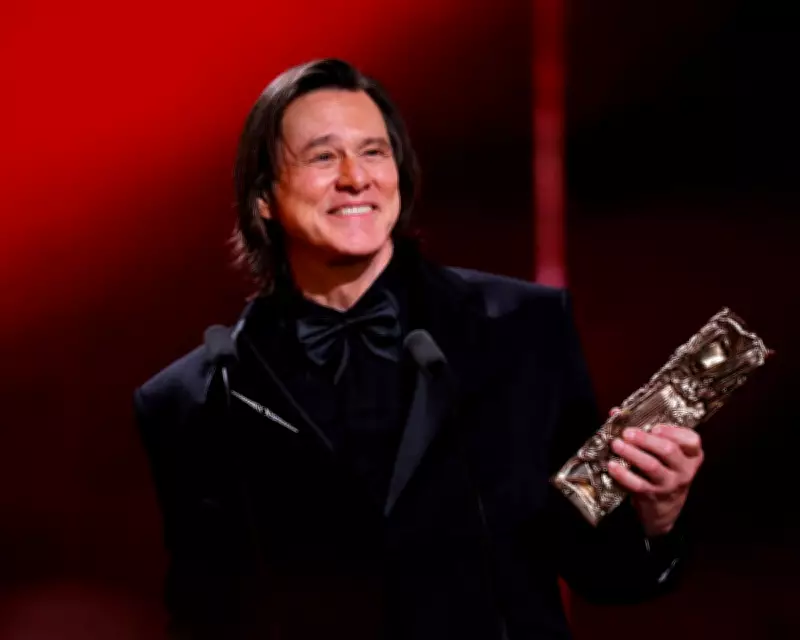
The 2026 César awards in Paris became a focal point for this cultural shift when Jim Carrey took the podium to accept his award. The 64-year-old actor appeared so dramatically altered that many spectators questioned whether they were witnessing the real Jim Carrey or a body double. His eyes appeared unusually wide, his cheeks were plumped and sharply defined, and his skin displayed an unnaturally smooth texture. Even his eye color seemed to have changed, creating an overall effect that contradicted his famously animated facial expressions.
Speculation grew so intense that Carrey's representatives had to publicly verify his identity, confirming that he had indeed worked on his French-language speech for months leading up to the ceremony. The controversy stemmed partly from public disbelief that an actor whose career has been built on expressive facial comedy would choose to freeze his features through cosmetic procedures.

Two Converging Trends Reshaping Hollywood Aesthetics
This new Hollywood aesthetic emerges from two powerful and converging phenomena that are rapidly transforming celebrity appearances:
GLP-1 Pharmaceutical Revolution: Medications like Ozempic, Wegovy, and Mounjaro have produced rapid and significant weight loss across Hollywood in remarkably short timeframes. The "Ozempic face" phenomenon describes how rapid fat loss creates volume depletion in facial features, resulting in gaunt, aged appearances that contrast sharply with traditional Hollywood glow.
Accelerated Cosmetic Procedures: A surge in popularity for various cosmetic enhancements has created a new normal in celebrity circles. These include:
- Facial fillers and injectables
- Brow lifts and other surgical adjustments
- Buccal fat removal (surgical extraction of cheek fat pads creating hollow, sharp facial contours)
- Lip enhancements and rhinoplasty procedures
When combined with GLP-1 induced weight loss, buccal fat removal in particular produces almost skeletal facial structures visible on screen and red carpets. The result manifests in dramatically hollowed cheekbones, prominently visible collarbones, and extremely thin arms that collectively create an uncanny, unnatural appearance.
The Artistic and Cultural Consequences
For the film industry itself, this new aesthetic presents significant artistic challenges. Actors traditionally serve as mirrors reflecting human experience back to audiences, requiring them to resemble enhanced versions of ordinary people. When faces become immobile or unnaturally altered, performances risk losing their emotional authenticity and connection with viewers.
Ethan Hawke, nominated for a Best Actor Oscar, exemplifies the alternative approach by allowing natural aging to shape his 55-year-old face. His performance in Blue Moon as a washed-up character consumed by jealousy relies on facial expressiveness that might be compromised by cosmetic procedures. Similarly, Jamie Lee Curtis has been vocal about what she calls "the genocide of a generation of women by the cosmeceutical industrial complex," criticizing the disfigurement of predominantly female actors through excessive cosmetic alterations.
Broader Cultural Implications
As society grapples with artificial intelligence replacing human roles and misinformation proliferating, human bodies and faces remain bastions of authentic humanity. Faces naturally carry the imprint of years lived, emotions experienced, laughter shared, sorrow endured, and genetic heritage. The systematic erasure of these human markers from public figures feels like another assault on genuine human expression in an increasingly artificial world.

While individuals maintain autonomy over their bodies and appearance choices, the public response to extreme alterations suggests diminishing willingness to embrace these new standards. Comment sections on celebrity images increasingly fill with expressions of concern rather than admiration, with phrases like "she looks sick," "he looked better before," and "this is sad" replacing previous aspirational comments.
Hollywood's Diminishing Cultural Power
This aesthetic shift coincides with Hollywood's broader financial and cultural challenges. When movie stars cease to inspire admiration or motivate emulation of their hairstyles, fashion choices, or fitness routines, the industry's cultural influence inevitably wanes. As critic Angelica Jade Bastien observed in Vulture, Hollywood faces not just financial crises but artistic ones, with many films failing to engage meaningfully with modern human concerns while stars transform toward "fascistic markers of beauty" emphasizing extreme thinness, whiteness, and timelessness.
The fundamental question emerges: How can audiences continue believing in Hollywood's dream when, for those within it, the reality increasingly resembles a nightmare of unnatural transformation and lost authenticity? The industry stands at a crossroads where aesthetic choices may determine not just individual appearances but collective cultural relevance in an era demanding genuine human connection.