Hostage Review: A Jaw-Dropping Portrait of War Reporter John Cantlie
This documentary about British war correspondent John Cantlie, who was kidnapped by Islamic State and is believed to have died in an airstrike, is filled with remarkable stories that challenge our perceptions of journalism in conflict zones.
The Messy Reality of Modern War Reporting
Reporters on the ground are essential for cutting through the fog of war, but in the asymmetric conflicts of the early 21st century across North Africa and the Middle East, this task has become awesomely difficult. With blurred frontlines and multiple antagonists whose identities and motivations are obscure, journalists often become targets themselves. Donning a flak jacket and trying to send home quotes or images that make sense of the chaos is not a job for everyone.
Who Was John Cantlie?
So what sort of person was John Cantlie, the British photographer and reporter likely killed in an airstrike in Iraq in 2017 after being kidnapped in Syria in 2012? Hostage spends three episodes attempting to unravel this enigma. Without the participation of Cantlie's family, who declined to be involved, the series adds to the sense that much about him remains unknowable. However, particularly in the opening instalment, this is not the reverent tribute one might expect for a man in a vocation usually held in high esteem. Cantlie emerges as a maverick, a danger to himself and others, as hard to analyse as the brutal chaos he continually immersed himself in.

A Maverick on the Frontlines
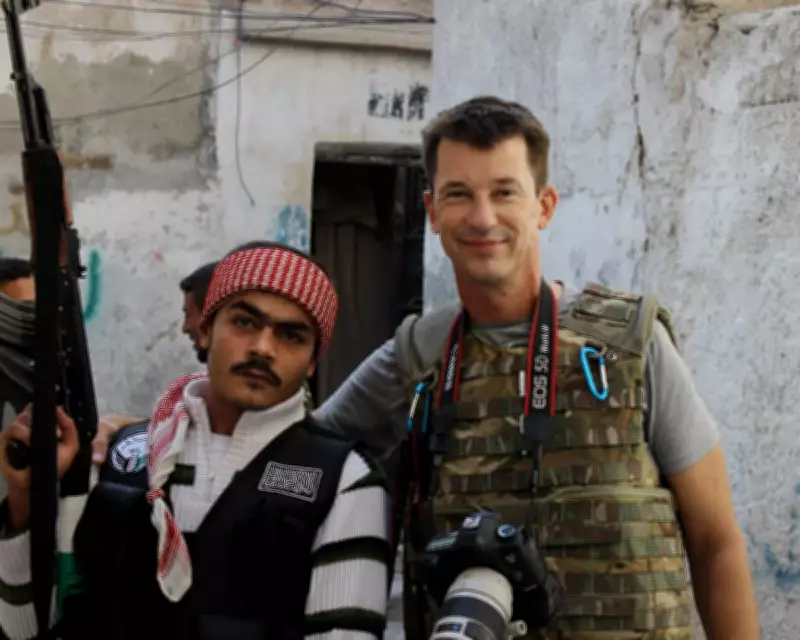
"If we don't make it out of this, it's been fun!" Cantlie exclaims in one of the first clips, a selfie video from Libya in 2011. He is with western-backed troops fighting to overthrow Muammar Gaddafi, right on the frontline. Not for the last time, he walks into a situation he might not escape, a prospect that seems to delight him. Other foreign correspondents, heavily relied upon in the series, recall his garrulous machismo, carried over from his previous life as a presenter of motorcycling documentaries on British cable TV. His confidence masked the reality that he was a struggling freelancer hoping to secure major media gigs his contemporaries had already obtained. Yet, Cantlie's on-the-fly smartphone reports possessed a visceral immediacy that rivaled more established journalists.
Dangerous Fascinations and Captivity
One of his colleagues was US journalist James Foley, who worked with Cantlie in Libya and reunited with him after the Syrian civil war erupted in 2011. Guided by local photographer and fixer Mustafa Karali, the programme's chief witness, they ventured into perilous zones. Karali describes a first meeting where he warned that crossing an Assad regime checkpoint could lead to gunfire. Foley assented calmly; Cantlie was exuberantly enthusiastic and visibly disappointed when they didn't have to dodge bullets. "He hoped to be shot [at]," Karali recalls.
From there, Karali, who holds deep affection for his lost friend, shares a remarkable series of yarns about Cantlie's interactions with fighters who would become Islamic State. Notorious for extreme ideology and ruthless kidnappings, many were from the UK. Cantlie developed a fascination that intensified after being captured by jihadists twice, fortunately freed both times by the Free Syrian Army. He now had the big story to make his name. Ignoring warnings that it could put him in grave peril, he returned to Syria to search for young British men turned violent fundamentalists.
The Jaw-Dropping Abduction
In December 2012, Cantlie and Foley were abducted by IS, with Karali's account being truly jaw-dropping. It occurred after an encounter in a Binnish internet cafe where Foley reportedly told Cantlie to shut up or risk getting them both killed. After captivity, Foley was murdered; Cantlie was kept alive, having made himself useful by presenting grotesque propaganda videos for IS. Whether this was a survival tactic or if he had been "turned" by his captors sparked much anguished speculation.

Nuance Amidst Horror
Cantlie's time as a hostage occupies the remaining two episodes, revealing how incarceration and torture brought his courage and kindness to the surface. This adds nuance to the overall view, but the picture remains tangled and incomplete, the whole truth lost to noise and smoke. Hostage aired on BBC Two and is available on iPlayer now.