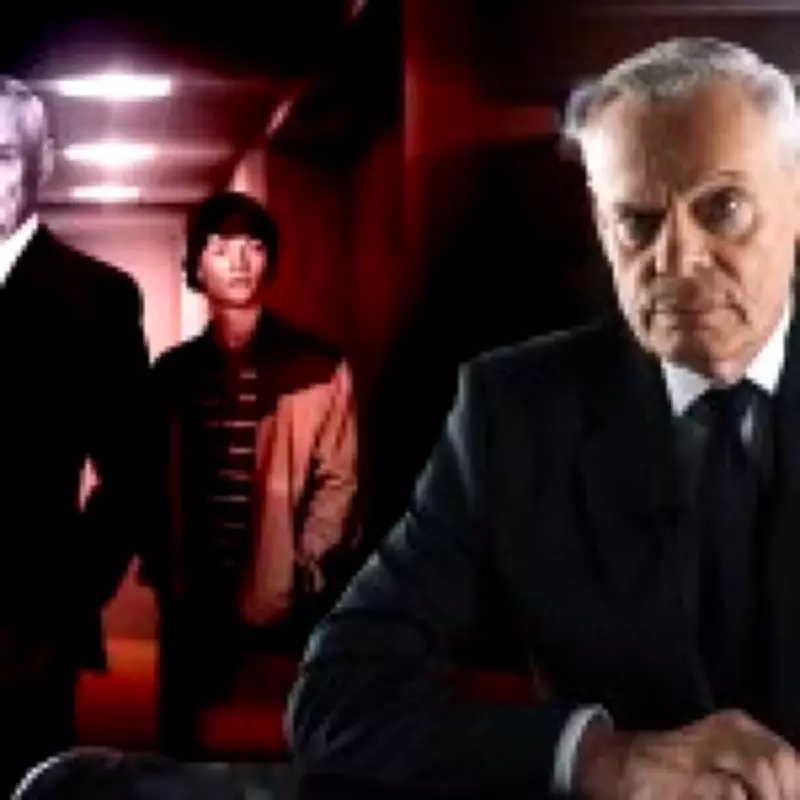
Channel 5's Huw Edwards Film Explores Grooming and Abuse with Disturbing Realism
The new Channel 5 drama Power: The Downfall of Huw Edwards begins on the pivotal day when the BBC's lead news anchor announced the Queen's death. This was a mighty, epoch-changing moment delivered with such aplomb by Edwards that it sparked calls for his knighthood. However, as the chilling film reveals, this most trusted newsreader was simultaneously receiving sexual images of children and grooming a vulnerable young man.
A Vulnerable Teen Targeted by a Powerful Figure
The young man at the center of the story is Ryan Davies, portrayed by Osian Morgan. While his real name has been changed, the now 23-year-old was extensively interviewed during the film's production. Ryan is depicted as a queer teen reckoning with his sexuality and a mercurial stepfather while living on an estate in Wales.
Into this vulnerable life comes an unexpected message from Edwards, played by Martin Clunes. The broadcaster obtained Ryan's number from the same individual who sent him child abuse material, for which Edwards was later convicted. From that initial contact follows a £500 PayPal transfer, then Ryan undressing for Edwards during a video call.

The Grooming Process Dramatized Verbatim
Over subsequent years, Ryan and Edwards continue messaging and calling. The significantly older Edwards begins calling boyish Ryan 'baby' while requesting to be called 'daddy' in return. Many of their text exchanges have been dramatized verbatim, creating an atmosphere as grim as the reality suggests.
Edwards occasionally pushes boundaries too far, orchestrating a hotel room rendezvous that the camera never enters. Viewers understand the meeting doesn't go as planned, with Ryan being told he 'disappointed him.' This fatherly admonishment becomes a repeated pattern throughout their relationship.
The Devastating Impact on Ryan's Life
As the abuse continues, Ryan begins to unravel, turning to alcohol and drugs—all funded by Edwards' bank transfers. 'Huw doesn't do no,' Ryan tells the single friend he confides in about this sorry situation. In desperation, he eventually tells his mother, who along with her husband takes action.
They first approach the BBC complaints department futilely, then successfully contact The Sun newspaper. This marked the moment Edwards dramatically re-entered public consciousness as the BBC presenter who had paid thousands for sexual images.
Performances and Production Elements
Despite promotional materials suggesting otherwise, Osian Morgan emerges as the film's lead, bringing experience from shows like Emmerdale and Waterloo Road. He delivers a solid performance as Ryan, though it occasionally veers toward soap opera territory.
Martin Clunes strikes a balance between the meek Welsh competence Edwards projected publicly and the needy, predatory figure operating in dark rooms while wearing eternal running gear. He directs Ryan like a schoolteacher commanding a student, while also portraying the calculating curmudgeon always covering his tracks.
Artistic Choices and Disturbing Content
The decision to shift this story from a mini-series to a film forces viewers to sit with the reality of what this news media pillar did, though the production feels more direct-to-video than cinema-worthy. Disclaimers appear throughout, and the camera generally avoids gratuitous content with one notable exception: a desk-bound Edwards masturbation scene that feels unnecessarily explicit given the restraint shown elsewhere.
The final scene acknowledges the irony of someone spending decades delivering news only to eerily become it. While not entirely successful artistically, it hammers home the severity of Edwards' crimes, for which he received no jail time.
Verdict on the Controversial Drama
Power: The Downfall of Huw Edwards serves as a capstone on the sordid legacy of the disgraced presenter. What it lacks artistically, it compensates for with a mostly sensitive depiction of grooming across a vast power imbalance. The film is compelling in its portrayal while remaining respectful within boundaries likely established by legal teams.

This is not strictly an 'enjoyable' drama—even cast members at the press screening struggled to describe it as 'good' or 'great.' But it provides a necessary examination of how a trusted public figure exploited his position to groom a vulnerable young man, with consequences that continue to reverberate.