The President's Cake: A Child's View of Saddam's Iraq
In the 1990s, as Iraq languished under Saddam Hussein's regime and crippling international sanctions, young Hasan Hadi discovered cinema through a dangerous secret. With cinemas shuttered, his family distributed banned foreign films on VHS tapes, using the boy as an unsuspected courier. "I was a kid," recalls the now 37-year-old director, "so no one would suspect me of smuggling. I'd put the tapes up my shirt or in my bag." He would watch these films clandestinely at night, from Bruce Lee to Tarkovsky, keeping the volume low to avoid detection.
A Childhood Without Innocence
When asked about the potential punishment for possessing such banned materials, Hadi pauses thoughtfully. "It depends. There were no specific rules. But if it was a political film, or something really forbidden by the regime, it could go to execution." The notion that children could face such extreme penalties underscores his observation that "childhood lost its innocence" during that period.
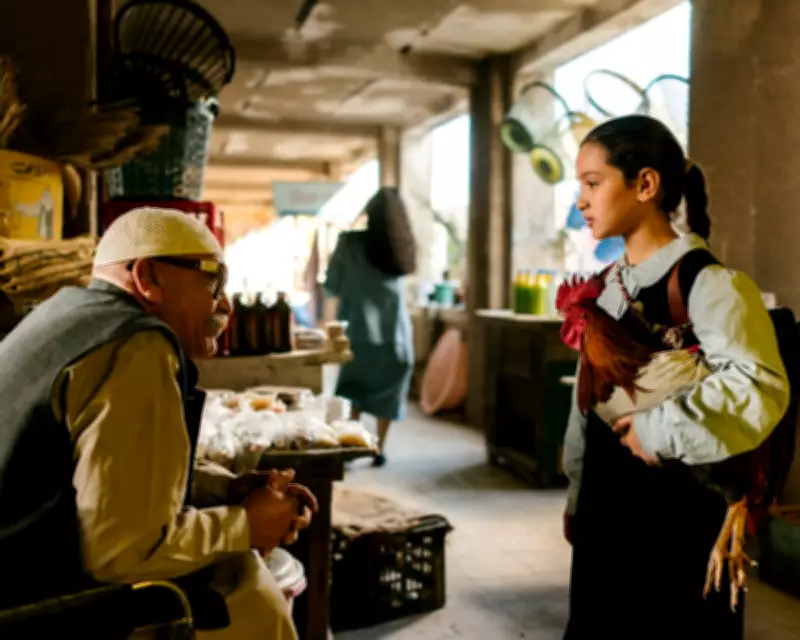
This lost innocence forms the emotional core of Hadi's debut feature film, The President's Cake, which has achieved the distinction of being the first Iraqi movie ever shortlisted for the Oscars' best international feature category. Set in early 1990s Iraq, the film follows nine-year-old Lamia, played by Baneen Ahmed Nayyef, who becomes "the unluckiest kid in class" when her name is drawn from a hat. This misfortune requires her to bake a cake for Saddam Hussein's birthday, a compulsory national holiday in Iraq at the time.

Capturing Life Under Sanctions
The film beautifully captures the juxtaposition of childhood wonder against the backdrop of brutal reality. Lamia's journey to gather scarce, expensive ingredients during sanctions-induced hardship forms the narrative's heart. She's accompanied by her grandmother, who sacrifices precious possessions like a radio and old watch to sell, and her pet cockerel Hindi, whose "querulous squawking" nearly steals the film.
Hadi draws from personal experience when depicting the mandatory cake-baking tradition. "The teacher would usually take it home for his family," he reveals. "I didn't taste cake until I was 13 or 14." The cakes that did exist were "depressing, just dates stuck together to trick kids." He recalls spending hours gazing at bakery window displays, a poignant memory of childhood deprivation.
The Ubiquity of Fear
Throughout the film, Saddam's personality cult looms large, with his portrait hanging on every wall. Hadi notes that when the dictator was overthrown in 2003, "the number of statues and portraits of him outnumbered people in Iraq." This omnipresence created constant anxiety. "It really did feel like he was watching you everywhere. You couldn't go from home to school without seeing him."
Fear permeated daily life without explicit instruction. "No one ever told you, 'Don't talk bad about Saddam.' They didn't need to. You knew," Hadi explains. His own father opposed the regime, leading to "lots of hiding, lots of escaping." One particularly harrowing memory involves soldiers storming their home and his grandmother forgetting her own name in terror.
Sanctions as Invisible Violence
One of the film's most heartbreaking scenes shows Lamia's teacher stealing an apple from her schoolbag. Hadi explains this reflects the widespread corruption that emerged as sanctions devastated the economy. "Before sanctions, a teacher might earn $800 a month; afterwards, it could be $5." He argues that "sanctions are more violent than bombs. The damage is not visible, but it's deeper," citing his cousin's hearing loss due to antibiotic shortages.
Storytelling Without Agenda
Despite the political context, Hadi deliberately avoided making an overtly political film. After studying film in New York, he approached the project with a specific intention: "I don't want to be political. I want to be loyal to what life was under those conditions. But I'm not coming with an agenda – I'm coming with stories." He focused on the relationship between Lamia and her friend Saeed, both played by untrained actors since Iraq lacks drama schools.

The filming process presented its own challenges, particularly the opening marshland scenes shot on water. "It was insane," Hadi admits with a laugh. "I have grey hair now." Despite the difficulties, he remains committed to telling Iraqi stories. "I want to make films about Iraq. Yes," he affirms, eyeing his suitcase before returning to Baghdad.
The President's Cake arrives in UK cinemas on 13 February, offering audiences a unique perspective on Iraqi childhood during one of the country's most challenging periods. Through Lamia's eyes, viewers experience both the warmth of family bonds and the chilling reality of life under dictatorship and sanctions.