Jayasree Kabir: A Cinematic Journey Across Continents
The acting career of Jayasree Kabir, who has died aged 73, represents a remarkable bridge between Indian auteur cinema, the burgeoning film industry of Bangladesh, and British television drama. Few performers can claim to have been launched by the legendary director Satyajit Ray while also sharing the screen with British television stalwarts like James Bolam. Kabir's life and work embodied a unique transnational narrative, shaped by artistic discovery, personal migration, and enduring cultural connections.
Discovery by a Master: The Ray Beginning
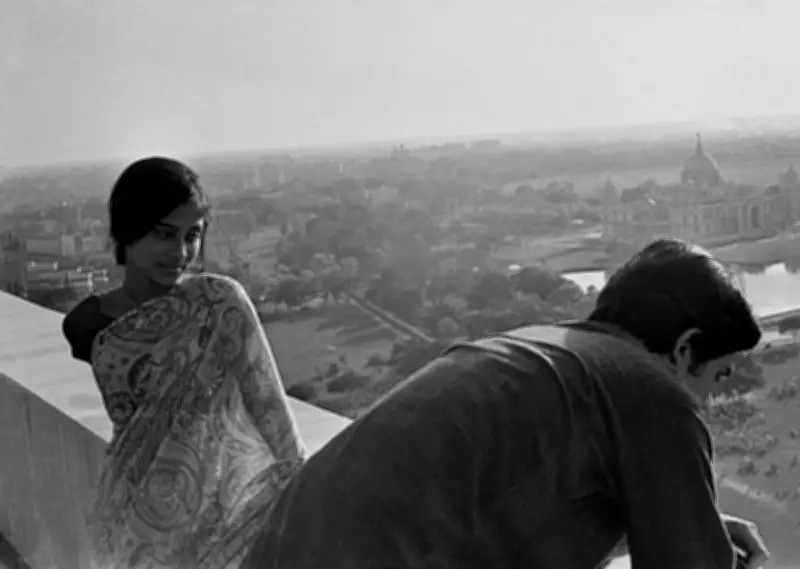
Kabir's entry into cinema was both serendipitous and transformative. While still a teenager studying at Calcutta's South Point school, she entered the Miss Calcutta beauty pageant on a whim during a dinner with her father at the famous Firpo's restaurant. Her victory caught the eye of Satyajit Ray, who was actively searching for fresh faces for his new project. This chance encounter led to her screen debut at age 17, billed as Jayasree Roy, in Ray's 1970 film Pratidwandi (The Adversary).
The film, adapted from a Sunil Ganguly novel and the first in what became known as Ray's Calcutta trilogy, marked a significant stylistic shift for the director. Influenced by early Jean-Luc Godard and New Hollywood cinema, it presented a gritty, neon-lit portrait of urban disillusionment. Kabir played Keya, the wide-eyed family friend who offers a moment of respite and hope to the film's protagonist, Siddhartha, played by Dhritiman Chatterjee. Her performance was noted for its beguiling stillness, a stark contrast to the restless agitation of the main character. Reflecting on Ray's direction, Kabir later remarked that he "expected precision, but he also made you feel that the camera would capture exactly what you offered – nothing more, nothing less."

Pratidwandi proved a critical success, winning three National Film Awards in India, including best director and best screenplay for Ray. For Kabir, the experience was foundational. "Winning Miss Calcutta opened doors," she acknowledged, "but it was only a beginning. Cinema demanded something different – something deeper. I was fortunate to meet remarkable people early on."
Building a Legacy in Bangladeshi Cinema
Following her breakthrough, Kabir continued to work in Bengali-language cinema, appearing in films such as Ajker Nayak (Today's Hero, 1972) and Ek Bindu Sukh (One Point Happiness, 1977). However, her most significant cinematic contributions emerged through her collaboration and subsequent marriage to Bangladeshi critic-turned-director Alamgir Kabir, whom she met through Satyajit Ray. The couple married in 1975.
Their creative partnership yielded several important works in Bangladeshi cinema. After collaborating on the romantic fantasy Surjo Konna (Daughter of the Sun, 1975), they created the enduring classic Shimana Periye (Across the Fringe, 1977). This film, a local riff on Lina Wertmüller's Marxist melodrama Swept Away, featured Kabir as Tina, a privileged woman stranded on a desert island with a lowly boatman after a cyclone. The film was a major success, winning four awards at Bangladesh's National Film Awards. Kabir's lip-sync performance of the poignant love song "Bimurto Ei Ratri Amar", written by Bhupen Hazarika and sung by Abida Sultana, became a legendary moment in regional cinema.
A further critical success followed with the urban corruption drama Rupali Shaikate (The Loner, 1979). However, as their personal relationship began to fray, Kabir made the difficult decision to leave Dhaka, returning first to Calcutta before ultimately relocating to east London with their son, Shourov.
A New Chapter in British Life and Television
Adapting to life in the United Kingdom presented considerable challenges. Kabir initially stepped away from acting, supporting herself by teaching English at a higher-education college and providing voiceover work for the BBC and Channel 4. It was during this period in England that she learned of her husband's tragic death in a drowning accident in 1989.

Reflecting on this transitional phase in a 2003 interview, Kabir revealed, "I had cut myself off from acting and the media … I was finding it difficult to juggle a demanding career [while] bringing up my son as a single parent. Now, with my son settled in his career, I can consider projects which have long been buried in my mind." This renewed focus led to a return to screen acting in British television.
Her final screen appearances were in two notable BBC dramas in 2004. She appeared in England Expects, a drama exploring white nationalism, and in an episode of the popular primetime series New Tricks titled "Painting on Loan". In the latter, she delivered a powerful performance as a scarred victim of a racist firebombing, speaking in Bengali, which poignantly connected her past and present artistic lives.
Patronage and a Lasting Cultural Influence
Although she retreated from the spotlight in her later years, Kabir remained deeply connected to the cinematic arts. She became a regular presence and eventually a patron of the Rainbow International film festival, held annually at the Genesis cinema in Mile End, east London. From this position, she maintained a watchful and nurturing eye on filmmaking developments in Bangladesh, offering guidance and support to a new generation.
In 2010, she expressed a hopeful vision for the future, stating, "It shouldn't be difficult to improve the standard of Bangladeshi films with the aid of technology. Young film-makers need to take the initiative towards that end." Her life's journey—from Calcutta to Dhaka to London—and her body of work left an indelible mark on the cultural landscapes of multiple nations. Jayasree Kabir is survived by her son, Shourov.