Raoul Peck's Intimate Exploration of George Orwell's Legacy
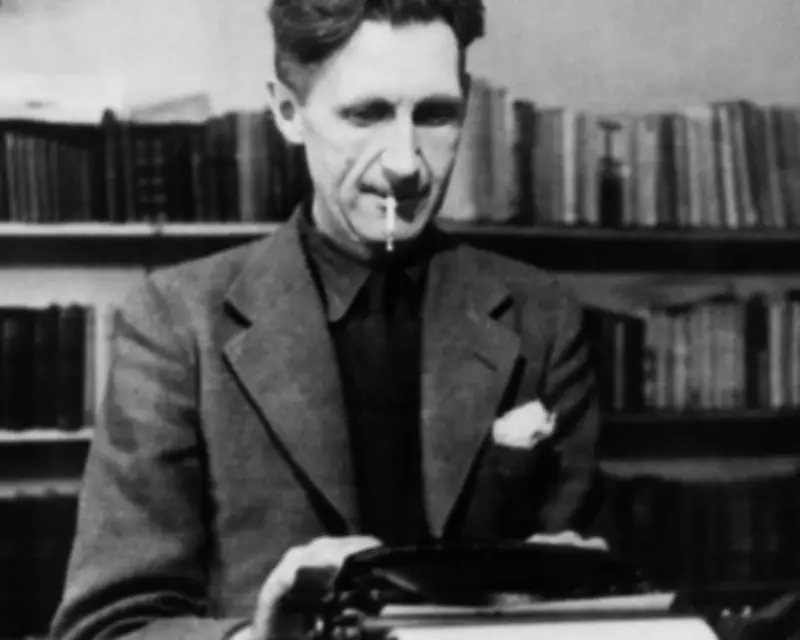
Haitian filmmaker Raoul Peck has created a powerful new documentary titled 2+2=5 that examines the enduring relevance of George Orwell's work in today's political landscape. The film, which received unprecedented access to Orwell's personal archives, positions the author not as a distant historical figure but as a contemporary voice warning against authoritarianism.
From Haiti to Orwell: A Director's Journey
Peck brings unique perspective to this project, having grown up under Haiti's violent Duvalier regimes before his family fled in 1961. His diverse education across three continents and varied career—from New York taxi driver to journalist to filmmaker—informs his approach to Orwell's work. "I discovered an Orwell from the third world," Peck explains, noting how the author's experiences in Burma (now Myanmar) as a colonial police officer and his participation in the Spanish Civil War resonated with Peck's own background of political struggle.
The director, now 72, has built a reputation for interrogating big ideas through films about intellectual heroes like Patrice Lumumba, Karl Marx, and James Baldwin. His 2017 documentary I Am Not Your Negro about Baldwin won a Bafta, and his 2021 series Exterminate All the Brutes examined colonization and ethnic cleansing.

Orwell's Words in Modern Context
Peck's film uses Orwell's own words—voiced by actor Damian Lewis—alongside footage from various adaptations of Nineteen Eighty-Four, including the 1954 BBC version and the 1984 film starring John Hurt. The documentary creates striking juxtapositions between Orwell's fictional concepts and contemporary political realities.
"Newspeak," the euphemistic language created by Big Brother's regime in Orwell's novel, appears alongside modern political slogans like Russia's "special military operation" in Ukraine. Scenes from Animal Farm play next to footage of Chinese military parades, while images from conflicts in Iraq, Yemen, and Gaza flash across the screen alongside snippets of speeches by leaders like India's Narendra Modi.
Orwell as a Tool for Understanding Today's Politics
Peck describes Orwell's analysis as a "toolbox" that remains relevant for diagnosing unhealthy societies. "He shows how political systems become authoritarian," says Peck. "It doesn't matter if it's left or right: they both attack language, attack intelligence, attack justice, attack the press or try to dominate it."
The director draws direct parallels between Orwell's warnings and contemporary American politics, particularly regarding Donald Trump's tactics. "He has 40 journalists in front of him and he attacks one, a woman, and calls her 'piggy' or says 'you never smile,'" Peck observes. "If the whole room doesn't stand up and leave, you're giving him the power."
Personal Experience with Political Failure
Peck speaks from experience about political systems, having served as Haiti's minister of culture from 1996 to 1997 before resigning in protest against what he saw as anti-democratic actions. "I know how weak governments are, how corrupt they can be, how scared they can be," he says. "As a society we give them too much power."
Despite his critical view of western democracies, which he describes as "fragile" and "crumbling day by day," Peck hasn't lost faith in political engagement. The final minutes of 2+2=5 feature footage of global protests, suggesting that people power can counter dishonest leadership.
The Urgency of Political Engagement
"The status quo is also a political position; doing nothing is also a political statement," Peck says, echoing Orwell's own beliefs. "The question for each one of us, individually and collectively, is what is our decision? Because if you don't engage, history will be made without you."
The documentary reveals surprising aspects of Orwell's life, including childhood photographs with his Indian nanny that place the writer in vulnerable context with connections to the British Empire. Peck was particularly struck by Orwell's self-critical writing about his time in Burma, where the author denounced colonial crimes with unusual candor for his time.

Orwell: 2+2=5 represents Peck's latest effort to use film as a tool for political understanding, connecting historical analysis with urgent contemporary concerns about democracy, language, and power.