Riz Ahmed Delivers a Fiery Modern Hamlet in Groundbreaking Adaptation
Four centuries after William Shakespeare first penned his seminal tragedy, a bold new cinematic interpretation proves the enduring power of Hamlet's timeless narrative. In a fiercely contemporary reimagining directed by Aneil Karia, Oscar-winning actor Riz Ahmed takes on the iconic role, delivering Shakespeare's most famous soliloquy while careening down a gritty London road, staring death in the face as a barrelling lorry approaches.
A Culturally Specific London Setting
This latest adaptation distinguishes itself from countless previous interpretations by transplanting the Danish court to London's modern Hindu community while preserving Shakespeare's original text in an abridged form. The Long Goodbye star portrays the titular tragic hero, the son of a wealthy property magnate driven to madness following his father's sudden death, with his rapid psychological unravelling soon escalating into deadly consequences.
Key production details include:

- Director: Aneil Karia
- Writer: William Shakespeare and Michael Lesslie
- Cast: Riz Ahmed, Morfydd Clark, Joe Alwyn, Art Malik, Sheeba Chaddha and Timothy Spall
- Runtime: 1 hour 25 minutes
Innovative Cultural Fusion and Performances
One of the film's most striking innovations occurs when the ghost of Hamlet's father delivers his crucial revelation speech in his mother tongue, adding a rich layer of subcontinent culture to Shakespeare's classic monologue that creates a surprisingly moving fusion. The supporting cast including Joe Alwyn as Laertes, Morfydd Clark as Ophelia, and Timothy Spall as Polonius share a frenetic energy that buzzes from the screen, propelling the narrative forward with compelling intensity.
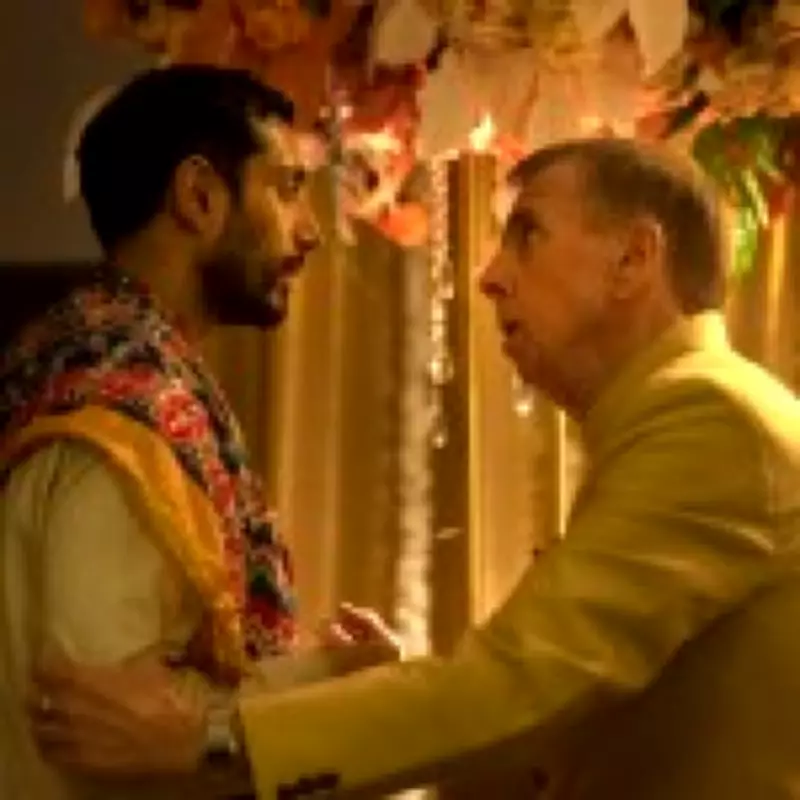
The adaptation reaches its midpoint climax during Claudius and Gertrude's wedding celebration, where the story of the poisoning unfolds through traditional performance that generates heart-pounding tension. This scene creates a crescendoing atmosphere that completely immerses viewers, pulling them directly into the wedding hall alongside the stricken royal couple.
Contemporary Relevance and Cultural Context
Hamlet's pervasive influence on contemporary culture remains undeniable, with this year alone witnessing rising anticipation for Chloe Zhao's adaptation of Hamnet and Taylor Swift's single The Fate of Ophelia sparking renewed discourse about the character's tragic arc. Within this climate of intense competition, Riz Ahmed's performance emerges as an unexpected frontrunner, maintaining ferocious energy throughout as he portrays a character wracked with grief and driven by bloodlust.
Ahmed makes the role distinctly his own through this culturally specific meditation on mental health, family dynamics, and the profound dissonance of loss. The actor's interpretation offers a fresh perspective on Hamlet's psychological turmoil, exploring themes that resonate powerfully with contemporary audiences.
Adaptation Challenges and Creative Liberties
Despite its largely faithful dialogue, the film occasionally struggles to fully translate the high-stakes context of seventeenth-century royalty to a contemporary family drama. At moments, Hamlet's motivations become somewhat obscured, and the continued use of royal terminology like 'King' and 'Lord' creates a jarring contrast against the aesthetic of dirty London roads and construction sites that form the film's backdrop.
The spiral into revenge-fuelled carnage leans perhaps too heavily on Hamlet's twisted mental state alone, making the escalation into multiple murders feel somewhat tenuous in its progression. For viewers less familiar with Shakespeare's original narrative, the creative liberties taken by this adaptation might present challenges in following the complex storyline.
Verdict: A Daring and Original Interpretation
Despite its imperfections, this earnest modern take on one of Shakespeare's most famous tragedies proves buzzy, well-acted, and most daringly original. The film premiered at the BFI London Film Festival and represents a significant departure from the rinse-and-repeat Hamlets typically told through Western-centric lenses.

While some may question whether another Hamlet adaptation was truly necessary, this interpretation offers a desperately needed breath of fresh air in an overpopulated genre. For those willing to suspend disbelief and indulge in this particular iteration's unique unfolding, there remains plenty to applaud in this experimental feature that boldly recontextualizes classic themes for contemporary audiences.
The adaptation's cultural specificity and Riz Ahmed's compelling central performance create a memorable cinematic experience that, while not without flaws, demonstrates the continued relevance and adaptability of Shakespeare's work across centuries and cultures.