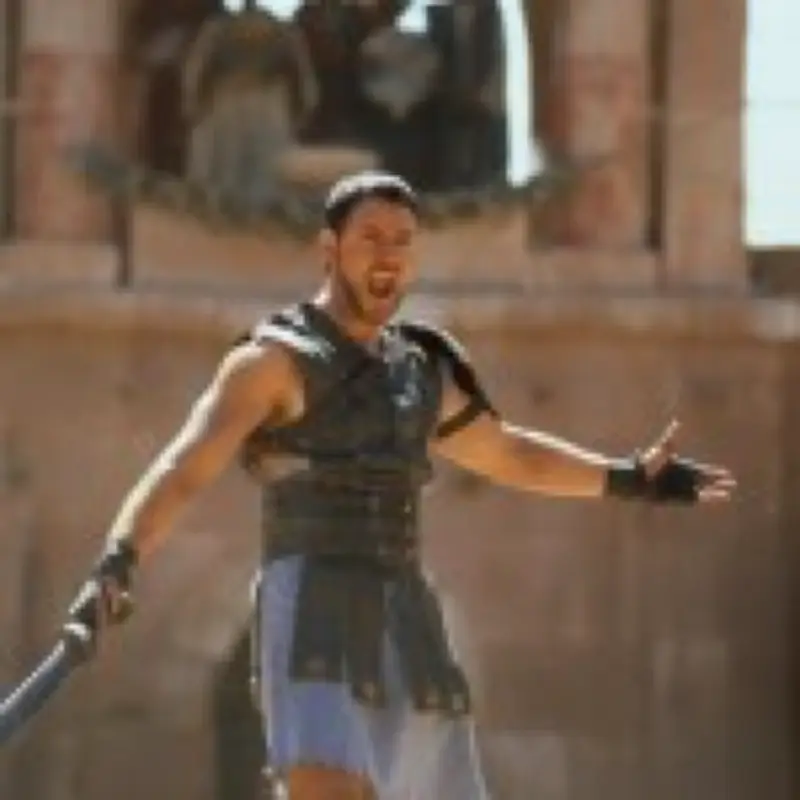
Russell Crowe's outspoken comments about the Gladiator franchise have shifted perspectives. The actor, who famously portrayed Maximus in Ridley Scott's original 2000 film, has now openly criticized the 2024 sequel, Gladiator II. Speaking at the Taormina Film Festival in Sicily, Crowe argued that the sequel failed because it lacked a "moral core," a quality he fought to preserve in the original.
Crowe's critique of Gladiator II
Crowe, who won an Oscar for his role, was not involved in the sequel starring Paul Mescal as Lucius Verus, the secret son of Maximus and Lucilla. He pointed to the sequel's box office performance, which grossed approximately £344.3 million compared to the original's £347 million, but noted that inflation and a significantly larger budget made the sequel less successful in real terms. "It failed," Crowe stated, emphasizing that the film lacked the moral center that made the first movie resonate.
During the festival, Crowe recounted how he resisted pressure to film a sex scene with co-star Connie Nielsen in the original. "This is a story about a man who's avenging the death of his wife and his child," he explained. "There cannot be a moment on that journey where he stops and has sex with somebody. It doesn't make any sense because that destroys the journey." Director Scott agreed with Crowe, recognizing that this restraint was the "moral core of the film."

The original Gladiator as a romance
Crowe argued that the original Gladiator is not merely a revenge movie but a romance. "On the surface, Gladiator is a movie for men but if it was a movie for men, it would be about revenge. But it's not about revenge. It's a movie for women because it's about vengeance," he said, noting that audiences skewed more female upon release. He elaborated, "We all want to be that guy who can stay that strong, if you're a man. And if you're a woman, we all want a man to love us in that way."
This perspective reframes the film's enduring appeal. Maximus's journey is driven by love for his family, not mere vengeance, which Crowe believes explains its timeless popularity. The sequel, by focusing on Lucius's discovery of his parentage, dilutes this moral center, according to Crowe.
Re-examining the sequel
While Gladiator II delivered spectacle and Mescal's performance was praised, critics note that Lucius's character development felt tied to his parents, lacking the clear-cut motivation of Maximus. The sequel struggled to balance originality with homage, a common pitfall for long-awaited follow-ups. Crowe's comments have prompted a re-evaluation, with many agreeing that the sequel missed the emotional depth of the original.
Ultimately, Crowe's critique underscores the importance of a film's moral core. As he stated, "We all want to be loved hard enough to inspire vengeance in this life – or the next." Whether or not audiences agree with his assessment, his passion for the original's integrity is undeniable.