From Actors to Authentic Folk Troubadours: A Transformative Musical Journey
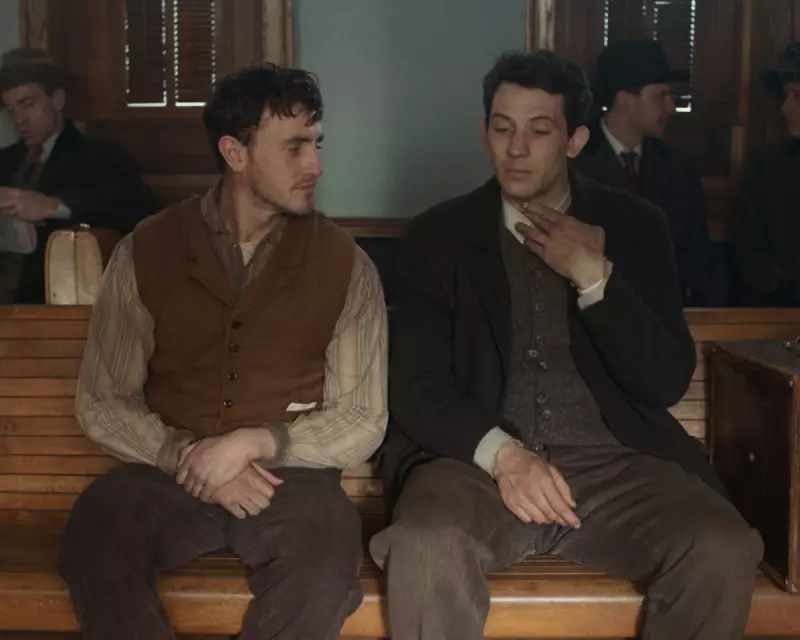
When singer-songwriter Sam Amidon was brought on board as music adviser for the film The History of Sound, he faced a unique challenge. His primary role was to serve as singing coach for the cast, with a particular focus on transforming stars Paul Mescal and Josh O'Connor into convincing folk balladeers. With just three weeks to prepare, the task required intensive training to make the actors appear as though they had been singing their entire lives.
A Natural Connection to Folk Traditions
Amidon's background provided the perfect foundation for this musical undertaking. Growing up in New England with parents who were folk educators, he was immersed in various folk traditions from an early age. This included Appalachian fiddle tunes and songs from the British Isles, with his parents particularly admiring legendary Yorkshire singing family the Watersons. Now based in London, Amidon found remarkable parallels between his own musical world and that of the film.
The production's setting around the first world war required authentic musical references. Amidon directed the actors toward recordings from that era, including the influential ballad-singer Almeda Riddle from the Ozarks, who championed the concept of "getting behind the song." Both actors brought their own connections to the material - Paul Mescal's Irish heritage gave him an immediate affinity for folk music, while Josh O'Connor had previous experience with traditional music and some singing in musical theatre and choirs.

Intensive Training in a Garden Studio
The coaching sessions took place in Amidon's garden shed-studio, where the actors would spend about an hour at a time learning different vocal approaches. Amidon discovered that actors make exceptional students due to their focused mindset and limited timeframes. He recalls Josh O'Connor studying his vocal technique from just inches away, examining every element of sound production, and Paul Mescal's enthusiastic reaction when they successfully mastered a three-part harmony.
"Actors have little time so their attitude is: 'I need to get this now,'" Amidon explains. "I have a distinct memory of Paul breaking out into a huge grin and grabbing Josh and I on the shoulders when we nailed a three-part harmony."
The Emotional Connection of Vocal Performance
Teaching singing presents unique challenges compared to instrumental instruction, as Amidon notes: "The voice is much more intensely connected to your emotions than other instruments are. When teaching guitar, you can point people's fingers to the right place, but with the voice it's all internal." His approach focused on helping the actors find comfort with their natural vocal sounds and overcome any apprehension about singing.
The preparation included pre-recordings made in a New York studio, which served both as reference material for on-set performances and as a way to deepen the actors' engagement with the music. Both Mescal and O'Connor demonstrated genuine musical commitment - O'Connor worked diligently on his piano parts while Mescal developed harmonies, particularly connecting with the melancholic atmosphere of the song Silver Dagger.
Authentic Performances and Personal Connections
The actors' dedication extended beyond formal sessions, with Amidon hearing that they continued singing the songs while walking down the street after leaving the studio, mirroring their characters' musical camaraderie in the film. This authenticity translated powerfully to screen, with all vocals performed live during filming rather than being dubbed later.
Personal connections enriched the production experience. During filming, some cast and crew members attended one of Amidon's gigs, where his mother met the actors backstage and immediately began singing the Watersons' song Country Life with Paul Mescal joining in spontaneously. Additionally, composer Oliver Coates incorporated an arrangement by Amidon's father, Peter Amidon, into the film's score - a particularly meaningful inclusion as Peter had passed away shortly after seeing the completed film.

The Enduring Power of Folk Music
Watching the finished film proved emotionally resonant for Amidon, who described seeing the actors' comfortable, authentic performances as "moving and magical." He particularly noted a powerful scene where Mescal's character experiences profound grief at a bonfire gathering, capturing both the communal spirit of folk festivals and deep personal emotion.
Amidon hopes the film will inspire audiences to explore folk music more deeply, describing it as "the poetic record of people who would make up songs to sing to themselves as they worked or travelled." He emphasizes that these ballads preserve emotional landscapes of working people from historical eras, with themes of love and enduring pain that continue to resonate a century later. The History of Sound and its accompanying soundtrack album represent not just a cinematic achievement but a celebration of folk music's timeless emotional power.